


Key Takeaways
- Reconciling an ERP with a payment gateway means matching internal sales orders and invoices with external processor payouts, fees, and bank deposits, linking gross sales, gateway charges, refunds, and net cash back to your general ledger.
- The core process has five steps: connect data sources, standardize identifiers, account for fees and timing, handle exceptions, and post to the general ledger.
- The real difficulty isn't data volume. It's that your ERP, your payment gateway, and your bank each describe the same transaction differently: as an invoice, as an event, and as a settlement.
- Even at a 90%+ match rate, the unmatched 10% of transactions can consume more than 80% of your team's reconciliation effort, because those are the ones requiring manual investigation.
- Batch, month-end reconciliation breaks down as transaction volume and payment gateway count grow. Continuous, automated matching is what actually holds up at scale.
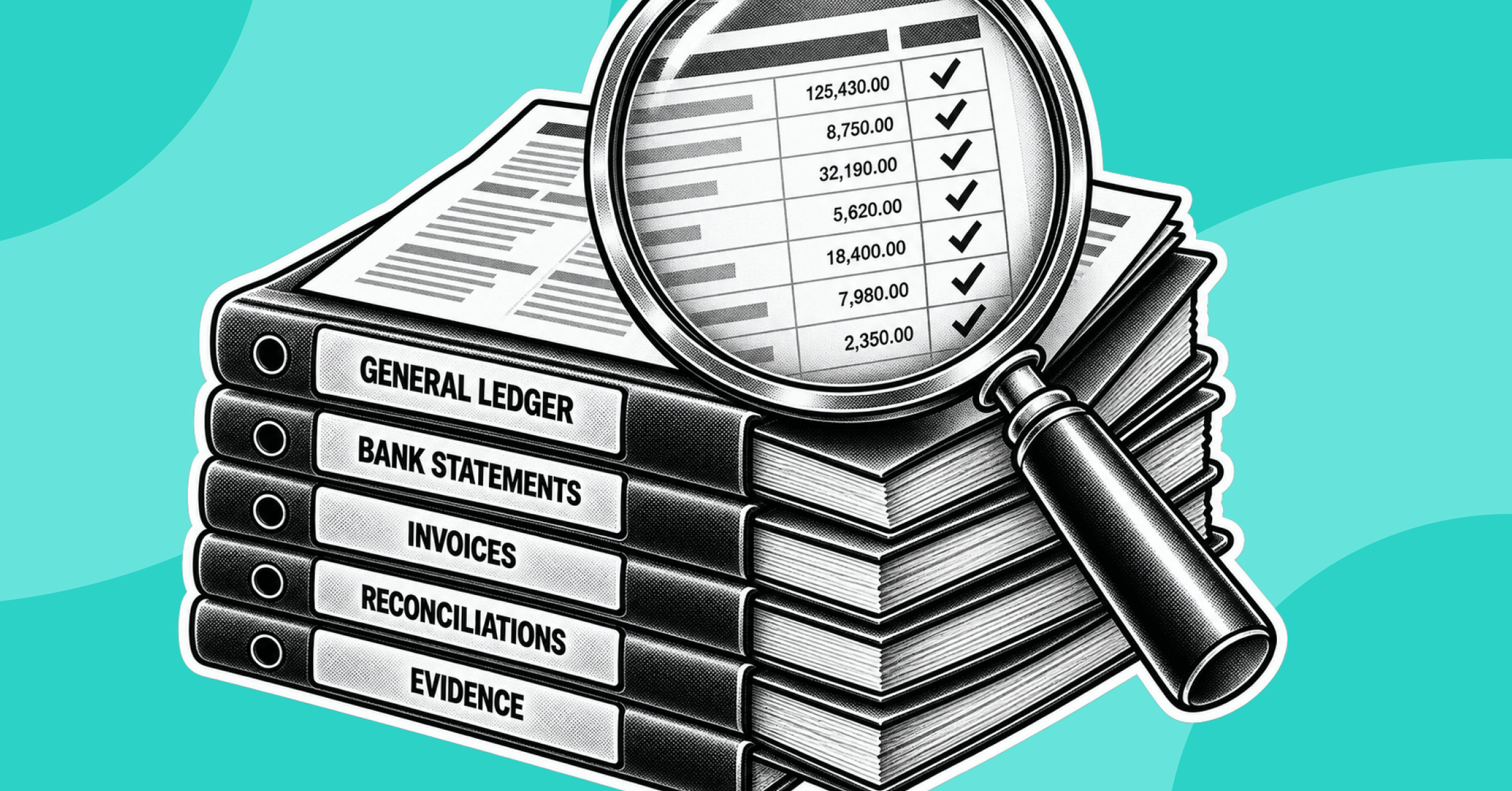
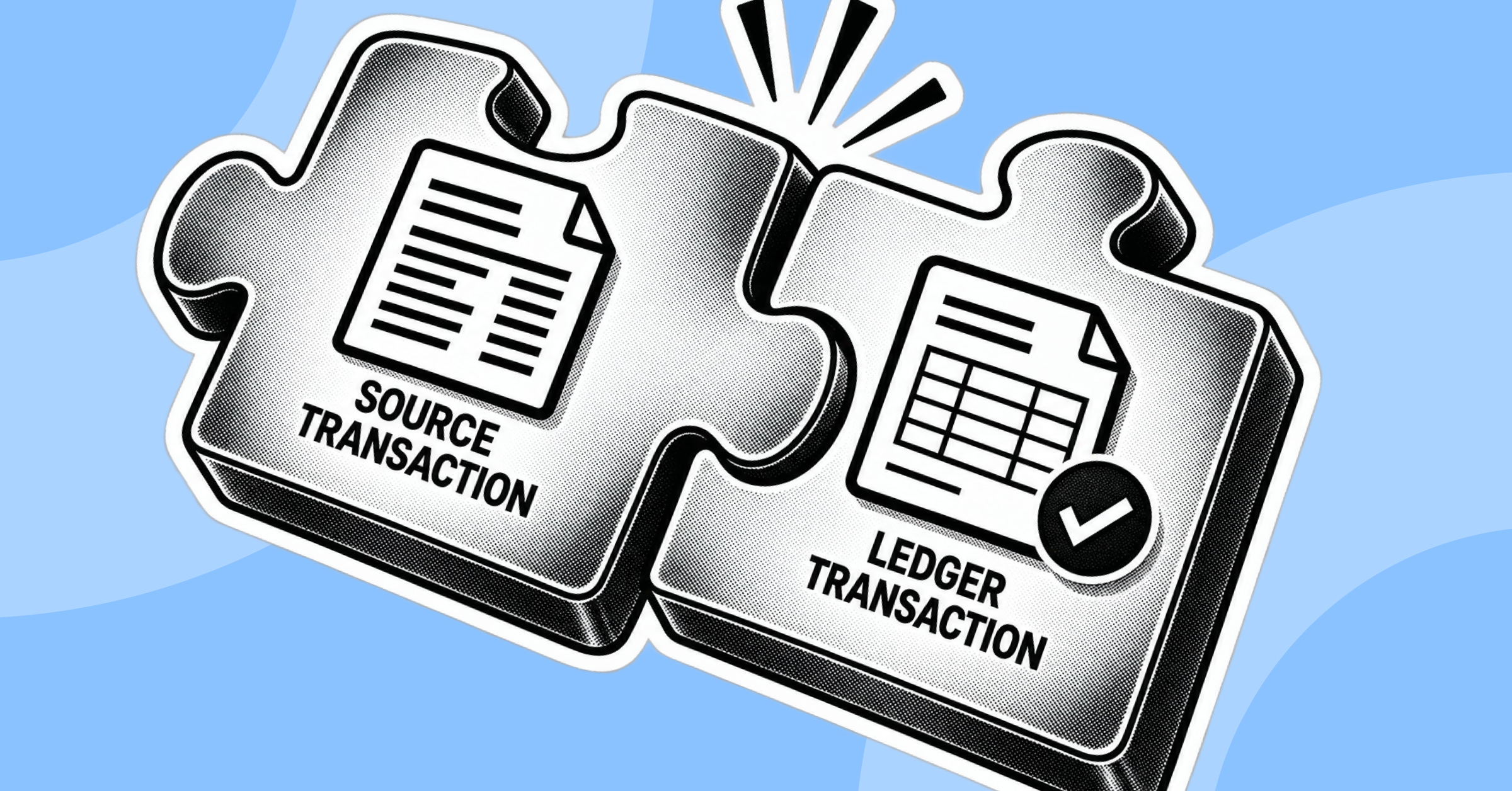
Reconciling an ERP with a payment gateway means matching internal sales orders and invoices with external processor payouts, fees, and bank deposits. This links your gross sales, gateway charges, refunds, and net cash back to your general ledger, so every dollar that left a customer's card ends up accounted for somewhere on your books.
That sounds simple. It rarely is, because the ERP, the gateway, and the bank aren't describing the same event. They're describing three different views of it, in three different formats, on three different timelines. Below is the process that actually holds up once you have more than one gateway, more than one entity, or more than a handful of transactions a day.
The Three-Layer Problem Behind Every Reconciliation Break
Most reconciliation problems get blamed on data volume. That's rarely the real cause. The actual problem is translation: your ERP records a sale as an invoice or a journal entry. Your payment gateway records the same sale as an event, a charge, a refund, a payout. Your bank records it as a settlement, a lump sum that's already netted for fees and batched with dozens of other transactions.
To reconcile correctly, you have to work across three layers, not one:
- Customer payment layer: what the customer was actually charged, at the transaction level, inside the gateway.
- Bank settlement layer: what the gateway actually deposited, after fees, refunds, and chargebacks are netted out, usually as a single batched payout.
- General ledger layer: what your ERP recorded as revenue, receivable, or cash, based on the original invoice or sales order.
A transaction can be correct at every one of these layers individually and still not tie out, because the amounts, timing, and grouping logic are different at each layer. That's the actual problem this process has to solve.
The Core Steps to Reconcile ERP and Payment Gateways
Here's the process, in the order it actually needs to happen.
- Connect your data sources. Ingest transaction feeds from every payment gateway you use (Stripe, PayPal, Razorpay, or others), alongside bank statements and ERP sales records. All three feeds need to land in one place before matching can start; reconciling from three separate exports in three separate tools is where most manual processes break down first.
- Standardize the identifiers. Order IDs, invoice numbers, customer references, and timestamps rarely match format across systems out of the box. Normalize these fields so the same transaction can actually be recognized as the same transaction across your ERP, gateway, and bank feed.
- Account for fees and timing. This is the step most teams underestimate. A gateway payout is the net amount after processing fees, not the gross sale amount your ERP recorded. You need to reconstruct the bridge between gross transaction value, gateway fees, refunds, and the net amount that actually lands in the bank, and you need to account for the lag between when a sale happens and when it settles.
- Handle exceptions. Unmatched transactions, partial payments, chargebacks, duplicate settlements, and currency conversion differences all need a defined workflow, not an ad hoc email thread. Route these into a queue for manual review rather than letting them sit unresolved until month-end.
- Post to the general ledger. Once a transaction is matched and any exception is resolved, create the corresponding journal entry in your ERP. This is the step that actually closes the loop between what the customer paid and what your books say happened.
Common Exceptions and How to Handle Them
Exceptions are where most of the actual work lives. A few patterns show up repeatedly:
- Chargebacks and disputes: the gateway reverses a settled payment after your ERP has already recorded it as revenue. This needs a reversing entry, not a manual override of the original one.
- Partial payments: a customer pays part of an invoice, and the gateway settles less than the ERP expects against that invoice. This needs matching logic that can tie a partial amount to the correct open item, not just an exact-match rule.
- Duplicate settlements: the same batch of transactions appears in two payout files, usually after a retry or a gateway-side correction. Left unresolved, this double-counts cash.
- Currency and FX differences: the amount charged to the customer and the amount settled to your bank can differ slightly due to conversion timing, which shows up as a small, recurring variance if it isn't tracked separately.
- Timing gaps across close periods: a sale happens in one period and settles in the next, which is normal, but only if your process actually accounts for it instead of treating it as an unmatched item every month-end.
Why It Still Feels Broken at 90%+ Match Rates
A 90% automated match rate sounds like a solved problem. It usually isn't, and here's the actual math behind why: the average finance team spends 3 to 5 days on reconciliation every close cycle, and the unmatched 10% of transactions can consume more than 80% of that total effort.
The reason is straightforward. The 90% that match automatically were always going to be easy: clean identifiers, no fees complexity, no timing gaps. The remaining 10% are exceptions by definition: chargebacks, partials, duplicates, and FX differences, each of which needs a human to open two systems, compare line items, and decide what actually happened. A high match rate on the easy transactions doesn't reduce the hardest 10% of the work; it just concentrates your team's time entirely on it.
This is also why match rate alone is a misleading metric for how automated a reconciliation process actually is. The number that matters more is how much manual investigation time the remaining exceptions require, and whether that time is shrinking cycle over cycle.
Manual Batch Reconciliation vs. Continuous Automated Matching
Most reconciliation processes are still built around a month-end batch: export the ERP ledger, export the gateway settlement report, export the bank statement, and manually tie them out once a month. This holds up reasonably well with one gateway and low volume. It breaks down as you add gateways, entities, or currencies, because the exception volume grows faster than the team's capacity to investigate it manually.
What actually changes with automation isn't just speed. It's the shift from a periodic batch process to continuous ingestion and matching:
- Transaction feeds are ingested daily or in real time, instead of pulled once at month-end.
- Matching runs continuously, so exceptions surface within days of the transaction, not weeks later during close.
- Exception queues stay small and current, instead of piling up into a single end-of-month backlog.
- Journal entries post automatically once a match is confirmed, instead of being manually keyed in after the fact.
The result isn't just a faster close. It's a close where the reconciliation work is already mostly done by the time the close cycle starts, because it happened continuously through the period instead of all at once at the end of it.
Choosing the Right Approach for ERP-to-Gateway Reconciliation
Some teams solve this with spreadsheets and manual exports for as long as volume allows it. Others build custom scripts to pull gateway and ERP data into a shared format. Both approaches tend to work until a second gateway, a second entity, or a higher transaction volume is added, at which point the exception volume outpaces what a manual or semi-manual process can absorb.
This is the problem Bluecopa's Record-to-Report and Order-to-Cash capabilities are built around. Bluecopa is an AI-native finance operations platform, and its Samyx Recon engine handles the matching layer described above directly: it processes over 5 million records per hour at 97 to 99% accuracy, matching ERP, gateway, and bank data across multiple identifiers rather than relying on a single exact-match field. Because Bluecopa connects to 200+ systems, including SAP, Oracle NetSuite, Sage Intacct, Stripe, Zoho Books, QuickBooks, and Xero, the same matching logic applies whether you're reconciling one gateway or several, across one entity or many.
Yatra used this approach to cut reconciliation time by 7x and reduce manual reconciliation effort by 80%, while also cutting month-end close time by 90%. The exceptions that used to consume most of a team's reconciliation time (chargebacks, partial payments, timing gaps) get routed into a defined workflow instead of an inbox, and confirmed matches post to the ERP automatically through continuous close rather than a manual month-end entry.
If you're evaluating whether to build this internally or bring in a platform built for it, the questions worth asking are how the tool handles fee and timing differences specifically (not just exact-match transactions), how it routes and ages exceptions, and whether it posts confirmed matches back to your ERP automatically or still requires manual journal entry.
FAQ
1. Is payment gateway reconciliation the same as bank reconciliation?
No. Bank reconciliation matches your ERP's cash balance against your bank statement. Payment gateway reconciliation adds a layer in between: matching the gateway's own transaction and payout records against both the ERP and the bank, since the gateway nets out fees and batches multiple transactions before the bank ever sees a single deposit.
2. Why doesn't my ERP's recorded amount match my bank deposit?
Because your ERP typically records the gross sale amount, while your bank receives the net payout after the gateway deducts processing fees and nets out refunds. The difference is the fee and timing bridge described in step three above, not an error in either system.
3. How often should ERP-to-gateway reconciliation run?
As close to continuously as your volume justifies. A monthly batch process works at low volume with a single gateway, but as transaction counts, gateways, or entities grow, daily or real-time matching keeps the exception queue small enough to actually manage instead of letting it pile up into a month-end backlog.
4. Which payment gateways and ERPs does this process work with?
The five-step process applies regardless of which systems you use. Bluecopa's own integrations span 200+ systems, including SAP, Oracle NetSuite, Sage Intacct, Stripe, Zoho Books, QuickBooks, and Xero, but the underlying matching logic (connect, standardize, account for fees and timing, handle exceptions, post to GL) is the same whether you're reconciling manually or with automation.