

If you are reconciling accounts manually in spreadsheets, or even inside a legacy ERP module, the process usually looks the same every month: export data from two or more systems, eyeball match line items, chase down the mismatches, and hope you find every discrepancy before the auditor does. Bluecopa is built to remove most of that manual match and chase work. This guide walks through how account reconciliation actually works inside Bluecopa, from connecting your data sources to closing out exceptions with a full audit trail.
This is a product walkthrough, not a generic reconciliation primer. If you need the fundamentals first, see what financial reconciliation is and why it matters before coming back here.
What Account Reconciliation Means Inside Bluecopa
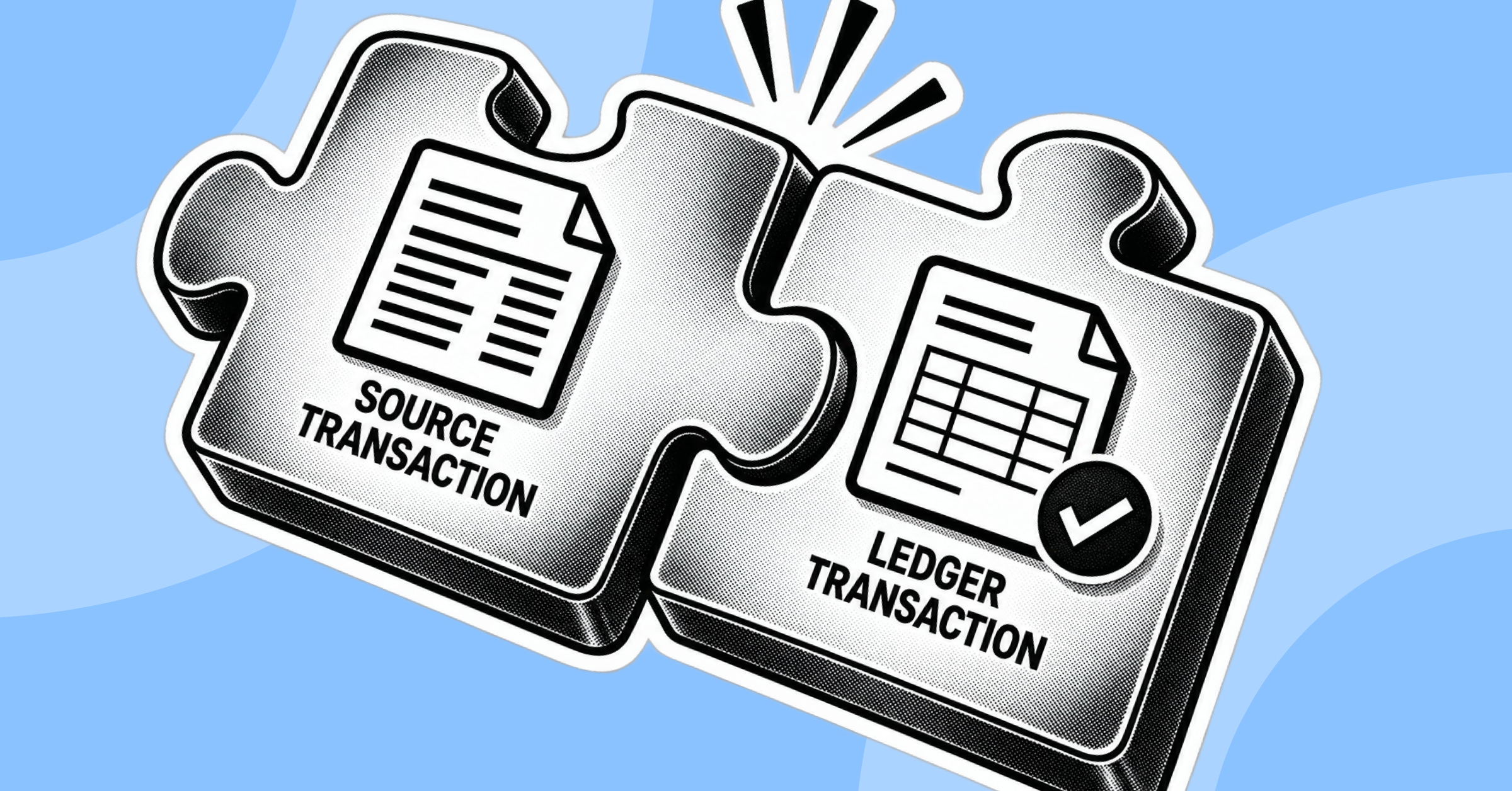
In most tools, account reconciliation means one thing: matching a bank statement to a ledger. Bluecopa treats it as a broader category, covering any two or more data sets that need to agree before you can trust your books. The platform is built to reconcile across six core use cases:
- Payment gateway reconciliation: bank transactions, invoices, and GL entries
- Sub-ledger to GL accuracy: journal entries mapped against GL accounts
- Statement to ledger accuracy: bank and vendor statements against internal records
- Order-to-cash accuracy: payments matched against invoices and receivables
- Invoice-to-payment accuracy: three-way matching across PO, invoice, and GRN data
- Inter-company accuracy: cross-entity entries reconciled ahead of consolidation
Which of these applies to you depends on what you are closing: AR, AP, intercompany, or the balance sheet as a whole. The workflow below is the same regardless of which use case you are running, because Bluecopa's matching engine, called Recon Transformer and powered by the platform's SamyxAI layer, applies the same logic across all six. See how this fits into the broader close process on the Record to Report platform page.
Before You Start: What Bluecopa Needs Connected
Bluecopa cannot reconcile what it cannot see. Before running your first reconciliation, make sure of the following.
- Your source systems are connected. Bluecopa supports 200+ integrations across ERPs, banks, payment gateways, and finance systems. Connect every system that touches the account you are reconciling, not just one side.
- The accounts you are reconciling are mapped. Sub-ledger accounts need to be mapped to their corresponding GL accounts so the matching engine knows what should tie out.
- You know which use case you are running. Payment gateway recon, intercompany recon, and three-way invoice matching pull from different data sets. Confirm the right sources are in scope before you start.
- Someone owns exception review. Bluecopa routes exceptions to an assigned owner automatically. Decide who that is (AR lead, AP analyst, controller) before transactions start flowing, so nothing sits unassigned.
If any of this is not set up yet, this is the point to loop in Bluecopa's onboarding and implementation team. Initial data mapping is typically a guided, one-time setup rather than something a single user configures alone.
Step-by-Step: Running an Account Reconciliation in Bluecopa
Step 1: Select the accounts and reconciliation type.
Choose the accounts or entities in scope and the reconciliation type (payment gateway, sub-ledger to GL, intercompany, order-to-cash, or invoice-to-payment). This determines which data sources Bluecopa pulls from and which matching rules apply.
Step 2: Let the matching engine run continuously.
This is the biggest structural difference from a spreadsheet-based process. Bluecopa does not wait for month end to start matching. Once accounts are in scope, the platform verifies balances as transactions flow, handling 1:1 matches (one transaction to one record), 1:many matches (one payment against multiple invoices, for example), and multi-way matches (such as three-way PO, invoice, and GRN matching). Matching logic is not static. It adapts automatically as transaction volume, patterns, and business rules change, so you are not manually rewriting match rules every time a new vendor or payment method shows up.
Step 3: Review exceptions as they are raised, not at month end.
Anything that does not match cleanly is flagged automatically using AI-powered anomaly detection, then routed to an assigned owner with full audit context attached, so whoever picks it up is not starting from zero. This includes automated flagging of missing or duplicate entries, overpayments and duplicate payments, and timing or amount mismatches. Because exceptions surface continuously, the review queue at month end becomes a short confirmation pass rather than a discovery exercise.
Step 4: Run variance analysis against defined thresholds.
For accounts where small variances are expected and acceptable, such as FX timing differences or rounding, Bluecopa lets you define thresholds so genuine anomalies get surfaced without flooding the exception queue with noise. A controller or reconciliation owner should set materiality thresholds deliberately. Thresholds that are too tight generate alert fatigue; thresholds that are too loose let real issues get buried.
Step 5: Resolve, document, and let the audit trail build itself.
Every reconciliation decision, whether a match, an override, or an exception resolution, is kept traceable automatically. Instead of a separate documentation step at month end, the audit trail is a byproduct of doing the reconciliation itself, which is the main lever behind faster audit prep.
Step 6: Confirm at month end, do not discover.
By the time you hit month-end close, reconciliation status should already be known. You are confirming a position the system has been maintaining continuously, not starting the matching process from scratch. This matters more than it sounds: according to CFO.com, 50% of finance teams still take over a week to close their books each month, and unresolved reconciliation items are one of the most common reasons that close drags past its target date.
What Happens When Something Does Not Match
The honest answer is that it gets routed to a person, not silently written off. Bluecopa's exception handling is built around three principles.
- Detection: anomaly detection flags the mismatch the moment it occurs, not in a batch run days later.
- Routing: the exception goes to an assigned owner automatically, rather than sitting in a shared inbox or spreadsheet tab.
- Context: the owner sees the transaction history and audit trail alongside the exception, so resolving it does not require re-pulling data from three systems.
For teams evaluating this: ask what "assigned owner" logic looks like for your org chart specifically (by account, by entity, by transaction type) during implementation. This is the kind of configuration decision that determines whether exception handling actually saves time or just moves the bottleneck.
Bluecopa vs. Other Reconciliation Software
If you are looking at Bluecopa for reconciliation, you are almost certainly comparing it against the other names that show up in this category: BlackLine, Trintech (Cadency and Adra), HighRadius, FloQast, and ReconArt. Here is how Bluecopa's approach actually differs, not just on paper.
- Unified vs. standalone. BlackLine, Trintech, and ReconArt are built primarily as standalone reconciliation and close platforms. Bluecopa reconciles Order-to-Cash, Procure-to-Pay, and Record-to-Report data on one AI-native layer, so reconciliation results feed directly into downstream AR, AP, and close workflows instead of requiring a manual re-import between separate tools.
- Continuous vs. batch. Several established players in this category, including BlackLine, are still architected around scheduled or month-end batch matching. Bluecopa matches transactions continuously as they flow in, so exceptions surface in real time instead of during a single month-end run.
- Self-learning vs. static rule configuration. HighRadius and FloQast both offer strong automation, but matching rules in many platforms still require manual reconfiguration as transaction patterns shift. Bluecopa's matching logic adapts automatically as volume and patterns change, which reduces the ongoing rule-maintenance overhead.
- Where it fits. ReconArt is a strong fit for teams that specifically need high-volume, standalone transaction matching without a broader finance operations layer. If your team's goal is reconciliation as one part of a wider Order-to-Cash, Procure-to-Pay, or Record-to-Report transformation, Bluecopa's unified approach removes a system boundary that the standalone tools do not.
None of this makes the other platforms a poor choice for every team. BlackLine and Trintech in particular have deep, mature reconciliation feature sets built over many years. The decision usually comes down to whether you want reconciliation as a standalone module you integrate yourself, or as one connected layer inside a broader finance operations platform.
Common Mistakes to Avoid
- Connecting only one side of the match. Reconciliation is only as good as both data sources. Connecting your ERP but not the bank feed, or vice versa, leaves gaps the engine cannot close.
- Setting variance thresholds too loosely, or not at all. This either buries real exceptions in noise or lets small discrepancies compound unnoticed across periods.
- Leaving exception ownership undefined. Automated routing only works if there is a person on the other end who checks the queue regularly.
- Treating go-live as set and forget. Matching rules adapt automatically to pattern changes, but new account types, new vendors, or new entities still need to be mapped in as they appear.
- Skipping the mapping step for sub-ledger to GL accounts. Without correct account mapping, even a good matching engine has nothing correct to compare against.
Best Practices for Reconciling in Bluecopa
- Start with your highest-volume, highest-risk account, usually payment gateway or bank, rather than trying to onboard every account type at once.
- Assign exception ownership by account or entity before go-live, not after the first exception backlog builds up.
- Revisit variance thresholds quarterly. What counts as acceptable FX or timing variance shifts as transaction volume grows.
- Use the always-on audit trail as a talking point with your auditors early. Showing continuous documentation, rather than a scramble at year-end, is usually the fastest way to shorten audit fieldwork.
- If you are running intercompany or three-way matching, make sure entity and PO/GRN data are as clean going in as your bank data. These use cases are more sensitive to upstream data quality than simple bank-to-ledger recon.
The upside of getting this right is measurable. A recent executive benchmark survey by Workiva, covering nearly 1,500 finance, accounting, and audit professionals and reported by Business Wire, found that 91% of respondents say AI has improved the timeliness and strategic value of financial decisions, reinforcing why continuous, AI-driven matching is becoming the default expectation rather than a nice-to-have.
Frequently Asked Questions
1. Which accounts can Bluecopa reconcile?
Bluecopa supports reconciliation across payment gateways, sub-ledger to GL, statement to ledger, order-to-cash, invoice-to-payment (three-way matching), and intercompany accounts.
2. Does Bluecopa reconcile continuously, or only at month end?
Continuously. Transactions are matched as they flow in, and exceptions are flagged and routed in real time rather than surfacing only during a month-end batch run.
3. How does Bluecopa handle transactions that do not match cleanly?
Unmatched or anomalous transactions are flagged by AI-powered anomaly detection and routed to an assigned owner with full audit context, rather than sitting unresolved in a shared file.
4. How is Bluecopa different from BlackLine or HighRadius?
Bluecopa unifies reconciliation with Order-to-Cash and Procure-to-Pay data on one platform and matches continuously rather than in scheduled batches, while BlackLine and HighRadius are typically deployed as standalone or close-focused modules.
5. Does Bluecopa support intercompany reconciliation?
Yes. Inter-company accuracy is one of the platform's core reconciliation use cases, reconciling cross-entity entries ahead of consolidation.
6. What integrations does Bluecopa need to reconcile my accounts?
Bluecopa connects to 200+ systems across ERPs, banks, payment gateways, and finance tools. Both sides of whatever you are reconciling, such as a bank feed and an ERP GL, need to be connected for matching to work.