
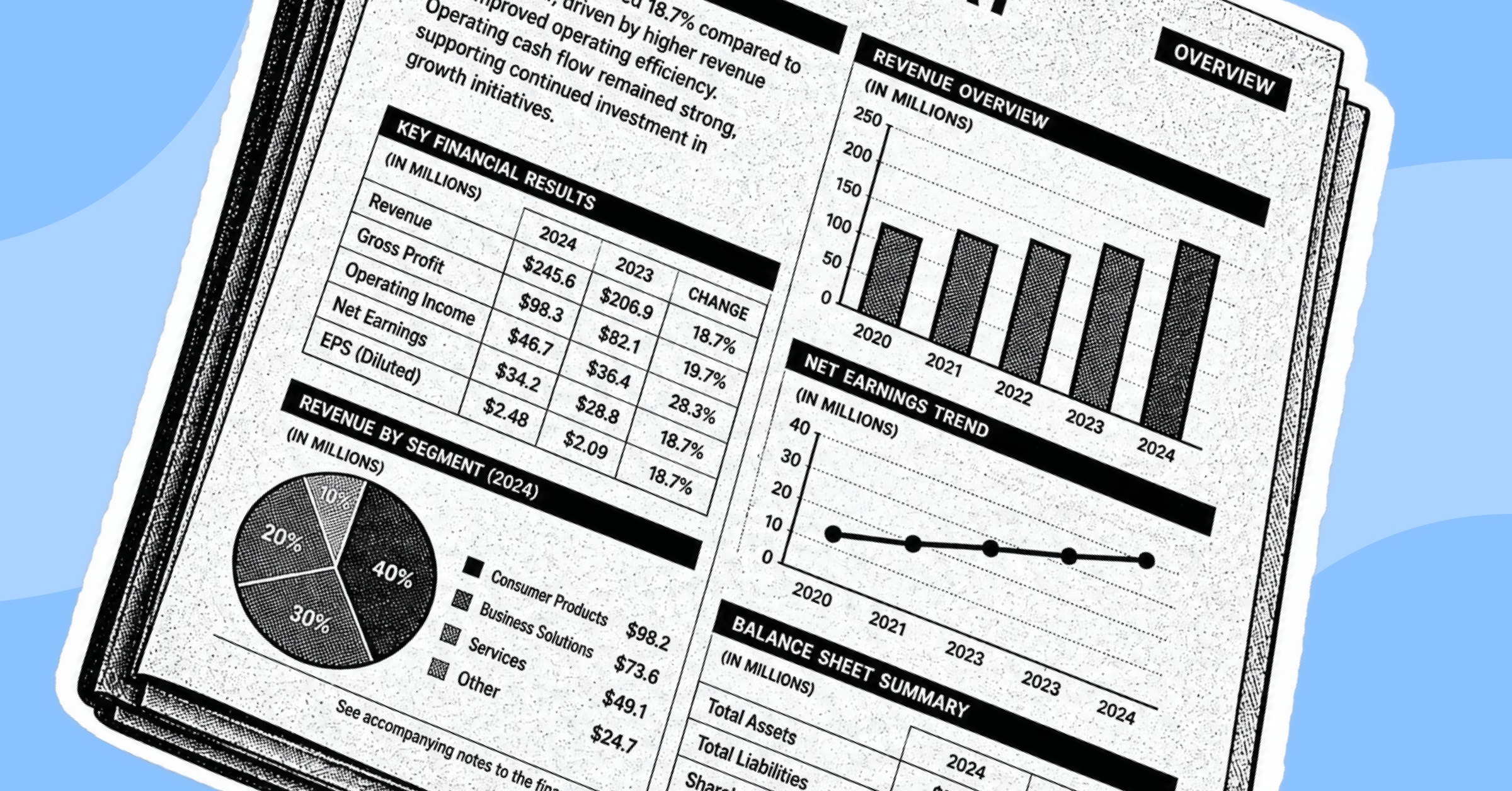
Record to report automation software automates the accounting close cycle, from account reconciliation and transaction matching to journal entries and financial reporting. This guide ranks the eight best Record to Report platforms for 2026 based on official product capabilities, verified G2, Capterra, and Gartner Peer Insights reviews, and company-size fit. We cover reconciliation automation, continuous close, and journal entry automation, and how each platform connects to the broader Order-to-Cash (O2C) and Procure-to-Pay (P2P) finance stack.
Which Platform Fits Your Business?
What Is Record-to-Report Software?
Record-to-Report (R2R) software automates the accounting close: account and subledger reconciliation, transaction matching, journal entry posting, and financial reporting. It replaces manual spreadsheet reconciliation with workflow automation, audit trails, and controls mapped to GAAP, IFRS, and SOX. R2R sits alongside Order-to-Cash (O2C) and Procure-to-Pay (P2P) as one of the three core finance operations pillars.
How We Ranked
We spent 20+ hours researching this list, evaluating each vendor's official website for feature depth and cross-referencing verified reviews on G2, Capterra, and Gartner Peer Insights against typical R2R buying criteria. Company-size fit and documented capability gaps, such as which platforms lack unified O2C, P2P, and R2R coverage, were weighed alongside verified ratings rather than pricing or implementation speed.
Evaluation Criteria
Side-by-Side Quick Comparison
7 Best Record-to-Report Automation Software for 2026
1. BlackLine
Best For
Large, multi-entity enterprises with dedicated finance-systems administrators and the budget for a multi-month platform rollout.
Overview
BlackLine is a cloud-based financial operations management platform built around its Studio360 data platform and Verity AI layer. It unifies account reconciliation, financial close management, transaction matching, journal entry automation, and intercompany accounting. The platform is designed to give finance teams accountability and visibility across the entire close cycle.
Key Features
- Account Reconciliation: Automates balance matching and flags discrepancies across general ledger accounts.
- Financial Close Management: Organizes close tasks, owners, and deadlines with real-time status tracking.
- Transaction Matching: Handles high-volume matching across bank statements, subledgers, and accounts.
- Journal Entries: Creates, validates, routes, and posts journal entries with built-in controls.
- Intercompany Accounting & Consolidation: Manages transactions and eliminations across subsidiaries and entities.
- Compliance and Controls: Provides certification workflows and documentation built for auditor review.
Pros
- Strong end-to-end close automation: "BlackLine automates reconciliations and repetitive accounting processes, giving our team an intuitive interface and checklist to manage the entire close."
- Reduces manual reconciliation errors: "The reconciliation process is efficient and reduces manual errors compared to spreadsheets."
- Real-time close visibility: "We use the task module to track month-end activities, assign ownership, and monitor close progress in real time."
Source: G2
Cons
- Steep learning curve and long implementation: "BlackLine can feel complex at first, requiring significant setup and user training. Some configurations take time, and performance may slow with very large datasets."
- Limited native reporting: "Built-in reporting dashboards are limited, and we frequently need external tools for more advanced analytics."
Source: G2
Pricing
Custom pricing based on entity count and modules; BlackLine does not publish list pricing and requires a sales consultation.
2. Bluecopa
Best For
Mid-market to enterprise finance teams that want to unify reconciliation, continuous close, and Record-to-Report on a single AI-native data layer rather than stitching together separate O2C, P2P, and close tools.
Overview
Bluecopa's Record-to-Report platform delivers real-time financial visibility with continuous close automation, eliminating month-end chaos, manual reconciliations, and surprise adjustments. It is powered by SamyxAI, a family of purpose-built foundation models automating transaction matching, reconciliation, journal entries, and variance analysis at enterprise scale. Named customers include Yatra, which achieved 7x faster AR reconciliation, an 80% reduction in manual reconciliation work, and a 90% faster month-end close, and HackerEarth, which reported a 60% reduction in reconciliation errors.
Key Features
- Samyx Recon: Multi-field fuzzy and deterministic hybrid matching, processing 5M+ records per hour at 97-99% accuracy.
- Samyx Extract: PDF and spreadsheet extraction with page-level and line-level provenance for audit traceability.
- Samyx Build: Policy-as-code gates for approvals, thresholds, segregation of duties, and risk checks.
- Samyx Narrate: AI-native variance analysis and trend insights for flux review.
- Continuous Close Automation: Ongoing reconciliation and journal posting rather than a single end-of-month event.
- 200+ Integrations: Native connectivity to SAP, Oracle NetSuite, Sage Intacct, QuickBooks, Xero, Snowflake, and more.
Pros
- Unified data layer across finance operations: "Bluecopa is the only platform that connects our reconciliation and close data to what's happening upstream in collections and payments, which we couldn't get from point solutions."
- High reconciliation accuracy at scale: "The AI matching engine handles volumes and edge cases our previous manual process couldn't keep up with."
Source: G2
Cons
- Bluecopa has a growing review base with no reported negatives to date on G2, Capterra, or Gartner Peer Insights.
Pricing
Custom pricing based on transaction volume and modules; contact sales.
3. FloQast
Best For
Accounting teams at mid-market to enterprise companies that want to automate close and reconciliation without replacing their existing ERP or spreadsheet-based workflows.
Overview
FloQast is an accounting transformation platform built by accountants, used by more than 3,000 global accounting teams. It centers on a collaborative close checklist, reconciliation management, and an operations dashboard. The platform gives finance leaders visibility from accounts payable through SEC reporting.
Key Features
- Close Management: Task status updates, collaborative close checklist, and organized review notes.
- Reconciliation Management: Centralized view of account-level reconciliation status with automated transaction matching.
- Ops Dashboard: Shows the status of all accounting operations for improved workload visibility.
- AI Agents: Intelligent automation for reconciliations, flux analysis, and journal entries.
- Flux Analysis: Automated variance detection against budget and prior period.
- Audit Trail Reporting: Tracks every checklist and reconciliation change for auditor review.
Pros
- Fast adoption with existing systems: "Its seamless integration with existing accounting systems made the close process much more efficient and streamlined."
- Real-time reconciliation visibility: "The ability to reconcile accounts with daily sync and receive notification emails when reconciliations change is a fantastic feature."
- Meaningfully shorter close: "We went from barely making it by the last day of the month to closing in 15 business days."
Source: Capterra
Cons
- Costly for smaller teams: "Pricing can be costly for small businesses relative to the feature set we actually use."
- Limited task segregation: "Task separation and role-based permissions are more limited than we expected."
Source: Capterra
Pricing
Custom pricing based on user count and modules; not publicly listed.
4. Trintech (Cadency & Adra)
Best For
Enterprise finance organizations that need a dedicated, high-volume transaction matching and reconciliation engine as the core of their Record to Report process.
Overview
Trintech's two flagship platforms, Cadency and Adra, deliver account reconciliation, financial close automation, and compliance workflows. Cadency Match performs high-volume transaction reconciliation as part of a comprehensive R2R process. Adra is the cloud-based edition of the same reconciliation and close capability aimed at mid-to-large finance teams.
Key Features
- Cadency Match / Adra Matcher: High-volume transaction matching and reconciliation.
- Adra Balancer: Automated account reconciliation workflows.
- Adra Task Manager: Financial task workflows and close controls.
- Adra Analytics: Reporting and dashboarding on close and reconciliation status.
- Journal Entry Automation: Structured journal creation, review, and posting.
- Risk and Compliance Management: Built-in controls mapped to SOX and audit requirements.
Pros
- Reliable high-volume matching: "Cadency handles our transaction matching volume reliably even during peak close periods."
- Strong compliance and audit support: "The audit trail and compliance documentation make our SOX reviews far less painful."
Source: G2
Cons
- Interface feels dated in places: "Some parts of the interface feel less modern compared to newer close platforms."
- Configuration requires vendor support: "Making changes to workflows often requires reaching out to Trintech support rather than self-service configuration."
Source: G2
Pricing
Custom pricing based on entity count and product edition (Cadency vs. Adra); not publicly listed.
5. OneStream
Best For
Large enterprises that want Record-to-Report, financial consolidation, and planning unified on a single EPM platform rather than a standalone close tool.
Overview
OneStream is a unified finance platform combining financial consolidation, close management, reporting, and planning. It was recognized as Exemplary with the highest overall Record-to-Report rating in the 2025 ISG Buyers Guide. IDC named OneStream a Leader in its Record-to-Report Vendor Assessment, citing strong data integration, workflow, and audit visibility.
Key Features
- Financial Consolidation: Automated multi-entity, multi-currency consolidation with elimination rules.
- Close Management: Task orchestration and status tracking across the close calendar.
- Account Reconciliation: Automated matching and certification workflows.
- Extensible Dimensionality: Flexible modeling that adapts to complex organizational structures.
- Reporting & Analytics: Built-in dashboards spanning financial and operational data.
- AI-Enabled Insights: Embedded machine learning for anomaly detection and forecasting support.
Pros
- Replaces fragmented EPM stacks: "OneStream let us retire three separate consolidation and reporting tools and run everything on one platform."
- Strong audit and data integration visibility: "The audit trail across consolidation and close gives our controllership team the visibility they need for SOX."
Source: G2
Cons
- Steep learning curve for non-technical users: "The platform is powerful, but non-technical finance users face a real learning curve without dedicated admin support."
Source: Gartner Peer
Pricing
Custom pricing based on modules and entity count; not publicly listed.
6. Redwood Finance Automation
Best For
Enterprises running SAP or Oracle at scale that need deep orchestration across finance workflows, not just a close checklist.
Overview
Redwood Finance Automation is a cloud-based platform that manages cash flow, financial close, and Record-to-Report workflows through a unified orchestration engine. Its Record-to-Report capabilities automatically prepare balance sheets and update journal entries, including accruals, reserves, and provisions. It also identifies counterparty and calculation errors in reconciliation entries.
Key Features
- Automated Journal Entry Workflows: Handles accruals, reserves, and provisions automatically.
- Reconciliation Error Detection: Identifies counterparty mismatches and calculation errors.
- Workflow Orchestration: Links review cycles, approvals, and metadata management across tasks.
- ERP-Native Integration: Deep connectivity built for SAP and Oracle environments.
- Audit and Log Management: Full activity logging for compliance review.
- Centralized Dashboard: Single view across finance automation workflows.
Pros
- Reliable at high workload volumes: "Redwood manages complex job dependencies reliably, even at very high transaction volumes."
- Strong support quality: "Support has been consistently responsive whenever we've run into scheduling or configuration issues."
Source: G2
Cons
- Steep learning curve: "The learning curve for new team members is steep, especially for those without a workflow orchestration background."
Source: G2
Pricing
Custom pricing based on workload volume and modules; not publicly listed.
7. SkyStem (ART)
Best For
Lean, lower-midmarket accounting teams that need a dedicated, easy-to-adopt balance sheet reconciliation and close tool without a full R2R platform.
Overview
ART by SkyStem is account reconciliation and financial close software that streamlines and automates the month-end close process for finance teams. Its reconciliation module reduces monthly reconciliation effort by up to 40% through built-in matching algorithms. Its Task Master module automates the close checklist and Flux Analysis highlights accounts exceeding defined variance thresholds.
Key Features
- Automated Balance Sheet Reconciliations: Reduces manual reconciliation effort with built-in matching logic.
- Task Master: Automates assignment, tracking, and completion of close checklist items.
- Flux Analysis: Flags account fluctuations exceeding defined thresholds.
- Electronic Document Management: Centralizes supporting documentation for each reconciliation.
- Audit Trail: Detailed tracking for internal controls and external audit review.
- ERP-Agnostic Design: Works alongside any general ledger or ERP system.
Pros
- Simple and easy to adopt: "The simplicity of ART is what stood out. It isn't overly complicated, and our team was reconciling accounts within weeks."
- Strong reporting for reconciliation status: "ART has excellent reporting capabilities and customizable quality control features for our reconciliation process."
Source: Capterra
Cons
- SkyStem (ART) does not have a verified G2 profile.
Pricing
Custom pricing; not publicly disclosed on the official site.
How to Choose the Right Record-to-Report Platform
The right choice depends on where your close actually breaks down today. If reconciliation volume and accuracy are the bottleneck, prioritize Trintech, Bluecopa, or BlackLine. If your close process is disorganized more than it is under-automated, FloQast's checklist-first approach solves that faster than a heavier platform. If you're consolidating multiple entities and need planning alongside close, OneStream or Fluence fit that scope. If your finance stack is already SAP or Oracle and workflow orchestration is the constraint, Redwood is purpose-built for that. If you need reconciliation and close connected to upstream O2C and P2P data rather than siloed, Bluecopa is the only platform on this list built that way.
Common Mistakes When Choosing Record-to-Report Software
Many finance teams choose a platform based on brand recognition alone, without validating that its reconciliation depth actually matches their transaction volume and entity complexity. Others underestimate implementation timelines, particularly with enterprise platforms like BlackLine, OneStream, or Redwood, which can take three to six months to fully deploy. A common mistake is evaluating R2R software in isolation from the upstream Order-to-Cash and Procure-to-Pay processes that feed it, which creates data silos even after automating the close itself. Teams also frequently skip reference calls with existing customers of a similar size, relying instead on vendor demos that don't reflect real-world configuration effort.
Why Bluecopa Is the Right Choice for Unified Finance Operations
Bluecopa fits best for finance teams that want Record-to-Report automation connected to what happens upstream in Order-to-Cash and Procure-to-Pay, rather than running close automation as an isolated system. Its AI-native SamyxAI engine handles reconciliation, journal entries, and variance analysis at high accuracy and speed. Bluecopa's 4.8/5 G2 rating is the highest in this category, and no single competitor on this list unifies O2C, P2P, and R2R on one data layer the way Bluecopa does.
Where Bluecopa does not fit: it is not built for treasury management, FP&A planning and budgeting, statutory financial consolidation, or full procurement sourcing and supplier management. Enterprises that need those functions alongside Record-to-Report should evaluate OneStream (for consolidation and planning) or Redwood (for SAP/Oracle-native orchestration) instead, and may still choose Bluecopa specifically for the O2C, P2P, and R2R layer of their stack.
Bottom Line
If you run a large, multi-entity enterprise with a dedicated systems team, choose BlackLine. If you want reconciliation and close unified with your O2C and P2P operations on one AI-native platform, choose Bluecopa. If you want the fastest adoption for an accounting team already using spreadsheets, choose FloQast. If transaction matching volume and audit rigor are your top priority, choose Trintech. If you need consolidation, planning, and Record-to-Report together, choose OneStream. If you're SAP or Oracle-heavy and need deep orchestration, choose Redwood. If you're a high-growth midmarket company that needs enterprise consolidation without enterprise pricing, choose Fluence. If you're a lean team that just needs reconciliation off spreadsheets, choose SkyStem.
FAQ
1. What is Record-to-Report (R2R) automation software?
R2R software automates account reconciliation, journal entries, and financial reporting, replacing manual GAAP, IFRS, and SOX-mapped close processes.
2. What is the difference between Record-to-Report and Order-to-Cash?
R2R covers close and reporting; Order-to-Cash covers revenue collection. Bluecopa unifies both with Procure-to-Pay on one layer.
3. How long does it take to implement R2R automation software?
Enterprise platforms like BlackLine and OneStream take 3-6 months; FloQast and Bluecopa often live within weeks.
4. Which Record-to-Report software has the highest G2 rating in 2026?
Bluecopa holds the highest G2 rating in the R2R category at 4.8/5, ahead of FloQast and Redwood, both above 4.6/5.
5. Does Record-to-Report software help with SOX compliance?
Yes. BlackLine, Trintech, and OneStream build segregation-of-duties controls and audit trails into SOX certification workflows.
6. Can Record-to-Report software integrate with SAP or Oracle NetSuite?
BlackLine, Redwood, OneStream, and Bluecopa all offer native SAP S/4HANA and Oracle NetSuite integrations, though depth varies by vendor.
7. Is Record-to-Report automation only for large enterprises?
No. FloQast, SkyStem, and Fluence Technologies serve midmarket and lower-midmarket teams; BlackLine and OneStream target enterprise scale.
8. What ROI can finance teams expect from R2R automation?
Finance teams report 40-55% faster close cycles with AI-driven R2R automation, plus fewer reconciliation errors and lower audit prep time.
Editorial Note
Last Reviewed: July 2026. This article is maintained by the Bluecopa editorial team and reviewed periodically as vendor features, pricing, and review data change.