
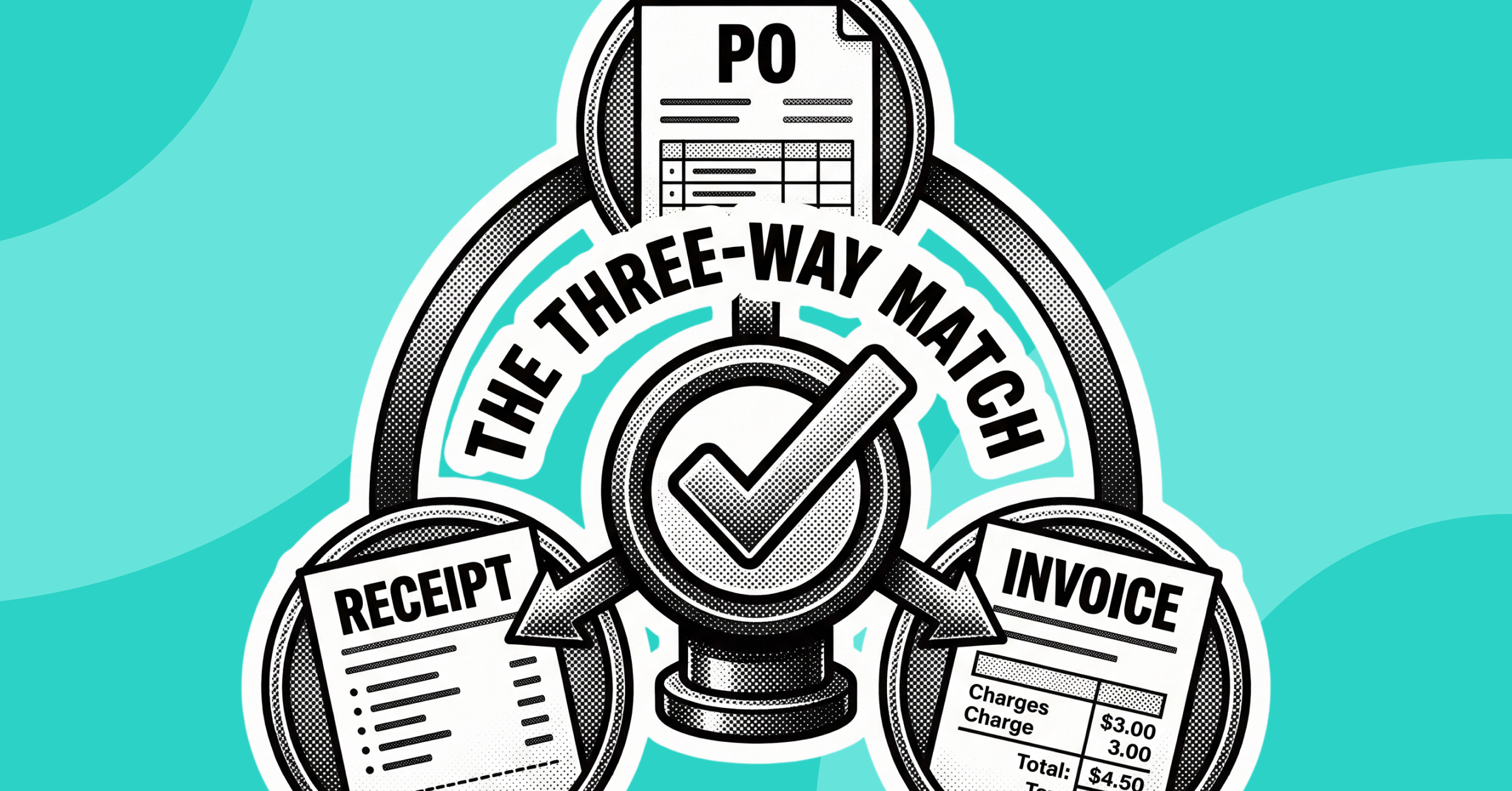
Comparing the top 9 best 3-way matching software platforms for accounts payable teams in 2026 includes 1. Stampli, 2. HighRadius, 3. Tipalti, 4. Bluecopa, 5. Basware, 6. Coupa, 7. SAP Ariba, 8. Medius, and 9. ProcureDesk. Each automatically compares a purchase order, goods receipt, and vendor invoice before payment goes out, catching quantity, price, and quality mismatches that manual review often misses. This list ranks all nine on official product capabilities, matching depth, and real company-size fit.
Quick Answer: Best 3-Way Matching Software Ranked
- 1. Stampli: AI-led invoice coding and line-level PO matching
- 2. HighRadius: Touchless matching at high-volume enterprise scale
- 3. Tipalti: Global, multi-entity PO and payment matching
- 4. Bluecopa: Matching unified with reconciliation, O2C, and close
- 5. Basware: Matching across incomplete or misaligned PO data
- 6. Coupa: Tolerance-based matching inside a full procurement suite
- 7. SAP Ariba: Network-based matching for SAP-centric enterprises
- 8. Medius: Standardized multi-way matching for mid-market AP
- 9. ProcureDesk: Budget-linked 3-way matching for growing mid-market teams
This article compares the 9 three-way matching software platforms finance teams evaluate most often in 2026, ranked on official product capabilities, real company-size fit, and pricing transparency, not marketing claims. Getting this choice wrong is expensive twice over: once in the implementation effort of rolling out a new matching workflow, and again every month invoices keep clearing on tolerance rules that were never configured for your actual purchasing patterns.
Who Needs 3-Way Matching Software?
Any finance team still comparing purchase orders, receiving reports, and invoices by hand eventually hits the same wall: transaction volume outgrows manual review long before headcount catches up. The list below maps common buyer profiles to the pain point driving the search and the capability they actually need.
- Mid-market finance team on NetSuite or Sage Intacct: Manual line-item matching eats up AP staff hours every close cycle. Needs automated, line-level PO matching with configurable tolerance thresholds.
- Global company purchasing across multiple entities and currencies: Matching logic and approval routing don't scale across legal entities. Needs multi-entity, multi-currency PO and payment matching in one system.
- Enterprise with reconciliation obligations beyond AP alone: Matched invoice data still has to be manually reconciled again against vendor statements and the GL. Needs 3-way matching that feeds directly into downstream reconciliation and close.
- High-volume AP team processing thousands of invoices monthly: Duplicate payments and missed exceptions slip through manual review. Needs AI-driven exception detection with minimal manual touch.
- Large enterprise with formal procurement workflows: Multi-line POs and complex contracts make matching error-prone at scale. Needs tolerance-based matching tied to a full procurement suite.
- SAP-centric enterprise: Invoice data is siloed from the existing SAP procurement network. Needs native, network-based matching inside the SAP ecosystem.
- Growing mid-market company (100-1,000 employees): Spend controls and month-end close both suffer without a structured PO-to-invoice trail. Needs 3-way matching tied directly to budget checks and close speed.
A platform like Bluecopa addresses the reconciliation gap directly by running 3-way matching on the same AI-native data layer used for vendor statement and subledger reconciliation, so AP teams aren't matching invoices in one tool and closing the books in another.
What Is 3-Way Matching Software?
3-way matching software automatically compares a purchase order, goods receipt, and vendor invoice to confirm quantities, prices, and terms agree before payment is approved. It replaces manual, line-by-line comparison with automated rules or AI models that flag discrepancies, duplicate invoices, and pricing errors before they reach the general ledger. Per Gartner's 2025 finance AI survey, accounts payable automation, including invoice matching, is one of the most widely adopted AI use cases among finance organizations already using AI. That gap is real money: Ardent Partners' 2025 State of ePayables report puts the average manually processed invoice at $9.84, against $2.65 for Best-in-Class, automated AP teams.
How We Ranked
I evaluated each platform on its official website for feature depth and matching sophistication, then checked verified reviews on G2, Capterra, and Gartner Peer Insights for real-world sentiment specific to purchase order and invoice matching, not AP automation generally. I also weighed company-size fit, since a matching engine built for enterprise procurement complexity performs very differently for a 150-person team on QuickBooks.
I ranked each platform against six criteria that matter most for a 3-way matching evaluation specifically:
- Matching Depth and Automation Maturity: Whether the platform runs genuine AI-driven line-level matching with configurable tolerances, or just digitizes header-level comparison without reducing manual exception review.
- ERP and Procurement System Integration: Whether the platform connects at the transaction level, with drill-through into the original PO and receipt, or only syncs summary totals back to the ERP.
- Ease of Implementation and Use: Typical rollout timelines, whether dedicated admins or consultants are required, and how quickly an AP team sees matching accuracy improve.
- Scalability: Whether the platform handles growing invoice volume, additional entities, and multi-currency purchasing without a costlier tier or a re-implementation.
- Security and Compliance: SOC 2 certification, audit trail depth on every match and override, and role-based approval controls.
- Pricing Structure and Transparency: Whether pricing is published or quote-only, how predictably it scales with invoice volume and entity count, and whether hidden implementation or per-module fees are common.
Side-by-Side Comparison: Best 3-Way Match Software at a Glance
*HighRadius's 4.3/5 rating reflects its broader "HighRadius Corporation" G2 listing, which spans accounts receivable and treasury products rather than an AP-matching-specific listing; check Gartner Peer Insights' dedicated AP Automation listing for a closer match. Bluecopa's rating rests on 26 G2 reviews and ProcureDesk's on 47, both thin review bases relative to the other platforms on this list. Verify current figures before publishing. Ratings reflect research conducted in August 2026.
9 Best 3-Way Match Software Platforms Reviewed in Detail
1. Stampli
Best For: Mid-market to enterprise finance teams that want to scale procurement, AP, and vendor management without adding headcount.
Overview: Stampli centers invoice processing around AI-led coding and matching rather than a rigid workflow. Its AI, Billy the Bot, performs an average of 87% of finance work across more than 2,700 unique data fields, learning each company's coding and approval patterns over time. Procurement, payments, and vendor management run as add-on modules on the same platform.
Key Features:
- AI Line-Level PO Matching: Matches invoice line items against purchase orders automatically, not just header totals.
- Automated Invoice Capture: Extracts header and line-item data on receipt without manual entry.
- Predictive GL Coding: Suggests coding automatically based on historical patterns.
- Duplicate Detection: Flags duplicate invoices before they reach the approval queue.
- Configurable Approval Workflows: Routes invoices through role-based approval chains.
- Centralized Vendor Communication: Keeps internal and external vendor messages inside each invoice record.
- Complete Audit Trail: Documents every action taken on an invoice, immutably.
- 13+ ERP Integrations: Connects to Oracle NetSuite, SAP S/4HANA, Microsoft Dynamics 365, Sage Intacct, and QuickBooks.
Pros:
- Fast, intuitive invoice review: Approving or declining invoices inside the platform's interface is described as extremely user-friendly and efficient.
- Accurate predictive coding: GL coding predictions cut down manual data entry and correction time.
- Responsive customer support: Support is consistently described as prompt and helpful during onboarding and daily use.
- Clear pipeline visibility: Pending, overdue, and in-process invoices are easy to track throughout the approval cycle.
Source: G2
Cons:
- Slow multi-line coding on complex invoices: Splitting an invoice into multiple coding lines can be slow and occasionally times out, forcing a restart.
- Limited bulk-editing tools: Editing vendor names or batch-processing invoices lacks bulk options some AP teams expect.
- Restrictive user role limitations: Some approval bottlenecks stem from limited flexibility in role configuration.
Source: G2
Pricing: Stampli does not publish pricing on its official site and uses a custom quote model scoped to entity count, vendor volume, and selected modules (AP, Procurement, Payments, Vendor Management).
2. HighRadius
Best For: Large, high-volume enterprise AP teams that want matching handled almost entirely without human touch.
Overview: HighRadius positions its invoice matching software around a dedicated 3-Way and 2-Way Matching Agent, part of a broader suite of 12+ AI agents covering invoice capture, non-PO coding, and exception management. The platform is built specifically for enterprise-scale AP volume rather than lighter mid-market use cases.
Key Features:
- 3-Way and 2-Way Matching Agent: Runs intelligent line-item matching across invoices, POs, and goods receipts with configurable tolerance rules for auto-approval.
- Invoice Capture Agent: Extracts header and line-level data with continuous AI learning to reduce recurring exceptions.
- Non-PO GL Coding Agent: Assigns account codes using AI and historical coding patterns for invoices without a PO.
- Context-Rich Exception Routing: Surfaces PO and receipt data directly alongside flagged discrepancies for faster resolution.
- Real-Time ERP Sync: Keeps invoice and matching status synchronized with the connected ERP continuously.
- AI Root-Cause Analysis: Assists reviewers in identifying why an exception occurred, not just that one exists.
Note on review data: HighRadius's G2 presence for this evaluation reflects the broader "HighRadius Corporation" listing (4.3/5), which spans accounts receivable and treasury products, not an AP-matching-specific product line. Buyers should also check Gartner Peer Insights' dedicated Accounts Payable Automation listing for feedback specific to invoice matching.
Pros:
- Meaningful automation gains: Automation capabilities are frequently credited with reducing manual reconciliation and AP tasks.
- Improved processing organization: Users note better organization and efficiency across collections and AP workflows.
- Strong time-saving impact: Payment management and visibility features consistently save processing time.
Source: G2
Cons:
- Inconsistent customer support response times: Escalation processes are described as slow and occasionally ineffective.
- Search and remittance limitations: Search speed and remittance format recognition create friction for some users.
- Complex initial setup: Implementation and configuration require a meaningful learning curve.
Source: G2
Pricing: HighRadius does not publish pricing and uses a custom quote model based on invoice volume and business scale. Implementation typically runs 8-12 weeks depending on deployment complexity.
3. Tipalti
Best For: Mid-market companies across AdTech, e-commerce, healthcare, and software that need global, multi-entity PO matching and mass payments in one system.
Overview: Tipalti ties purchase order matching directly to global payment execution, supporting 200+ countries and 120 currencies through 50+ payment methods. Multi-entity payables run from a single system, with personalized PO policies determining which invoices require matching at all.
Key Features:
- Personalized PO Policies: Rules-based configuration determines which invoices require PO-backed matching, filtered by supplier or bill amount.
- Two-Way and Three-Way Matching: Supports header and line-level matching with currency and unit alignment across multiple POs against one invoice.
- Configurable Tolerance Ranges: Sets amount or percentage-based thresholds instead of manually reviewing every mismatch.
- Color-Coded Exception Interface: Highlights discrepancies visually with email-based approval routing.
- Global Mass Payments: Executes payments across 200+ countries in 120 currencies through 50+ payment methods.
- Multi-Jurisdictional Tax Compliance: Validates tax IDs and applies jurisdiction-specific controls automatically.
Pros:
- Fewer duplicate payments: Automated matching has lowered duplicate payment incidents for AP teams.
- Higher invoice throughput per headcount: Teams process more invoices at the same staffing level.
- Smooth onboarding experience: Setup and integration are described as seamless with a helpful support team.
Source: G2
Cons:
- Sync gaps for outside payments: Payments made outside Tipalti don't always sync back, creating aging report discrepancies.
- ERP integration issues: Some implementations have produced duplicated invoices due to sync problems.
- Reporting limitations: Built-in reporting can limit insight and complicate tracking and compliance work.
Source: G2
Pricing: According to Vendr, the median annual contract for Tipalti is approximately $15,384, with small deployments running $15,000-$25,000 annually and enterprise deployments reaching $100,000-$300,000+ once per-transaction and multi-entity fees are included.
4. Bluecopa
Best For: Mid-market to enterprise finance teams that need 3-way matching connected to vendor statement reconciliation, subledger-to-GL tie-out, and continuous close, not just invoice-to-payment matching in isolation.
Overview: Bluecopa is an AI-native finance operations platform that unifies Order-to-Cash, Procure-to-Pay, and Record-to-Report on a single data layer. Its Samyx Extract and Samyx Recon agents capture invoice, PO, and receipt data and run 3-way matching at 99%+ accuracy inside Bluecopa's Procure-to-Pay solution, then carry that matched data straight into vendor reconciliation and month-end close rather than stopping at approval.
Key Features:
- Samyx Extract Data Capture: Pulls line-level and page-level PO, receipt, and invoice data with provenance tracking.
- AI-Native 3-Way Matching: Runs automated purchase order, goods receipt, and invoice matching at 99%+ accuracy.
- Matching Tied to Reconciliation: Feeds matched invoice data directly into ongoing vendor statement and subledger reconciliation.
- Policy-as-Code Controls: Enforces approval thresholds and segregation-of-duties gates through Samyx Build.
- Real-Time AP Pipeline Visibility: Surfaces invoice and matching status across the entire AP process as it happens.
- 200+ System Integrations: Connects natively to SAP, Oracle NetSuite, Sage Intacct, QuickBooks, and Xero.
Note on review data: Bluecopa's G2 rating of 4.8/5 rests on 26 reviews, a materially smaller sample than the 400-plus review bases behind several platforms on this list. The rating direction is consistent, but buyers evaluating at enterprise scale should ask for reconciliation-specific customer references alongside the review score.
Pros:
- Consolidated finance operations: Brings matching, reconciliation, and close into one system instead of several disconnected tools.
- Hands-on onboarding support: Customer support is described as friendly and actively engaged during setup and daily use.
- Meaningful reconciliation time savings: Automation reduces time spent on data processing and cross-team reconciliation work.
Source: G2
Cons:
- Occasional performance slowness: Some users report slower task visibility and dashboard performance during peak load.
- Learning curve during rollout: New users need time to become fully proficient with the platform.
- Reporting depth still developing: Some users want more diverse, configurable reporting options.
Source: G2
Pricing: Custom pricing, scoped to invoice volume, entity count, and integration requirements. Book a demo for a quote specific to your AP volume.
5. Basware
Best For: Large global enterprises with multi-entity purchasing structures and inconsistent PO data quality across regions.
Overview: Basware automates matching across "any combination of invoices, POs, goods receipts, quality checks, and contracts" at the line or header level, using recognition logic to calculate the best match even when source data is incomplete. Non-PO recurring invoices route through separate scheduled or budget-based matching without needing a linked PO.
Key Features:
- Flexible Multi-Document Matching: Matches invoices against POs, receipts, quality checks, and contracts in any combination.
- Incomplete-Data Matching Logic: Calculates optimal matching scenarios when PO or receipt data doesn't align perfectly.
- Non-PO Automation: Automates recurring invoices like rent and utilities through scheduled or amount-based rules.
- SmartCoding: Applies machine learning to propose invoice coding for non-PO spend based on historical patterns.
- Smart Routing: Routes exceptions to the correct approval workflow automatically based on invoice data.
Pros:
- Easy day-to-day use: The platform is described as exceptionally easy to use for routine invoice processing.
- Strong touchless processing: Automation meaningfully reduces manual effort across high invoice volumes.
Source: G2
Cons:
- Slow load times: Users report frustration with page and dashboard loading speed.
- Unintuitive workflows for simple tasks: Some routine actions require more steps than expected.
- Support response delays: Issue resolution can take longer than users expect.
Source: G2
Pricing: Basware does not publish pricing and uses a custom subscription model scoped to organization size, module selection, and deployment scale across the enterprise.
6. Coupa
Best For: Large enterprises with formal procurement workflows processing hundreds to hundreds of thousands of invoices monthly.
Overview: Coupa's invoice management runs two-way and three-way matching with configurable tolerance levels inside a full business spend management suite, using Rossum AI to ingest and normalize invoices from any format before matching. Eurofins automated 1.5 million invoices annually across 21 countries using the platform, and Deliveroo achieved 100% supplier adoption across 1,700+ vendors.
Key Features:
- Tolerance-Based Matching: Applies two-way and three-way matching with configurable thresholds that limit manual review to real exceptions.
- AI Document Intelligence: Ingests multipage invoices in any format or language, normalizing line-level data to ERP-ready output.
- Automated PO Matching: Matches invoices to approved POs with configurable tolerances and auto-approval.
- Duplicate and Error Catching: Flags duplicate invoices and data errors before they enter the approval workflow.
- Multilevel Compliance Validation: Validates country-specific invoicing requirements automatically before issuance.
Pros:
- Streamlined approval workflows: Purchase requests and approvals are simple to manage across teams.
- Strong automation depth: Automation meaningfully reduces manual work in invoice and expense processing.
Source: G2
Cons:
- Steep configuration learning curve: Backend setup requires significant training and support.
- Dated interface design: Some users describe the UI as outdated relative to newer platforms.
- Weaker supplier portal experience: Vendors submitting simple invoices find the portal less intuitive.
Source: G2
Pricing: Coupa does not publish pricing. According to Vendr, the median annual contract value is approximately $95,000, ranging from roughly $20,000 for smaller deployments to well over $300,000 for large enterprise rollouts.
7. SAP Ariba
Best For: Enterprises already standardized on SAP that want matching enforced natively across a global supplier network.
Overview: SAP Ariba validates invoices through two-way or three-way matching against the PO, goods receipt, or contract, then routes exceptions through configurable, network-based business rules. The platform supports invoice receipt across paper, fax, email, PDF, and e-invoice formats, with compliance enforcement spanning 190+ countries.
Key Features:
- Two-Way and Three-Way Matching: Compares PO, goods receipt, or contract data against the invoice automatically.
- Automated Exception Handling: Applies tolerance thresholds and network-based rules to route mismatches.
- Multi-Format Invoice Receipt: Accepts paper, fax, email, PDF, and e-invoice submissions.
- Configurable Approval Routing: Automates escalation and delegation across approval chains.
- Global Compliance Coverage: Supports 190+ countries and 70+ currencies with up to 40 configurable business rules per country.
Pros:
- Centralized procurement visibility: Simplifies procurement processes and improves spend transparency.
- Reliable time savings: Automation helps teams manage more spend with less manual effort.
Source: G2
Cons:
- Complex, unintuitive interface: New users face a steep learning curve navigating the platform.
- Difficult non-SAP integration: Connecting to systems outside the SAP ecosystem introduces friction.
- High implementation cost: Setup complexity makes the platform less suitable for smaller organizations.
Source: G2
Pricing: SAP Ariba prices on a documents-per-year entitlement model with contract terms typically running 3-36 months and auto-renewal. SAP does not publish list rates; pricing requires a custom quote scoped to document volume and modules.
8. Medius
Best For: Mid-market to enterprise finance teams that want standardized, multi-way matching without the configuration overhead of a full procurement suite.
Overview: Medius runs multi-way invoice matching through two tiers: AP Essentials, covering core matching, prepayments, and recurring invoices, and AP 360, which adds an AI copilot, supplier conversations, and fraud and risk detection for organizations with greater scale or complexity.
Key Features:
- Multi-Way Matching: Matches invoices against POs and receipts with configurable rules.
- Prepayment and Recurring Invoice Handling: Automates matching logic for prepayments and scheduled recurring invoices.
- AI Copilot (AP 360): Assists with exception review and invoice queries through a conversational interface.
- Fraud and Risk Detection (AP 360): Flags anomalous invoices and supplier activity for review.
- Supplier Conversations: Centralizes vendor communication around disputed or held invoices.
Pros:
- Effective AP task automation: Automates tedious AP tasks with clear spending visibility.
- Intuitive for approvers and end-users: The interface is consistently described as easy to navigate.
Source: G2
Cons:
- Challenging initial setup: Integration and configuration carry a steep learning curve for new teams.
- Support response delays: Multiple users note slower-than-expected support responses.
- Cost concerns: Some users describe the platform as expensive relative to comparable tools.
Source: G2
Pricing: Medius does not publish pricing. AP Essentials and AP 360 are both custom-quoted, scoped to entity count (1 entity included in AP Essentials, 3 in AP 360) and additional modules like Payments, Procurement, or Sourcing.
9. ProcureDesk
Best For: Growing mid-market companies (100-1,000 employees) on NetSuite, Sage Intacct, or Business Central that want 3-way matching tied directly to spend control and close speed.
Overview: ProcureDesk automates the full purchase-to-pay cycle so that "every purchase starts with a PO, gets 3-way matched, and is coded by AI before the invoice hits your desk." The platform emphasizes real-time budget validation and audit trail capture from request through receipt, positioning itself around measurably faster month-end close.
Key Features:
- Automated 3-Way Matching: Matches purchase orders, goods receipts, and invoices to prevent unmatched spend and duplicate payments.
- Real-Time Budget Validation: Checks spend against budget at the request stage, before a PO is even issued.
- Multi-Level Approval Routing: Routes purchase requests through configurable approval chains before PO issuance.
- Punchout Catalog Integration: Connects to 200+ supplier catalogs for direct ordering.
- End-to-End Audit Trail: Captures the full request-to-invoice lifecycle for every transaction.
Note on review data: ProcureDesk's 4.4/5 G2 rating is built on 47 reviews, below the threshold for strong statistical confidence. Buyers should ask for customer references specific to their ERP and transaction volume before relying on the aggregate score alone.
Pros:
- Simple, single-page navigation: The interface is consistently described as user-friendly and intuitive.
- Responsive customer support: Support is described as knowledgeable and efficient during setup and daily use.
Source: G2
Cons:
- Steep learning curve for infrequent users: Occasional users take longer to get comfortable with the platform.
- Vendor management data issues: Some users report incorrect data transfers and integration problems with supplier records.
- Missing budget management features: A few users want deeper budget management functionality than what's currently available.
Source: G2
Pricing: ProcureDesk publishes pricing directly: Startup at $830/month (10 users included) for companies under 100 employees on QuickBooks or Xero, Growth at $1,250/month (20 users included) for 100-250 employee companies on NetSuite, Intacct, or Business Central, and a custom-priced Enterprise plan for 250+ employees needing SAP S/4 compatibility.
How to Choose 3-Way Matching Software
By pain point:
- If manual line-item matching is your biggest time sink: Stampli or HighRadius, depending on whether you need enterprise-scale volume handling.
- If you're paying vendors across multiple countries and currencies: Tipalti.
- If matching needs to connect to vendor statement and subledger reconciliation, not just AP: Bluecopa.
- If your PO and receipt data is often incomplete or inconsistent: Basware.
- If matching needs to sit inside a full procurement suite: Coupa.
- If you're an SAP-centric enterprise: SAP Ariba.
- If you want standardized matching without full procurement complexity: Medius.
- If you're a growing mid-market team wanting matching tied to budget checks: ProcureDesk.
By stakeholder:
- CFO: Cares about DPO impact, total cost of ownership, and how fast the platform pays for itself in reduced AP headcount growth.
- Controller: Cares about match accuracy, audit trail completeness, and whether matched data reconciles cleanly into the GL without manual adjustment.
- AP Manager: Cares about day-to-day exception volume, tolerance configuration, and how much manual coding the team still has to do.
Common Mistakes When Choosing 3-Way Matching Software
- Testing matching accuracy only on clean, templated invoices. A high match rate on simple invoices doesn't tell you how the AI handles your actual vendor mix and multi-line POs.
- Leaving tolerance thresholds at default settings. Untuned tolerance rules either create too many false exceptions or let real mismatches clear automatically.
- Ignoring what happens after the match. Matching alone doesn't close your books; check whether matched data flows into reconciliation and close without manual export.
- Underestimating multi-entity complexity. A tool that works for one legal entity often breaks down once you add a second ERP instance or currency.
- Choosing based on invoice volume today, not growth. Pricing and performance both shift meaningfully as volume scales past a few thousand invoices per month.
- Not checking ERP integration depth, only integration existence. A listed integration and a deep, transaction-level sync with drill-through are not the same thing.
Why Bluecopa Is the Right Choice for 3-Way Matching
Bluecopa fits mid-market and enterprise finance teams that need 3-way matching to be one piece of a larger, connected reconciliation and close process rather than an isolated AP checkpoint. Because Samyx Extract and Samyx Recon run matching on the same AI-native data layer used for vendor statement reconciliation, subledger tie-out, and continuous close, finance teams avoid the handoff gap that shows up when a standalone matching tool's output has to be manually reconciled again downstream.
This is Bluecopa's core differentiator against every other platform on this list: it's the only one built to unify Procure-to-Pay matching with Order-to-Cash and Record-to-Report close on a single platform. For finance teams that need matched invoice data to flow straight into month-end reconciliation without a second export-and-reconcile step, that unified data layer removes work every other AP-only tool on this list leaves for someone to do manually.
Bottom Line
If you want the deepest AI-led matching and coding on its own, Stampli is the pick. If your AP operation runs at high enough volume that matching needs to be almost entirely touchless, go with HighRadius. If you're paying vendors across multiple countries and currencies, Tipalti fits best.
If 3-way matching needs to connect directly into vendor statement reconciliation and close rather than stopping at approval, Bluecopa is the stronger fit. Large global enterprises dealing with inconsistent PO data across regions should look at Basware, while organizations that want matching inside a full procurement suite are better served by Coupa.
SAP-centric enterprises get the cleanest fit from SAP Ariba, and mid-market teams that want standardized matching without full procurement complexity should consider Medius. Growing mid-market companies that want matching tied directly to budget checks and a faster close belong with ProcureDesk.
All Vendors Reviewed
We evaluated the following 3-way matching and invoice matching tools before narrowing this list to the 9 featured above: Stampli, HighRadius, Tipalti, Bluecopa, Basware, Coupa, SAP Ariba, Medius, ProcureDesk, Precoro, Procurify, Tradogram, AvidXchange, Airbase, Vic.ai, Ramp, BILL AP/AR, Yooz, Nanonets, Ottimate, Zycus, Ivalua, Kissflow Procurement, SAP Concur Invoice, and Osfin.ai.
Last Reviewed: August 2026
Vendor capabilities, pricing, and customer ratings change over time. Confirm current features, pricing, and integrations directly with the vendor before making a decision.
Frequently Asked Questions
1. What is 3-way matching software?
3-way matching software compares a Purchase Order, goods receipt, and vendor invoice automatically, flagging quantity or price mismatches before Accounts Payable approves payment.
2. Is 3-way matching required for every invoice?
No. 3-way matching applies mainly to Purchase Order-backed, goods-based purchases; service invoices and low-value non-PO spend typically use 2-way matching instead.
3. Does 3-way matching software work with SAP or NetSuite?
Yes. Most platforms here, including Bluecopa, Tipalti, and Coupa, connect natively to SAP S/4HANA, Oracle NetSuite, and Sage Intacct for automated matching.
4. How much does 3-way matching software cost?
Pricing ranges from roughly $830/month for ProcureDesk's Startup plan to six-figure annual contracts for enterprise suites like Coupa and SAP Ariba.
5. What's the difference between 2-way and 3-way matching?
2-way matching compares only the Purchase Order and invoice; 3-way matching adds the goods receipt, confirming what was ordered actually arrived before payment.
6. Can AI improve 3-way matching accuracy?
Yes. Per Gartner's 2025 finance AI survey, AP automation is among the most widely adopted AI use cases in finance, largely for matching and anomaly detection.