

Comparing the top 9 best balance sheet reconciliation tools and software options for finance and accounting teams in 2026 includes 1. BlackLine, 2. Trintech, 3. HighRadius, 4. FloQast, 5. OneStream, 6. Bluecopa, 7. Oracle Cloud EPM, 8. Numeric, and 9. SolveXia.
Balance sheet reconciliation software automates the account-level tie-out, flux and variance analysis, accrual and prepayment schedules, and sign-off workflow that finance teams normally rebuild in spreadsheets every close. This guide ranks each platform on official capabilities, verified G2, Capterra, and Gartner Peer Insights feedback, and real company-size fit, not marketing claims.
Quick-Answer: Best Balance Sheet Reconciliation Software at a Glance
This article compares the 9 balance sheet reconciliation platforms finance teams evaluate most often in 2026, ranked on official capabilities, verified G2, Capterra, and Gartner Peer Insights feedback, and real company-size fit. It matters because getting this choice wrong is expensive twice over: once in the implementation effort spent standing up a certification workflow, and again every month accountants keep rebuilding the same GL tie-out in Excel because the tool they bought doesn't actually solve the substantiation problem.
Who Needs Balance Sheet Certification Software?
Balance sheet certification software matters most to teams that own the sign-off, not just the match. If your bottleneck is proving a number is right, not just matching two files, the table below shows which persona typically needs which capability.
Where a team's pain point is unifying reconciliation with the rest of finance operations rather than running it as an island, Bluecopa's approach of tying GL substantiation directly into O2C, P2P, and R2R on one data layer addresses that specific gap.
What Is Balance Sheet Substantiation Software?
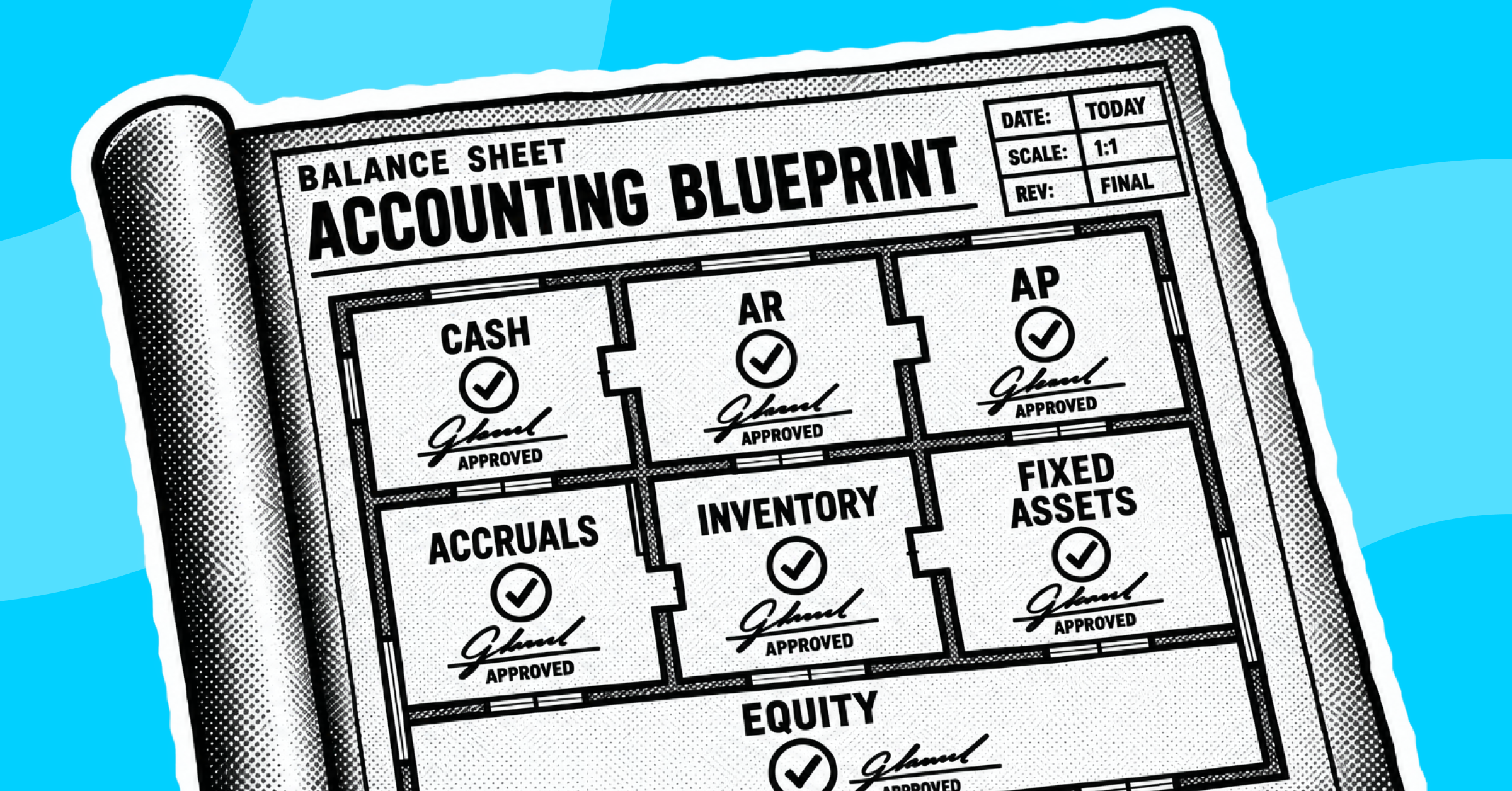
Balance sheet substantiation software is a system that proves every GL account balance is accurate before close, by matching sub-ledger detail to the GL, flagging variances, and routing each account for review and sign-off. It is not the same as bank reconciliation or intercompany matching; those are inputs into the substantiation process, not the process itself. Automated balance sheet reconciliation typically covers trial balance tie-out, flux/fluctuation analysis, accrual and prepayment schedules, amortization and depreciation schedules, open-item aging, and the certification step that closes the loop before the books lock.
For a broader look at all reconciliation types beyond balance sheet substantiation, see our guide to account reconciliation tools.
How We Ranked These Balance Sheet Reconciliation and Certification Software Platforms
We spent 35+ hours researching official product documentation, verified G2, Capterra, and Gartner Peer Insights reviews, and published outcome metrics for this category. We reviewed 30+ balance sheet reconciliation and certification software vendors on the market today, from enterprise incumbents to AI-native newcomers, and narrowed the list to the 9 that consistently show up across the top SERP results and AI Overview answers for this keyword. Bluecopa is a Bluecopa product; we have kept the ranking data-driven rather than moving it up on that basis alone.
We weighted:
- GL substantiation and certification workflow depth: how well the platform handles account-level tie-out, sign-off, and audit trail, not just transaction matching.
- AI maturity in matching and variance detection: genuine self-learning matching and flux analysis versus static rules with an AI label.
- ERP integration breadth: native connectivity to SAP S/4HANA, Oracle NetSuite, Sage Intacct, and other systems finance teams actually run.
- Verified user sentiment: recurring, category-specific praise and complaints from G2, Capterra, and Gartner Peer Insights.
- Company-size fit: whether the platform is genuinely built for the buyer's scale, not just marketed to it.
Side-by-Side Comparison: Best Balance Sheet Reconciliation Software at a Glance
9 Best Balance Sheet Reconciliation Platforms Reviewed in Detail
1. BlackLine
Best For: Large enterprises that need the deepest, most mature balance sheet reconciliation tool on the market, backed by 20+ years of specialization and the largest G2 review base in the category.
Overview: BlackLine positions itself as "The Leader in Agentic Financial Operations," running its Account Reconciliations module on Verity AI. The platform covers balance sheet certification, high-frequency reconciliation, transaction matching, and journal entry management inside a single Studio360 architecture. BlackLine reports 4,300+ customers, with headline metrics of 70% reduction in close time and 97% journal entry automation.
Key Features:
- Verity Prepare: End-to-end reconciliation preparation with an 8x reconciliation efficiency claim.
- Balance Sheet Certification: Risk-based reconciliation workflows with built-in sign-off and audit trail.
- High-Frequency Reconciliation: Daily or on-demand reconciling that groups transactions into one actionable view.
- Verity Accruals: Automated accruals with an 80% manual-work reduction claim.
- Verity Narrate: AI-generated flux analysis and trend narratives.
- Verity Flag: Anomaly detection across reconciliation activity.
- Transaction Matching: Ingests and matches transactions across multiple data sources without manual handling.
- 30+ pre-built ERP connectors: Includes SAP, Oracle, NetSuite, and Workday.
Pros:
- Still the reference standard for balance sheet tie-out: "The system is still the gold standard for balance sheet reconciliations."
- Simplifies GL account tracking across large charts of accounts: "I like how BlackLine Financial Close Management helps us remember all different general ledger accounts."
- Cuts manual variance work: "With variance analysis we have removed a lot of manual work, removing all spreadsheet."
- System-driven certification reduces manual sign-off: "We have been able system certify over 60% of our reconciliations. This saved time."
Source: G2
Cons:
- Reconciliation mapping is administratively heavy: "The admin can take long to map reconciliations."
- Steep learning curve that often requires a dedicated in-house BlackLine admin, per multiple G2 reviewers: "undefined"
- Long payback period cited by mid-market buyers, with reviewers reporting a 22-25 month ROI timeline before seeing full returns: "undefined"
Source: G2
Pricing: Not published. According to Vendr, the median annual price for BlackLine is approximately $40,125/year, based on 74 tracked purchases.
2. Trintech (Cadency + Adra Balancer)
Best For: Organizations that need purpose-built balance sheet certification software across both enterprise (Cadency) and mid-market (Adra) segments, with industry-leading auto-match rates.
Overview: Trintech calls itself "The World's Most Trusted Reconciliation and Financial Close AI Agentic Platform," running three product lines: Cadency for large enterprises, Adra for mid-market teams, and ReconNET for operational reconciliations. Trintech claims 99%+ auto-match rates and 75%+ shorter time to close, with named AI capabilities for variance analysis and exception management.
Key Features:
- Cadency balance sheet reconciliations: Transaction matching, close management, and governance/risk/compliance built for enterprise scale.
- Certify with built-in controls: Risk-based certification workflows as part of Trintech's six-step AI model.
- Adra multi-way matching: 3-way and 4-way+ matching for mid-market teams, embedded directly in Microsoft 365.
- AI-suggested actions: Learns from user activity to speed reconciliation review.
- Intercompany accounting: Support alongside balance sheet substantiation.
- SAP-certified, Oracle, and NetSuite connectors: Across both Cadency and Adra.
Pros:
- User-friendly certification workflow with strong results: "Cadency is very user friendly while producing effective results."
- Standout implementation support: "Cadency by Trintech stands out for its exceptional IT support, which users find invaluable."
- Fast onboarding for mid-market teams: "Adra's intuitive onboarding process allows teams to get up and running quickly."
- Easy to administer post-launch: "As an application support admin, I appreciate the ease with which the application can be supported, patched, upgraded."
Source: G2
Cons:
- Interface can lag on large reconciliations: "The interface can feel slow, especially when loading larger reconciliations, and reporting options could be more flexible."
- Implementation requires heavy planning: "Difficult due to layered setup, requiring significant planning and risking loss of work with errors."
- Standard reports often need customization: "Standard reports in most cases did not provide business with what they needed."
Source: G2
Pricing: According to SpendHound, average enterprise pricing for Trintech runs approximately $257,851/year, with average SMB pricing around $94,429/year.
3. HighRadius
Best For: Enterprises that want agentic AI with guaranteed GL auto-certification KPIs for balance sheet reconciliation, especially those already running HighRadius for AR/O2C automation.
Overview: HighRadius markets "Intelligent Agents. Measured By Outcomes," with a Financial Close and Reconciliation product built around its R2R Agent Builder. Companies upload Excel-based processes, which the platform converts into AI agents. HighRadius publishes guaranteed operational KPIs rather than generic AI claims: 95% transaction auto-match, 40% GL auto-certification, and a 30% reduction in days to close.
Key Features:
- R2R Agent Builder: Converts 2,000+ uploaded Excel spreadsheets into 200+ AI agents, one per close and reconciliation use case.
- Prepaid Expense Substantiation agent: Automated accrual and prepayment schedule handling.
- Auto GL Reconciliation agent: Published 40% GL auto-certification target.
- Intercompany Reconciliation agent: Covers AR/AP reconciliation, dispute resolution, and journal creation.
- Balance Sheet Reconciliation suite: Spans bank, GL auto-certification, deferred revenue, and payroll clearing accounts.
- 20+ machine learning models: For real-time anomaly detection during continuous close.
Pros:
- High auto-match rates reduce manual matching: "95% transaction auto-match with 100% real-time visibility into reconciliation status."
- Close cycle reduction with productivity gains: "Close days down 30% and productivity up 50%, with praise for AI-driven worklists."
- Handles high-volume, complex accruals: "Spans daily revenue reconciliation, balance sheet reconciliation, and intercompany management in one suite."
Source: G2
Cons:
- Complex onboarding: "A bit complex because of the number of configuration options, with advanced reports requiring vendor support."
- Format handling gaps: "Inability to read non-traditional remittance formats."
- Heavy platform for mid-market teams: "Comprehensive scope can create friction for teams needing fast time-to-value without significant IT involvement."
Source: G2
Pricing: HighRadius is a Gartner Magic Quadrant Challenger for Financial Close and Consolidation. Vendr reports a median annual contract value of $12,973 for HighRadius, though this figure likely reflects smaller point-module purchases rather than full enterprise R2R deployments.
4. FloQast
Best For: Mid-market to enterprise accounting teams that want the most accountant-friendly balance sheet reconciliation tool, with a preparer/reviewer sign-off workflow built specifically for audit trail visibility.
Overview: FloQast positions itself as "Accounting + AI," with the tagline "Built by accountants for accountants." The platform's Automated Reconciliations module pairs preparer/reviewer workflows with due-date assignment and consolidated visibility across entities. FloQast reports 3,500+ companies on the platform, including Lululemon, DoorDash, and Shopify.
Key Features:
- Automated Reconciliations: Preparer/reviewer workflows with comprehensive audit reports built for certification sign-off.
- AI Transaction Matching: Natural-language rule creation without requiring IT support.
- Advanced Automation: Amortization and depreciation schedules plus subledger-to-GL reconciliations.
- Connected Compliance: Automated evidence collection and AI-driven testing for SOX documentation.
- AI Agents: Flow through reconciliations and exception flagging continuously, not just at month-end.
- FloHub Ecosystem: Direct ERP and bank connectivity across major institutions and local branches.
Pros:
- Clear close status visibility: "Simplifies reconciliations, provides clear visibility into close status."
- Automated flux flagging: "The flux analysis tool automatically identifies and flags changes, and this includes entries that need some reconciliation."
- Audit-ready sign-off trail: "Excellent for demonstrating review sign-off to auditors."
Source: G2
Cons:
- Thinner transaction-level detail than specialist tools: "Lacks the granular transaction-level detail and advanced functionality of some other enterprise-grade reconciliation."
- Limited variance customization: "Lack of customizability in variance analysis frustrating, such as ability to view journal entries not yet posted."
- Prepaid schedule setup friction: "The prepaid section... could be a bit easier, specifically when entering beginning balances."
Source: G2
Pricing: Not published on floqast.com/pricing. According to Vendr, the median annual price is approximately $24,481/year based on 312 tracked purchases, ranging from $10,147 to $68,727.
5. OneStream
Best For: Enterprise finance teams already using, or evaluating, an EPM platform for planning and consolidation who want balance sheet reconciliation embedded in the same financial data model rather than in a separate tool.
Overview: OneStream calls itself "The AI Operating System for Modern Finance." For reconciliation specifically, OneStream claims to be "the only solution that can provide a link from reported balances to reconciled accounts" through Drill-to-Reconciliation. The platform is a Gartner Magic Quadrant Leader for Financial Close and Consolidation for four consecutive years, with 1,700+ customers including 15% of the Fortune 500.
Key Features:
- Drill-to-Reconciliation: Links reported balance sheet balances directly to reconciled accounts in one click.
- Trial Balance Single-Sourcing: Account reconciliations share the same data sources and hierarchies as actuals.
- SensibleAI for reconciliation: AI-powered anomaly detection and automated exception handling.
- Transaction Matching: Processes hundreds of millions of transactions monthly with virtually unlimited matching fields.
- Always-on audit trails: Cannot be disabled; SOX-compliant with 100+ pre-defined audit reports.
- Express Framework: 6-8 week rapid deployment with pre-packaged best practices.
Pros:
- Eliminates cross-tool reconciliation: "Unified platform removes the need to reconcile data between separate close, consolidation, and planning tools; McCain Foods reports the platform is now core to uniting consolidation, planning, tax, and analysis teams."
- Strong on meeting requirements: "Scores 9.2/10 on G2 for meeting requirements, with deep close and consolidation capability."
- Reliable, audit-ready platform: "Robust audit trail and four consecutive years as a Gartner MQ Leader for Financial Close and Consolidation."
Source: G2
Cons:
- Balance sheet reconciliation reporting has room to grow: "I would like to see improvements in balance sheet account reconciliation reporting."
- Very high cost: "Enterprise deployments typically range from $150,000-$400,000+/year in licensing, with implementation adding $250,000 to $1.5 million depending on complexity."
- Long ROI timeline: "Reviewers report a 16-month average ROI timeline, longer than lighter, close-focused alternatives."
Source: G2
Pricing: Not published. According to Vendr, the average annual cost for OneStream is approximately $178,000, with contracts ranging up to roughly $290,000/year.
6. Bluecopa
Best For: Mid-market to enterprise finance teams that need AI-native, self-learning balance sheet reconciliation tied directly into a unified platform covering Order-to-Cash, Procure-to-Pay, and Record-to-Report, instead of a standalone certification point tool.
Overview: Bluecopa's own positioning is direct: "If reconciliation happens only at month end, you're too late." Where most tools on this list treat balance sheet substantiation as one module inside a close suite, Bluecopa ties GL substantiation, flux analysis, and certification directly into the same Record-to-Report layer running O2C and P2P. Named customers report material gains from this approach: Yatra saw a 90% faster month-end close and an 80% reduction in manual reconciliation, and HackerEarth reported a 60% reduction in reconciliation errors.
Key Features:
- SamyxAI with 4 purpose-built agents: Samyx Recon (high-volume, multi-field fuzzy and deterministic hybrid matching), Samyx Extract (document-to-data extraction with page/line-level provenance), Samyx Build (policy-as-code gates for approvals, thresholds, and segregation of duties), and Samyx Narrate (variance root-cause analysis and anomaly detection).
- Self-learning matching: Adapts automatically to new transaction patterns without manual rule rewrites when formats or volumes change.
- Sub-ledger-to-GL accuracy: Validates journal entries and maps sub-ledger detail to correct GL accounts as part of the same substantiation flow.
- Continuous, same-day reconciliation: Instead of month-end batch, turning month-end into confirmation rather than discovery.
- Intercompany reconciliation: Unified visibility into cross-entity balances.
- AI-native exception routing: Every exception is prioritized, assigned, and logged for audit.
Note on review data: Bluecopa's G2 rating (4.8/5) is drawn from a growing review base of approximately 26 reviews as of August 2026 — smaller than 10-20 year category incumbents like BlackLine and Trintech. Buyers should weigh named customer outcomes and case studies alongside G2 sentiment given the smaller sample size.
Pros:
- Faster, more accurate finance operations and recon: "Finance Operations and Recon are so much faster and accurate."
- One platform across finance functions: "The platform can be commonly used across all our teams (AP, AR, Ops, Controllership)."
- Faster trial balance and income statement work: "Make income statement faster. Calculate and review trial balance."
Source: G2
Cons:
- Growing review base relative to category incumbents
- No enterprise deployment history to match 10-20 year category incumbents
Pricing: Custom subscription pricing based on transaction volume, team size, and modules selected. Source: bluecopa.com/demo.
7. Oracle Cloud EPM (Account Reconciliation)
Best For: Enterprises already standardized on Oracle Cloud ERP or EPM that want GL substantiation and balance sheet certification native to the same suite already running consolidation, close, and narrative reporting.
Overview: Oracle Cloud EPM Account Reconciliation is built to close faster by automating account reconciliations and transaction matching, inside the broader Oracle Fusion Cloud EPM suite rather than as a standalone product. It ties directly into Oracle's Financial Consolidation and Close and Enterprise Journals capabilities, so a matched, certified account flows into the same reporting layer without a separate export.
Key Features:
- Transaction Matching: Auto-match engine processes millions of transactions in minutes with one-to-one, many-to-one, and many-to-many matching rules.
- GL Substantiation & Compliance: Built-in workflow captures sign-offs and audit trails, with automated certifications for ledger-to-sub-ledger and zero-balance accounts.
- Variance/Flux Analysis: Automated variance reports flag outliers, with automatic journal entry creation for resolution.
- Accruals Management: Supports complex reconciliations across unlimited data sources and attributes.
- Flexible reconciliation formats: Can be customized by account type without custom development.
Note on review data: Oracle Account Reconciliation does not maintain a standalone G2 or Capterra review listing separate from the broader Oracle Cloud EPM suite, which limits how precisely user feedback can be attributed to this specific module. The pros and cons above reflect that constraint and are drawn from directional product-fit analysis rather than module-specific verbatim reviews.
Pros:
- Deep native fit for existing Oracle shops: "Organizations already running Oracle ERP avoid a separate reconciliation vendor and separate integration project, since the module shares data with consolidation and close out of the box."
- Zero-balance and ledger-to-sub-ledger certification is built in: "Rather than requiring a custom workflow layer on top."
Cons:
- Feedback is diluted across the broader Oracle Cloud EPM product listing: "Making it harder for a prospective buyer to isolate Account Reconciliation-specific sentiment before purchase."
- Tied to Oracle's own ecosystem: "Teams running a mixed ERP landscape (SAP plus NetSuite plus a legacy system, for example) get less native benefit than an Oracle-only shop."
Pricing: No credible third-party pricing tracker currently publishes a specific figure for the Account Reconciliation module. Custom pricing — contact Oracle sales for a quote.
8. Numeric
Best For: Mid-market, NetSuite-centric finance teams that want the fastest path to balance sheet reconciliation and close automation, with transparent pricing and a free tier.
Overview: Numeric describes itself as an AI close automation platform that unifies close management, reporting, and cash for complex accounting teams. Founded in 2020 and backed by $89 million in total funding, Numeric's core suite spans Close Management, an Analytics Suite with AI flux analysis, and Cash Management. It is the only vendor in this list with published, transparent pricing starting at $0/month.
Key Features:
- Cash Matching: 90%+ auto-match rate on bank reconciliations, roughly 3x the industry standard of approximately 30%.
- AI Flux Writer: Drafts variance explanations automatically; DailyPay reports 80% of flux analysis first drafts are AI-written.
- Continuous Learning: AI agents observe manual matches and suggest new rules over time.
- Real-Time ERP Data Sync: Pulls every NetSuite transaction and refreshes at the transaction level every 1-2 minutes.
- Discrepancy Detection: Points directly to the GL transactions causing an account to fall out of balance.
- Auto-Submit: Automatically clears consistently balanced accounts under materiality thresholds.
Pros:
- Fastest implementation and strong estimated ROI among close automation platforms: "Per G2 award data, with 73.7% of reviewers from mid-market companies."
- AI-drafted flux analysis saves close prep time: "DailyPay reports 80% of variance explanation first drafts are written by Numeric's AI."
- Genuine free tier: "Core close management with unlimited users, unusual in this category."
Source: G2
Cons:
- Flux analysis linking has reported limits: "Reviewers cite limited functionality around features like flux analysis linking to underlying GL detail."
- NetSuite-centric: "The deepest integration is transaction-level and NetSuite-only; Sage Intacct, QuickBooks, and Xero connections sit at trial balance level, a meaningful step down for GL-level substantiation work."
- Close-management-first product: "Cash matching is a newer addition, and the platform does not cover O2C, P2P, or broader finance operations beyond close."
Source: G2
Pricing: Free: $0/month (core close management, unlimited users). Essentials: starting at $30/user/month. Growth: custom (live ERP integration, auto-rollforward, AI tools). Enterprise: custom (SSO, custom roles, dedicated support). Source: numeric.io/pricing.
9. SolveXia
Best For: Mid-market to enterprise finance teams that want configurable, no-code balance sheet reconciliation automation without a heavy IT build.
Overview: SolveXia calls itself "the intelligent way to reconcile accounts," offering AI-powered matching that finance teams configure themselves rather than through a vendor-led implementation. The platform claims a 99% match rate and 100x faster processing than manual methods, handling 500,000+ daily transactions with built-in workflow and approval controls.
Key Features:
- AI-powered matching rules: Supports simple and complex fuzzy-matching scenarios configured by business users.
- Balance sheet reconciliation with audit-ready documentation: Built into the output.
- GL account reconciliation: Against subledgers and source data.
- Automated variance detection: And discrepancy flagging.
- Flux analysis: Through dynamic, configurable reporting.
- Built-in workflow and approval processes: With complete audit trails for governance.
Pros:
- Streamlines GL account sign-off: "Streamline GL account reconciliation approval process."
- Automates cash-side reconciliation: "Automate cash reconciliations."
- Reduces manual finance workload: "Helps to reduce the manual operations in finance."
Source: G2
Cons:
- Change requests can be slow: "Change requests can take a long time."
- Analytics has a learning curve: "Analytics is a bit complicated to work with."
Source: G2
Pricing: Not published. No credible third-party pricing tracker currently reports a specific figure for SolveXia. Custom pricing — contact sales for a quote.
How to Choose the Right Balance Sheet Reconciliation Tool
Before comparing feature lists, decide what you're actually optimizing for:
- How many GL accounts need certification each close, and by whom? A 50-person team certifying 200 accounts needs a different tool than an enterprise certifying thousands across dozens of entities.
- Does your reconciliation output need to flow into close and reporting automatically? If yes, prioritize a platform where a certified account posts directly into R2R rather than requiring a manual export and re-import.
- How many ERPs and entities are in play? Multi-ERP, multi-entity environments (common after M&A or in shared service centers) need real native connectivity, not batch file imports.
- Is your bottleneck matching or substantiation? Some tools are strong at transaction matching but thin on certification workflow, and vice versa. Know which problem you're actually solving.
- What's your accrual and prepayment schedule complexity? Teams with heavy amortization/depreciation schedules should weight platforms with dedicated schedule automation, not just matching.
Stakeholder view:
- CFO: cares about close-cycle impact and audit cost reduction.
- Controller / Head of Accounting: cares about certification workflow, match accuracy, and audit trail depth.
- Finance Operations / Shared Services: cares about transaction volume, multi-entity scalability, and exception routing.
- IT / ERP Team: cares about integration effort, deployment model, and security.
- Internal Audit: cares about compliance coverage, evidence management, and access controls around every certification.
Common Mistakes When Choosing Balance Sheet Reconciliation Software
Confusing transaction matching with account substantiation. Some platforms are strong at matching bank or payment transactions but thin on the actual certification workflow — the sign-off, the supporting documentation, the audit trail for each GL account. Matching and substantiation are related but distinct capabilities; automated balance sheet reconciliation requires both.
Assuming "AI-powered" means self-learning matching. Nearly every vendor claims AI now. The real question is whether matching logic adapts automatically when a vendor changes an invoice format or a new payment gateway is added, or whether it's a static rules engine with an AI label on top.
Ignoring accrual and prepayment schedule support. If your team spends hours every month rebuilding amortization or prepayment schedules in Excel, a tool without dedicated schedule automation only solves part of the problem, no matter how good its transaction matching is.
Choosing based on overall G2 rating without checking company-size fit. A platform rated 4.8 by mid-market NetSuite teams may not deliver the same experience for a 10,000-person enterprise running SAP across 50 entities. Filter reviews by company size before drawing conclusions.
Underestimating the sign-off bottleneck. Practitioners on forums like Reddit and Proformative frequently report that the real bottleneck in balance sheet reconciliation isn't the matching, it's building the "prove this number" analysis layer themselves in Excel because their ERP or point tool doesn't support it natively. Ask any shortlisted vendor to demo the actual certification and sign-off step with your own chart of accounts, not just transaction matching.
Treating reconciliation output as disconnected from close. A tool that automates matching but hands the close team a separate export at month-end has only automated half the problem. Where this pain point shows up, a platform like Bluecopa that ties certified accounts directly into continuous close removes that manual handoff entirely.
Why Bluecopa Is the Right Balance Sheet Reconciliation Platform for Unified Finance Teams
Bluecopa is built for finance teams that don't want balance sheet substantiation living in a separate tool from the rest of their operations. The platform's core differentiator in this category is straightforward: reconciled, certified GL accounts flow directly into the same continuous close process running Order-to-Cash and Procure-to-Pay, so a matched account doesn't just get marked "done" in a recon module, it moves into close and reporting without a second manual pass.
Mapped against the decision criteria in this guide:
- Certification and audit trail: Samyx Build applies policy-as-code gates for approvals, thresholds, and segregation of duties, so every certified account carries a logged, auditable trail without manual configuration.
- Self-learning matching: Samyx Recon adapts to new transaction patterns automatically, which matters most for organizations with high format variability across vendors, entities, and payment channels.
- Flux and variance analysis: Samyx Narrate generates AI-driven variance root-cause analysis, reducing the manual write-up work accountants otherwise do by hand every close.
Multi-ERP, multi-entity fit: Native connectivity to SAP, NetSuite, Sage Intacct, and 200+ other systems supports the reality of Global Capability Centers and post-acquisition finance teams running more than one ERP.
Unified platform, not a point tool: Balance sheet reconciliation sits on the same data layer as Order-to-Cash and Procure-to-Pay, a combination no other platform in this comparison covers on a single AI-native layer.
This makes Bluecopa the strongest fit for mid-market to enterprise finance teams that want to stop treating balance sheet certification as an island and start running it as one connected step inside close.
Bottom Line
The right balance sheet account reconciliation software depends on what your team is actually trying to fix. If the bottleneck is enterprise-wide certification depth on a market-tested platform, BlackLine and Trintech have the most mature products, with BlackLine still the reference point for balance sheet tie-out at scale and Trintech offering purpose-built products for both enterprise and mid-market. If you want agentic AI with guaranteed GL auto-certification targets, HighRadius delivers measurable commitments, while FloQast leads on accountant-friendly usability and the strongest sign-off audit trail experience for teams that prioritize adoption.
If your organization already runs an EPM platform for planning and consolidation, OneStream's Drill-to-Reconciliation avoids adding another vendor, and Oracle Cloud EPM offers the same native fit for teams standardized on Oracle's own stack. If you need balance sheet reconciliation tied into a unified AI-native platform spanning O2C, P2P, and R2R rather than a standalone certification tool, Bluecopa is the only option here built that way from the ground up.
For NetSuite-centric mid-market teams that want the fastest, most affordable close automation, Numeric's free tier and transparent pricing are hard to beat. And if your finance team wants to configure its own matching logic without an IT project, SolveXia's no-code approach fits that need directly. No single platform is right for every organization; match the decision criteria in this guide to your actual chart of accounts complexity, ERP landscape, and certification workload before committing.
Frequently Asked Questions
1. What is balance sheet reconciliation software?
It automates GL account tie-out, flux analysis, and sign-off, replacing manual Excel-based substantiation with matching, audit trails, and certification workflows across SAP, NetSuite, and other ERPs.
2. How is balance sheet reconciliation different from bank reconciliation?
Bank reconciliation matches one account against a bank statement; balance sheet reconciliation substantiates every GL account, including accruals, prepayments, and intercompany balances, before close.
3. What is balance sheet substantiation software used for?
It proves every trial balance account is accurate through sub-ledger-to-GL matching, variance analysis, and a documented certification sign-off, satisfying SOX and audit requirements.
4. How much does balance sheet reconciliation software cost?
Most enterprise vendors like BlackLine, Trintech, and OneStream require a custom quote; Numeric is the most transparent, with a free tier and plans starting at $30/user/month.
5. Which balance sheet reconciliation software has the highest G2 rating?
Bluecopa and Numeric both hold 4.8/5 on G2, ahead of established enterprise incumbents like BlackLine, Trintech, and HighRadius on rating, though on smaller review bases.
6. Can balance sheet reconciliation software integrate with SAP S/4HANA and Oracle NetSuite?
Yes. BlackLine, Trintech, HighRadius, FloQast, OneStream, Bluecopa, and Oracle Cloud EPM all publish native SAP and NetSuite connectivity for GL and sub-ledger data.
Editorial Note
Last Reviewed: August 2026
Vendor capabilities, pricing, and customer ratings change over time. Confirm current features, pricing, and integrations directly with the vendor before making a decision.
All Vendors Reviewed
We evaluated the following balance sheet reconciliation and certification software tools before narrowing this list to the 9 featured above: BlackLine, Trintech Cadency, Trintech Adra, HighRadius, FloQast, OneStream, Bluecopa, Oracle Cloud EPM Account Reconciliation, Numeric, SolveXia, ReconArt, CCH Tagetik, Workiva, Vena Solutions, Prophix, Redwood Software, Ledge, DOKKA, Duco, AutoRek, Gresham Technologies, Taxilla, Bean AI, Osfin, ChatFin, SkyStem, Fluence Technologies, QuickBooks Online, Xero, Sage Intacct, Zoho Books, Ramp, Chargebee, Cashbook.