


Key Takeaways
- General ledger reconciliation is the process of confirming that every account balance in the general ledger agrees with its independent supporting record, such as a subledger, bank statement, or fixed asset register.
- It matters because the general ledger is the single source every financial statement is built from. An unreconciled GL balance doesn't stay contained, it flows straight into the numbers leadership, auditors, and investors rely on.
- The process runs in five core steps: pull the trial balance, gather supporting evidence, compare and investigate variances, post corrections, and get management sign-off.
- Reconciliation types split by what's being matched: subledger-to-GL, bank-to-GL, and intercompany-to-GL each carry a different risk profile and a different fix.
- At multi-entity or multi-ERP scale, general ledger reconciliation stops being a spreadsheet task and becomes a data-normalization problem before it's even a matching problem.
Introduction
Every number on a balance sheet or income statement traces back to the general ledger. If a GL balance is wrong, wrong information doesn't stay in one account, it moves downstream into every report built on top of it.
A quick overview: this guide covers what general ledger reconciliation actually is, why it carries more weight than a routine bookkeeping task, the five-step process finance teams run every close, the different types of GL reconciliation, and why the process gets meaningfully harder once a company adds entities, ERPs, or transaction volume.
What Is General Ledger Reconciliation?
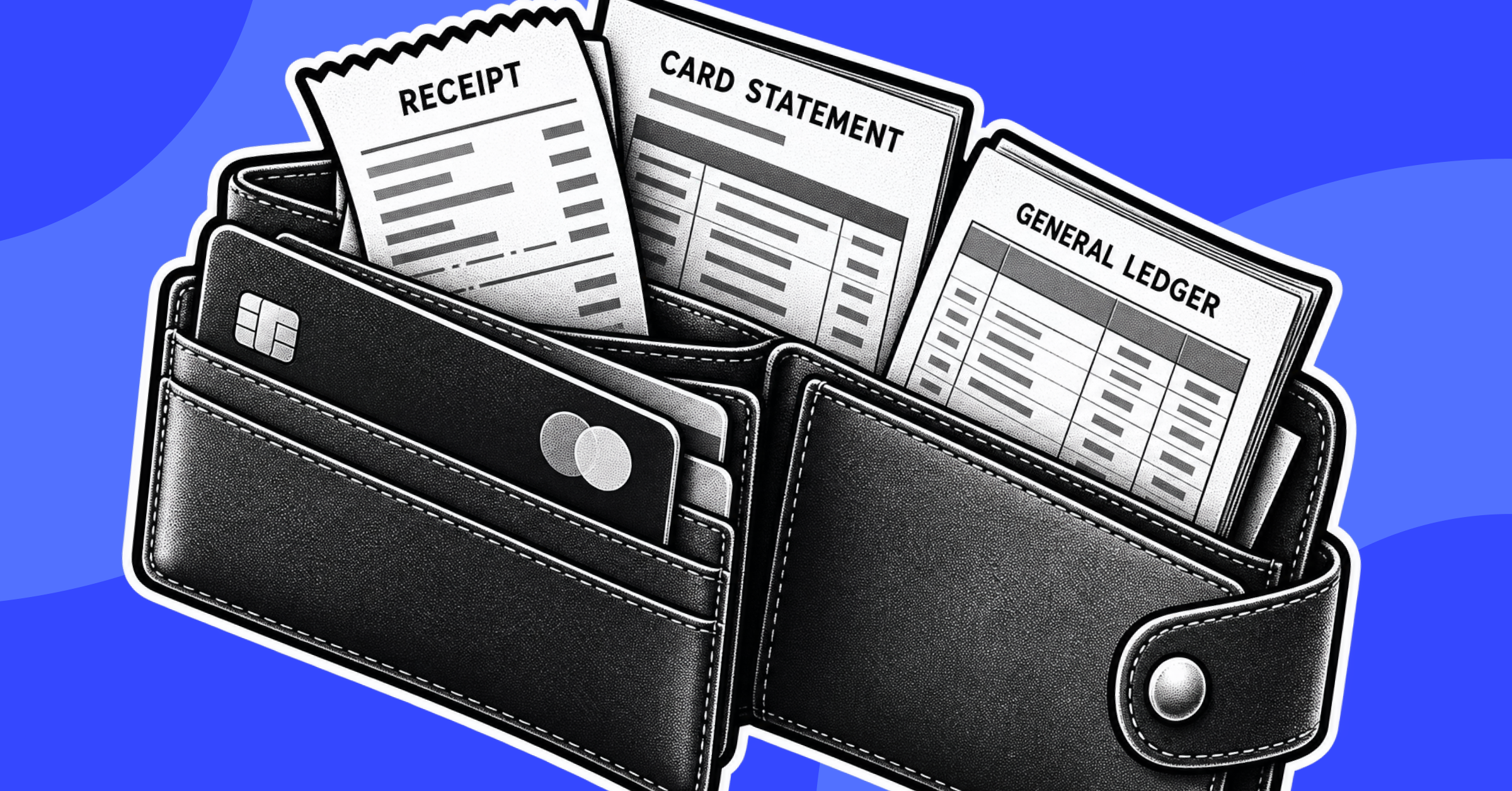
General ledger reconciliation is the process of comparing every balance in the general ledger against an independent source of truth, such as a bank statement, a subledger, a fixed asset register, or a loan statement, to confirm the two agree. Any variance gets investigated, explained, and corrected before the books are considered final for the period.
It differs from general ledger management itself. The GL is the record; reconciliation is the check that confirms the record is accurate. A company can post every transaction correctly and still carry a reconciliation gap, from a bank fee that never hit the books, a duplicate journal entry, or a subledger that drifted out of sync with the GL over the period.
Why General Ledger Reconciliation Matters for Close and Audit Readiness
An unreconciled GL account doesn't just sit there quietly. It compounds. A $2,000 timing difference left unexplained in March is still there in April, now buried under a new month of activity that makes it harder to trace.
- Financial statement accuracy: every reported balance depends on the GL being correct first. There is no downstream fix for an upstream error.
- Audit readiness: auditors test reconciliations directly. A messy or late reconciliation process is one of the fastest ways to turn a routine audit into an extended one, with more sample testing and more management letter comments.
- Fraud and error detection: reconciliation is a control, not just a math check. Duplicate payments, unauthorized entries, and posting errors surface here before they reach a financial statement.
- Close speed: a general ledger that reconciles cleanly closes faster. Most close delays trace back to a handful of accounts that won't tie out, not the entire ledger.
Strong internal control frameworks treat GL reconciliation as a required control over financial reporting, not an optional best practice, in line with AICPA guidance on internal controls over financial reporting.
The General Ledger Reconciliation Process
The process runs the same five steps whether it's done manually or with an automated reconciliation platform running the matching underneath it.
- 1. Pull the trial balance: extract the trial balance or general ledger detail for the period and identify every account that needs reconciling for that cycle, not just the accounts that were flagged as problems last time.
- 2. Gather independent supporting evidence: collect the documentation each account needs to prove itself: bank statements for cash, subledger reports for AR and AP, the fixed asset register, loan statements, and payroll registers.
- 3. Compare and investigate: match the GL balance against the supporting record and trace every variance to a root cause, whether that's a timing difference, a duplicate entry, an unrecorded transaction, or a straightforward posting error.
- 4. Post adjusting entries: record the correcting journal entries for confirmed errors and route them through approval before they hit the ledger.
- 5. Review and sign off: a reviewer who did not prepare the reconciliation, typically a supervisor or controller, confirms the adjusted balance ties out and approves the package before the books close.
Types of General Ledger Reconciliation
Not every GL reconciliation matches against the same kind of source, and the risk profile changes with the type.
- Subledger-to-GL reconciliation: confirms that AR, AP, inventory, or fixed asset subledgers agree with their corresponding GL control accounts. This is where most day-to-day reconciliation volume sits.
- Bank-to-GL reconciliation: confirms the cash balance in the GL against the bank statement. Covered in depth in Bluecopa's bank reconciliation glossary entry, since it follows its own dedicated process.
- Intercompany-to-GL reconciliation: confirms that balances between related legal entities net to zero before consolidation. This is the type most likely to break at multi-entity scale, since it depends on two separate ledgers agreeing, not just one ledger against a static document.
For the accounts that carry forward period to period, this work overlaps closely with the broader balance sheet reconciliation process, which auditors and controllers weight more heavily than routine income-statement account checks.
Why General Ledger Reconciliation Gets Harder at Scale
The five-step process above doesn't change as a company grows. What changes is the volume and the number of systems the data has to be pulled from before that process can even start.
- Multi-entity complexity: every additional legal entity means another trial balance, another set of intercompany balances, and another consolidation step before the group-level GL is reconciled.
- Multi-ERP environments: a company running SAP in one region and NetSuite in another has to normalize data formats before matching logic can even run, long before the actual comparison step happens.
- Transaction volume: a controller manually tracing a few hundred line items each month is a very different job from tracing tens of thousands. Manual, spreadsheet-based reconciliation scales linearly with headcount; volume does not.
A 2025 Gartner survey found 59% of finance leaders now use AI somewhere in their function, and reconciliation and close are consistently among the first processes finance teams automate, precisely because manual matching is one of the least scalable parts of the close.
Enterprise finance teams running reconciliation across multiple entities and ERPs increasingly rely on AI-native matching to keep pace, since fuzzy and deterministic matching engines can process millions of transaction lines an hour rather than tracing them one by one.
General Ledger Reconciliation Best Practices
- Reconcile on a fixed schedule, not just at month-end. Continuous or weekly reconciliation on high-volume accounts catches issues while they're still cheap to fix.
- Segregate preparer and reviewer roles. The person who prepares a reconciliation should never be the person who signs it off.
- Standardize the reconciliation template. Every reconciliation should document the account, period, GL balance, supporting balance, reconciling items, and preparer, in the same format every time.
- Prioritize by risk, not alphabetically. High-balance, high-volatility, or historically problematic accounts should get reconciled and reviewed first.
- Automate matching wherever transaction volume makes manual tracing impractical. This is the single biggest lever for close speed at scale.
For a step-by-step roadmap on moving from manual to automated GL reconciliation, see how to streamline the general ledger reconciliation process.
How Bluecopa Supports General Ledger Reconciliation
Enterprise finance teams reconciling across multiple entities and ERPs often reach a point where spreadsheet-based matching can no longer keep up with transaction volume. Bluecopa's Samyx Recon engine processes over 5 million records per hour at 97 to 99% accuracy, using a hybrid of deterministic and multi-field fuzzy matching, connected to 200+ systems including SAP, Oracle NetSuite, and Sage Intacct. Teams evaluating dedicated reconciliation platforms for this reason can compare options in Bluecopa's general ledger reconciliation software guide.
Frequently Asked Questions
1. How often should general ledger reconciliation happen?
Monthly at minimum, aligned with close. High-volume accounts, like cash or intercompany, benefit from weekly or continuous reconciliation so variances don't age into the next period.
2. Who is responsible for general ledger reconciliation?
Typically a staff accountant or reconciliation analyst prepares it, with a controller or finance manager reviewing and approving it before close.
3. What's the difference between general ledger reconciliation and account reconciliation?
General ledger reconciliation is a form of account reconciliation scoped specifically to the accounts that flow through the GL. Account reconciliation is the broader umbrella term covering any process that confirms two sets of financial records agree, including reconciliations that never touch the GL directly, like a vendor statement reconciliation.
4. Can general ledger reconciliation be automated?
Most of the matching and exception-flagging work can be automated. Genuine exceptions, like a real posting error or an unauthorized entry, still need human investigation and judgment.
5. What causes most general ledger reconciliation errors?
Timing differences, duplicate entries, unrecorded transactions, and manual keying errors account for the large majority of reconciling items in most GL accounts.