

_%20The%20Complete%20Process%20Guide.png)
Record to report (R2R) is the finance process that turns raw transaction data into accurate, audit-ready financial statements every close cycle. It covers everything from recording transactions and reconciling accounts to consolidating entities and publishing final reports for leadership and regulators. Most finance teams already run some version of R2R every month; the difference between a smooth close and a stressful one usually comes down to how much of this process still runs on spreadsheets versus a connected system.
A quick overview: this guide walks through what R2R actually includes, the seven steps in the process, best practices and common challenges, how manual R2R compares to automated R2R, the KPIs worth tracking, and how an AI-native platform like Bluecopa's R2R platform fits into all of it.
What Is Record to Report (R2R)?
Record to report (R2R) is the end-to-end finance process of capturing transactions, reconciling accounts, consolidating entity-level data, and producing financial statements and management reports for a given period. It's the backbone of every month-end and year-end close, and it's the process that ultimately determines whether a CFO can trust the numbers going to the board, auditors, or regulators.
R2R matters because every other finance function depends on its output. FP&A can't forecast accurately if the close is late or the numbers are wrong. Auditors can't sign off if the reconciliation trail has gaps. Boards can't make decisions on stale or inconsistent reporting. A slow or error-prone R2R process doesn't just create extra work for accounting; it delays every downstream decision that depends on clean financial data.
R2R is often confused with financial close, but close is really one phase inside R2R, the point where the books are locked for the period. R2R is the broader process that includes everything leading up to close (recording, validating, reconciling) and everything after it (consolidation and reporting). R2R is also distinct from Order-to-Cash and Procure-to-Pay, which handle the transactional side of revenue and vendor payments; R2R is where that transactional data ultimately lands in the general ledger and gets reported on.
For companies running on SAP, Oracle NetSuite, or Sage Intacct, R2R sits on top of whatever ERP holds the general ledger. The process itself doesn't change much by ERP, but multi-entity or multi-ERP environments make reconciliation and consolidation meaningfully harder, since data has to be normalized across systems before it can be closed and reported consistently.
The Record to Report Process: 7 Steps
The R2R process runs through seven core steps every close cycle, from raw transaction data to a finished, reported set of financials.
1. Data and transaction collection: Pull transaction data from every source system: ERP, subledgers, bank feeds, payroll, and any point solutions handling AR or AP. This step sets the ceiling on accuracy for everything downstream; incomplete or late data here delays the entire cycle.
2. Data recording and journal entries: Post transactions and adjusting journal entries (accruals, deferrals, allocations) to the general ledger. This is where most manual R2R processes lose time, since teams are often keying entries individually from spreadsheets.
3. Data validation: Check entries for completeness, correct coding, and policy compliance before they flow further into the close. Validation catches errors while they're still cheap to fix, before they've been baked into a trial balance.
4. Reconciliation: Match balances across the general ledger, bank statements, subledgers, and intercompany accounts to confirm everything ties out. This includes account reconciliation, bank reconciliation, and fixed asset reconciliation, depending on the entity.
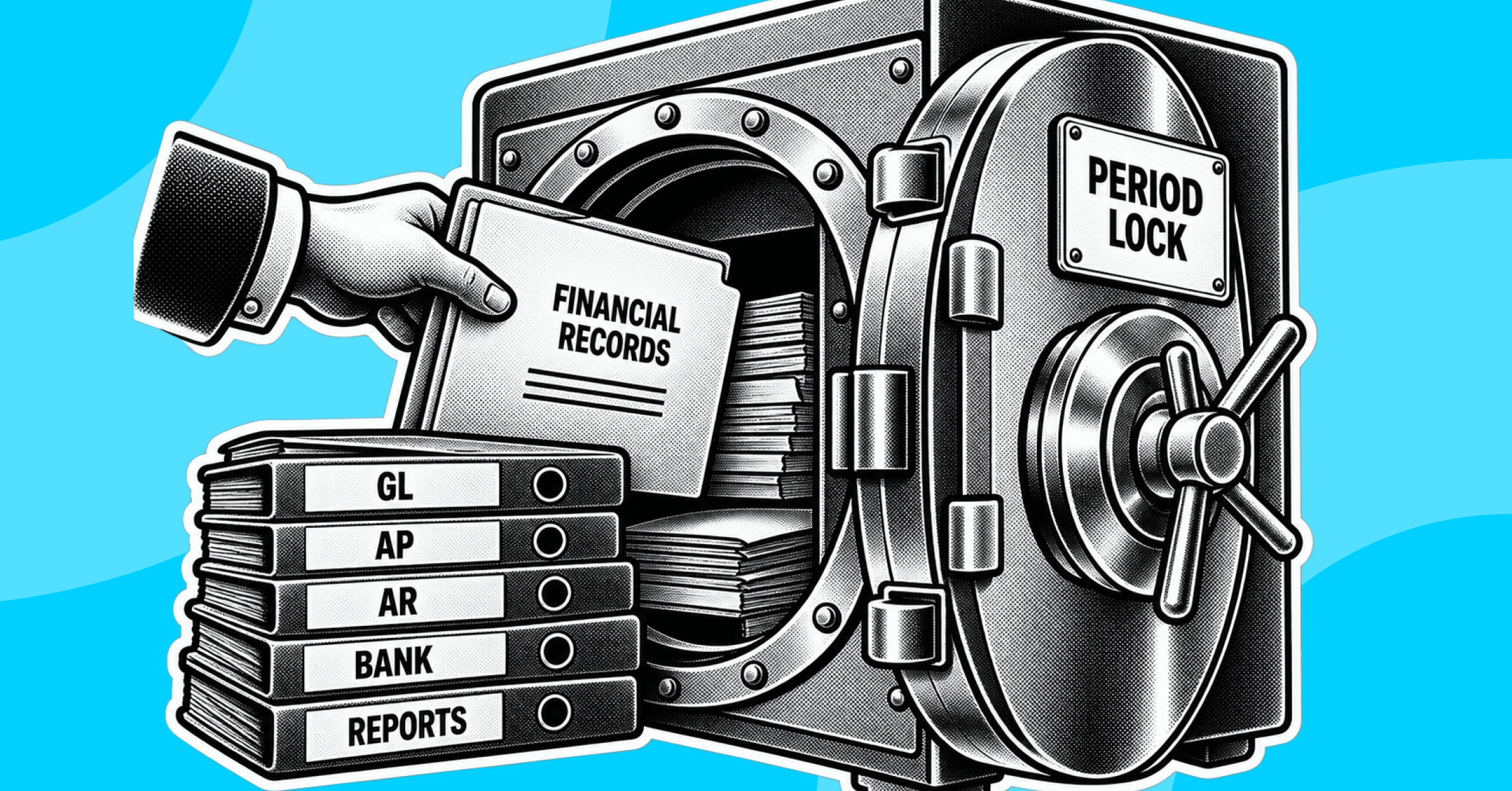
5. Financial close: Lock the books for the period once reconciliations are clean and adjusting entries are final. This is the narrowest step in R2R but the one most often used as a proxy for the whole process, since close speed is the most visible symptom of how well the rest of R2R is running.
6. Consolidation: Combine entity-level financials into a single consolidated view, applying intercompany eliminations, currency translation, and minority interest adjustments for multi-entity organizations.
7. Financial reporting and analysis: Produce the final statements, management reports, and variance analysis that go to leadership, auditors, and regulators. This is the deliverable the rest of R2R exists to support.
A worked example: a mid-market ecommerce company with three legal entities closes its books each month. Entity-level teams record transactions and post journal entries by the 2nd business day. Validation and reconciliation, including intercompany accounts between the three entities, run through day 4. Books close by day 5. Consolidation, including FX translation for the entity billing in a different currency, wraps by day 6. Final management reports and variance commentary go to the CFO by day 7. Every day added to any one step pushes the final reporting date out by the same amount, which is why R2R is usually measured and improved as a single connected cycle rather than seven independent tasks.
Record to Report Best Practices
- Standardize the chart of accounts across entities: Inconsistent account structures are the single biggest reason consolidation takes longer than it should. A standardized chart of accounts makes entity-level data comparable without manual remapping.
- Run a fixed close calendar: Publish deadlines for every step, not just the final close date, so bottlenecks in recording or reconciliation surface early instead of on day 5.
- Reconcile continuously, not just at period-end: Reconciling high-volume accounts throughout the month, rather than saving everything for close week, spreads the workload and shortens the final crunch.
- Enforce segregation of duties: Separate who records entries, who reviews them, and who approves the close. This is both a control best practice and typically a requirement for SOX or equivalent compliance regimes.
- Document the audit trail as you go: Capture support for every adjusting entry and reconciliation at the time it's made, not reconstructed later when an auditor asks for it.
- Automate the repetitive, judgment-free steps first: Data collection, matching, and validation are usually the most automatable steps; save manual review for genuine exceptions and judgment calls.
Common R2R Challenges and How to Fix Them
- Manual reconciliation backlog: High transaction volume outgrows what a team can reconcile by hand, so exceptions pile up and get pushed into the next period. Fixing this usually means automating matching for the accounts with the highest volume first; Bluecopa's Samyx Recon engine, for example, matches over 5 million records per hour at 97-99% accuracy, which removes the backlog at the source rather than just working through it faster.
- Siloed data across ERPs and entities: Multi-entity or multi-ERP organizations often can't get a consistent view of balances without exporting and manually merging data. The fix is a unified data layer that normalizes data across every connected ERP before reconciliation and consolidation happen, which is the approach covered in more depth in Bluecopa's guide to standardizing R2R across multiple entities.
- Late-cycle surprises: Errors that surface during close, rather than earlier in the cycle, force last-minute rework and delay reporting. Validating data at the point of entry, instead of only at close, catches most of these issues while they're still easy to fix.
- Thin or reconstructed audit trails: When documentation gets pieced together after the fact for an audit, it's slower and riskier than capturing it in real time. Policy-as-code controls that log every approval and adjustment automatically, similar to how Samyx Build enforces approval thresholds and segregation of duties, remove the reconstruction step entirely.
- Spreadsheet dependency: Spreadsheets are flexible but they don't scale, version control is weak, and errors are easy to introduce and hard to catch. Moving reconciliation and reporting off spreadsheets and into a connected system is usually the single highest-leverage fix available to a team stuck here.
Manual vs. Automated Record to Report
Manual: Teams export data from multiple systems into spreadsheets, match transactions by hand or with basic formulas, track reconciliation status in separate trackers, and compile final reports by copying numbers between documents. Close timelines stretch to two or three weeks for larger organizations, and most of that time goes to matching and error correction rather than analysis.
Automated: Data flows in automatically from every connected source system, matching runs continuously rather than in a single end-of-period push, exceptions are flagged for review instead of requiring a full manual pass, and consolidated reports generate directly from reconciled data. Close timelines compress to a matter of days, and the team's time shifts from data-wrangling toward reviewing exceptions and analyzing variance. Platforms built for accounting automation are designed specifically to make this shift possible without adding headcount.
Record to Report KPIs to Track
Speed and efficiency:
- Days to close (calendar days from period-end to final financials)
- Close cycle time by step (recording, reconciliation, consolidation, reporting)
- Percentage of close tasks completed on schedule
Accuracy and control:
- Reconciliation match rate (percentage of transactions matched without manual intervention)
- Journal entry error and rework rate
- Number and severity of audit findings per cycle
Reporting and visibility:
- Time lag between period-end and management reporting delivery
- Percentage of reporting available in real time versus produced manually
- Number of manual adjustments required after initial reporting is delivered
Close speed varies widely by company size, industry, and entity complexity, which is why benchmarking bodies like APQC track close cycle time as a standard, comparable metric across organizations rather than relying on anecdotal targets. Tracking your own trend over time matters more than hitting an external benchmark on day one.
How Bluecopa's R2R Platform Improves Your Finance Team
Bluecopa maps directly onto the R2R process described above, rather than automating one step in isolation:
- Samyx Recon handles the reconciliation step, matching over 5 million records per hour at 97-99% accuracy across GL, bank, and intercompany accounts using hybrid fuzzy and deterministic matching.
- Samyx Extract supports the data collection and recording steps, pulling structured data from PDFs and spreadsheets with page-level and line-level provenance so nothing has to be re-keyed manually.
- Samyx Build enforces the validation and control layer, applying policy-as-code gates for approval thresholds, segregation of duties, and risk checks throughout the cycle.
- Samyx Narrate supports the reporting and analysis step, generating AI-powered variance analysis and trend insights directly from reconciled, closed data.
Proof points: Yatra achieved a 90% faster month-end close and 7x faster AR reconciliation after adopting Bluecopa. HackerEarth reduced reconciliation errors by 60%. Diversey improved visibility by 80%. These are published, named-customer outcomes, not projected estimates.
Who Bluecopa fits best: Controllers and R2R leads who need faster, cleaner closes without adding headcount; CFOs who need consolidated, audit-ready reporting across entities; FP&A teams that need closed financials on a predictable schedule to forecast against. On the company-profile side, Bluecopa fits mid-market to enterprise organizations running multiple entities, multiple ERPs, or both, not single-entity small businesses with a simple ledger.
Where Bluecopa fits in practice:
- A multi-entity organization standardizing R2R across ERPs and currencies, as covered in Bluecopa's multi-entity R2R guide.
- A finance team replacing manual account reconciliation spreadsheets with automated matching; see Bluecopa's account reconciliation tools comparison for how this compares across the category.
- A controller team evaluating a broader financial close platform rather than a single point tool, covered in Bluecopa's financial close software guide.
- An FP&A or reporting team that needs consolidated, real-time management reporting instead of static month-end decks, per Bluecopa's financial reporting software guide.
- A GCC or shared-services team running R2R for multiple regional entities on different ERPs, where a single connected data layer replaces per-entity manual consolidation.
Frequently Asked Questions
1. What is the difference between R2R and financial close?
Financial close is the step of locking the books for a period; R2R is the full process from recording transactions through consolidation and reporting.
2. How is R2R different from Order-to-Cash and Procure-to-Pay?
O2C and P2P handle revenue and vendor transactions; R2R is where that transactional data gets recorded, reconciled, and reported in the general ledger.
3. How long should the R2R process take?
It varies by entity complexity, but manual R2R often takes two to three weeks, while automated R2R typically compresses to a few days.
4. Can the R2R process be fully automated?
Most of it can. Data collection, matching, and validation automate well; judgment-heavy adjustments and final review still need human sign-off.
5. What are the most important R2R KPIs?
Days to close, reconciliation match rate, and time lag to management reporting are the three most commonly tracked R2R KPIs.
6. Does R2R apply differently to multi-entity companies?
Yes. Multi-entity R2R adds intercompany elimination, currency translation, and cross-ERP standardization on top of the core seven-step process.