
Comparing the top 8 best close management automation software options for finance teams in 2026 includes 1. BlackLine, 2. Trintech, 3. FloQast, 4. Numeric, 5. Bluecopa, 6. OneStream, 7. HighRadius, and 8. CCH Tagetik.
I evaluated each platform specifically on close task orchestration, checklist automation, sign-off workflows, and audit-trail depth, not the broader reconciliation or consolidation features some of these vendors also sell.
1. BlackLine: Deepest close-management feature set for audit-heavy enterprises
2. Trintech: AI-based close planning and predictive bottleneck forecasting
3. FloQast: Fastest adoption for mid-market accounting teams
4. Numeric: Modern AI-native close checklist for growth-stage teams
5. Bluecopa: Close management unified with O2C and P2P data
6. OneStream: Close folded into a broader unified EPM platform
7. HighRadius: Close automation bundled with AR and treasury
8. CCH Tagetik: Close as a module inside CPM and consolidation
This article compares 8 close management platforms finance teams evaluate in 2026, ranked on official close-task-orchestration capabilities, verified G2 and Capterra feedback, and real company-size fit, not marketing claims. It matters because the wrong pick here is expensive twice over: once in a close-checklist rollout nobody actually adopts, and again every month the close still slips past its deadline because tasks, not just reconciliations, aren't actually automated.
A quick scope note before the rankings: this piece is deliberately narrower than a general "financial close software" roundup (Bluecopa covers that broader category, including reconciliation and consolidation platforms, in a separate comparison here). Here I'm evaluating close management specifically: task orchestration, close calendars, checklists, and sign-off workflows.
Who Needs Close Management Automation Software
Close management automation isn't one-size-fits-all. The right fit depends on entity count, ERP complexity, and how much of the close is still running through spreadsheets and email.
Controller at a multi-entity mid-market company: manually rebuilding close checklists in Excel every month, chasing sign-offs over email — needs automated task orchestration with segregation of duties and a real-time close calendar.
CFO at a large enterprise with regulatory exposure: close status scattered across teams with no single audit trail for SOX purposes — needs role-based approval workflows, documented controls, and enterprise-grade audit logging.
Close manager at a growth-stage company on QuickBooks or NetSuite: outgrowing spreadsheet checklists but not ready for enterprise pricing — needs a lightweight, fast-to-implement close checklist with flux/variance support.
Shared services/GCC lead running close across multiple ERPs: close tasks and reconciliation status live in disconnected systems per entity — needs one orchestration layer that sits above SAP, Oracle, and NetSuite simultaneously.
What Is Close Management Automation Software?
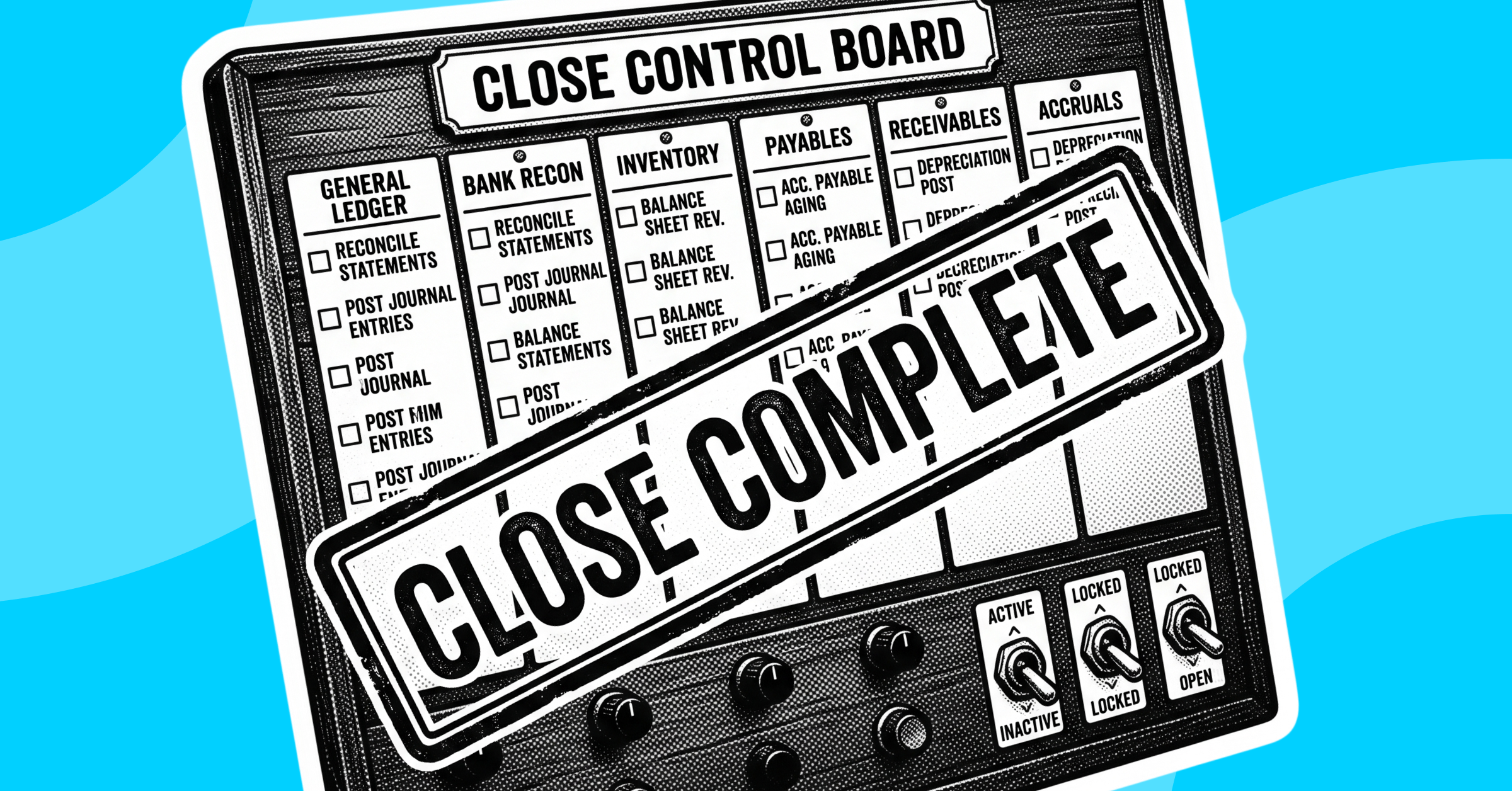
Close management automation software replaces manual close checklists and spreadsheet trackers with software that assigns, schedules, and monitors every month-end close task automatically, then routes each one through review and sign-off with a built-in audit trail. It's the task-orchestration layer of the broader financial close process, distinct from account reconciliation software, which matches transactions rather than manages tasks. Most close management platforms also add real-time dashboards showing exactly which tasks are late, at risk, or blocking the close.
How I Ranked Close Management Automation Software
I looked at close management platforms from BlackLine and Trintech down to newer AI-native entrants like Numeric, spending time in each vendor's own documentation, product pages, and published G2, Capterra, and Gartner Peer Insights feedback rather than relying on vendor claims alone. Every platform in this list showed up repeatedly in close-management conversations among Controllers and Accounting Managers, not just in vendor marketing.
I ranked each platform on the criteria that actually determine whether a close management rollout succeeds or turns into another unused tool:
Automation depth: Whether the platform actually removes hands-on task-tracking work — automated assignment, escalation, and status rollups — or just digitizes a checklist someone still has to update by hand.
ERP integration depth: Whether close tasks connect live to the underlying ERP for status and data, or the platform runs as a disconnected tracker that still requires manual updates when something changes upstream.
Ease of implementation and use: Typical rollout timelines, whether dedicated admins or consultants are required, and how quickly a team sees its first clean close cycle.
Scalability across entities: Whether the platform handles growing entity counts, multiple ERPs, and rising task volume without a re-implementation or a forced upgrade to a pricier tier.
Security and compliance: SOC 2 support, segregation-of-duties controls, audit-trail depth, and role-based access, since close management software is often the system of record auditors review directly against SEC internal-control requirements under Section 404 of Sarbanes-Oxley.
Pricing structure and transparency: Whether the vendor publishes pricing or requires a sales call for even a ballpark figure, and how predictably cost scales with users and entities.
Side-by-Side Comparison: Best Close Management Software at a Glance
8 Best Close Management Platforms Reviewed in Detail
1. BlackLine
Best For: Large enterprises and shared-services teams running complex, audit-heavy close processes across multiple entities and ERPs.
Overview: BlackLine is a cloud-based financial close platform built around a "command center" for close task management, combined with account reconciliation and its Verity AI layer for intelligent automation. It's one of the longest-established names in financial close software, repeatedly named to G2's Best Accounting & Finance Software lists, and is used widely across shared services and GCC setups replacing spreadsheet-based close processes. Performance Food Group reports automating 97% of its journal entries on the platform.
Key Features:
- Close task command center: Configurable, cloud-based task management with automated task lists, assignments, and workflows to track thousands of close tasks.
- Real-time close dashboards: Process orchestration that monitors tasks throughout the close cycle to surface bottlenecks and overdue items.
- Centralized close calendar: Consolidates month-end close activities into one location, replacing inconsistent checklists and spreadsheets.
- Role-based permissions and SoD: Segregation-of-duties controls built into task assignment and approval.
- Sign-off workflows: Role-based approvals with real-time tracking across the entire close.
- Comprehensive audit trails: Documents user access and every process step for SOX and external audit support.
Pros:
- Strong close and reconciliation automation: Meaningfully reduces reliance on manual spreadsheets by consolidating close activity into one place.
- Clear task ownership and status visibility: Centralizes who owns what during close, replacing status-check emails and meetings.
- Solid audit trail and compliance documentation: Well suited to SOX and controls-heavy environments that need a defensible audit record.
- Intuitive day-to-day interface: Generally user-friendly for reconciliation and account-grouping work, with easy export to Excel.
- Reliable auto-matching at volume: Reconciliation-focused reviewers report consistent transaction matching even at higher volumes.
Source: G2
Cons:
- Steep learning curve and complex setup: Onboarding requires significant training, and initial configuration takes longer than most teams expect.
- ERP integration friction: Reviewers specifically flag connectivity issues with Microsoft Dynamics, and note SAP, NetSuite, and Intacct connections need more configuration effort than marketed, with data sync sometimes lagging a day or more.
- Performance slows at scale: Noticeable slowdowns with large datasets or when a single user is assigned many accounts.
- Limited reporting customization: Some reviewers export to external tools for advanced reporting, since native dashboard customization is limited.
- Clunky admin experience: Restricted user-permission changes often require escalating to BlackLine support rather than self-service adjustment.
Source: G2
Pricing: BlackLine doesn't publish pricing — cost is fully custom, based on modules licensed, entity count, transaction volume, and contract term. According to Vendr, the median annual contract is approximately $40,125/year, with most deals falling between $13,200 and $101,000/year; enterprise deployments can run well past $500,000/year. Implementation and training are typically billed separately.
2. Trintech
Best For: Large enterprises with multi-entity, multi-ERP operations and strict governance or regulatory compliance requirements.
Overview: Trintech's Cadency platform is a financial close and record-to-report system built for enterprises running high transaction volumes across several ERPs. It automates close task orchestration, account reconciliation, intercompany accounting, and journal entry management under one governed workflow, with Adra as Trintech's separate, lighter mid-market product line. Boston Scientific standardized close across 93 entities and 53 countries on the platform.
Key Features:
- Close task management dashboard: Dashboard-driven orchestration providing repeatable, visible workflow for period-end activities.
- Real-time bottleneck tracking: Surfaces issues and delays during close as they happen, not after the fact.
- AI-based close planning: Predictive forecasting of close timing, workload, and likely bottlenecks before they occur.
- Governance and configurable workflows: Documented controls built for audit readiness across entities.
- Intercompany accounting controls: Streamlines intercompany transactions with enhanced approval and matching controls.
- Multi-ERP dashboard: Centralized tracking across multiple ERPs and entities in a single view.
Pros:
- Centralizes multi-entity close activity: Brings close status across multiple ERPs and entities into one dashboard with clear completion visibility.
- High-volume auto-matching: Handles large transaction volumes with minimal manual effort, cutting reconciliation time from weeks to days for some users.
- Enforced approval workflows: Prevents steps from being skipped and keeps supporting documentation in one searchable place.
- Smooth onboarding for its complexity: Implementation and support are described as responsive relative to the platform's scope.
- Logical interface once ramped up: Intuitive menu structure once teams get past the initial learning curve.
Source: G2
Cons:
- Performance degrades on large reconciliations: Described as slow and cumbersome during peak close periods or with complex account structures.
- Inflexible task reassignment: Ad hoc task loading isn't flexible, and regional access restrictions limit cross-team collaboration on shared tasks.
- Complex setup requiring specialized knowledge: Integration and configuration demand dedicated expertise, with limited API access for custom automation.
- Split product architecture: Cadency and Adra sit as separate product lines rather than one unified platform, which reviewers and competitor analyses both flag as a governance complication.
- Occasional reliability issues: Intermittent system errors and misalignment between task status and the connected ERP have been reported.
Source: G2
Pricing: Trintech does not publish pricing for Cadency or Adra on its site. Cost is custom-quoted based on entity count, transaction volume, modules licensed, and ERP complexity — no third-party source publishes a reliable estimate, so budget for a sales conversation early in evaluation.
3. FloQast
Best For: Mid-market to enterprise accounting teams that want a fast, low-friction close-management rollout without heavy IT involvement.
Overview: FloQast is a close-management platform built to modernize month-end close, reconciliations, and task tracking for accounting teams already comfortable with spreadsheets. It's aimed at Controllers and accounting managers running ERPs like NetSuite, SAP, Oracle, and Microsoft Dynamics, and markets itself around an "accountant-built" positioning designed for rapid adoption. Twilio International reports saving over 800 hours a year using the platform.
Key Features:
- Automated close checklists: Replaces manual Excel close calendars with automated task scheduling.
- Real-time close dashboards: Progress visibility and accountability by task and owner.
- Centralized close files: Single source of truth that reduces version-control issues across a distributed team.
- Task-level collaboration: Real-time messaging tied directly to specific reconciliations and tasks.
- Process analytics: Flags bottlenecks and trends across close cycles for continuous improvement.
- ERP connectivity: Integrations with NetSuite, Sage, Oracle, and Microsoft Dynamics for pulling balance data automatically.
Pros:
- Fast onboarding and adoption: Spreadsheet-familiar interface shortens the learning curve for accounting teams used to Excel-based closes.
- Centralized checklists and status: Cuts down status-check emails and meetings by putting task ownership and reconciliation status in one dashboard.
- Solid audit trail: Logs sign-offs, completion timestamps, and linked supporting documents, easing audit prep.
- Strong ERP connectivity: Reliable data pulls from NetSuite, Sage, Oracle, and Microsoft Dynamics.
- Builds accountability: Real-time visibility into close progress reduces bottlenecks and finger-pointing.
Source: G2
Cons:
- Balance-level, not transaction-level, integration: When a reconciliation doesn't tie out, accountants still have to go back into the ERP to investigate root-cause transactions.
- Manual flux analysis: The tool compares period balances but doesn't auto-generate GL-level explanations, so teams still export to Excel for variance narratives.
- Reactive rather than proactive: Tracks whether a task got done but doesn't monitor underlying data quality in real time, so posting errors often surface late.
- Limited reporting and bulk-edit customization: Some users find amortization handling and mass-update workflows clunky.
- Pricing opacity: No published pricing, and incremental modules like transaction-level automation add-ons are priced separately, so real cost can run well above the advertised entry point.
Source: G2
Pricing: FloQast doesn't publish pricing; every package on its site is "Contact Sales." According to Vendr, the median actual contract across tracked purchases is approximately $24,000/year, with add-on modules like transaction-level automation priced separately and typically adding $15,000–$50,000/year.
4. Numeric
Best For: Growth-stage and mid-market accounting teams on QuickBooks, Xero, or NetSuite who want a modern, AI-native close checklist without enterprise pricing.
Overview: Numeric is an AI-powered close automation platform unifying close checklists, task management, reconciliation, and flux/variance analysis for controllers at growth-stage and mid-market companies. Customers include Brex, Asana, and Wealthfront, and the platform is positioned specifically around reducing manual month-end work with AI-drafted variance commentary.
Key Features:
- Close project management: Orchestrates month-end, quarter-end, and year-end close cycles with segregation of duties.
- Account reconciliation with materiality thresholds: Auto-rolls forward month to month and attaches supporting work papers automatically.
- AI-drafted flux analysis: Generates variance explanations organized by revenue, opex, or department.
- Auto-reconciliation with notifications: Flags exceptions as they occur rather than at month-end review.
- Review notes and Slack integration: Built-in collaboration tools tied to specific close tasks.
- Continuous transaction monitoring (Enterprise tier): Ongoing, controlled close visibility for teams on mature ERPs like NetSuite.
Pros:
- Intuitive, structured reconciliation: Auto-rolls forward each month, easing the review process for controllers.
- Clear task and checklist visibility: Improves cross-team collaboration and transparency into where the close stands.
- Automatic entry tracking: Journal entries get tracked and flagged automatically so approvals happen on time.
- Attachable references: Ability to attach worksheets and reference links directly to tasks reduces back-and-forth during close.
- Genuinely fast to use: Repeatedly cited as speeding up monthly closings versus a spreadsheet-based process.
Source: G2
Cons:
- Reconciliations locked to month-end dates: No flexibility to reconcile as of an arbitrary date.
- UI friction between screens: Toggling between views to link journal entries feels cumbersome, and the reconciliation page can lag with larger data sets.
- Limited customization: Restructuring or deleting categories has real limits.
- Rigid sign-off steps: Forced approval steps can add workflow friction for smaller teams.
- Single-purpose scope: Focused on close management only, without unifying upstream AR/AP or reconciliation data the way broader platforms do.
Source: G2
Pricing: Numeric is one of the more transparent vendors in this category. Essentials starts at $30 per user per month, billed monthly, and covers close project management, segregation of duties, review notes, and Slack integration. Growth and Enterprise tiers, which add live ERP integration, auto-reconciliation, and continuous monitoring, move to custom pricing.
5. Bluecopa
Best For: Mid-market to enterprise finance teams that want close management running on top of already-unified Order-to-Cash and Procure-to-Pay data, not disconnected from it.
Overview: Bluecopa is an AI-native finance operations platform built on SamyxAI that unifies Order-to-Cash, Procure-to-Pay, and Record-to-Report on a single data layer, with close management and continuous close as core R2R capabilities. Rather than treating close as a standalone tracker sitting above whatever data the ERP hands it, Bluecopa's close tasks run on reconciliation and transaction data the platform has already processed upstream. Purplle accelerated month-end close by 50% after adopting the platform.
Key Features:
- AI-planned close task management: Automated close checklists with intelligent assignment and real-time bottleneck tracking, part of Bluecopa's continuous close capability.
- Predictive close insights: Forecasts close timing, workload distribution, and likely bottlenecks before they delay sign-off.
- Automated escalation and calendar orchestration: Auto-assigns and escalates overdue tasks without manual chasing.
- Consolidated entity status tracking: Close checklists, reminders, and review notes visible across every legal entity in one place.
- Smart journal entry templates: Approval workflows built directly into the close task flow, feeding from already-reconciled transaction data.
- Full audit trail and controls: Documentation and sign-offs centralized as part of Bluecopa's controls and audit trail layer, supported by policy-as-code approval gates from Samyx Build.
Note on review data: Bluecopa's G2 review base (26 reviews as of July 2026) is the smallest in this comparison, even though its 4.8/5 rating is tied-highest. Buyers evaluating Bluecopa should ask directly for close-management-specific customer references alongside the published rating, since a newer entrant's review sample takes time to reach the scale of BlackLine's or FloQast's.
Pros:
- Close runs on already-unified data: Close tasks and journal entries draw on transaction data already reconciled through Bluecopa's O2C and P2P modules, reducing rework compared to close tools that sit disconnected from upstream data.
- Fast time to first clean close: Customers report accelerated month-end close cycles after implementation, without a multi-quarter rollout.
- Broad ERP integration: Native connections across 200+ systems including SAP, Oracle NetSuite, Sage Intacct, and Microsoft Dynamics.
- AI-native variance narratives: Samyx Narrate generates variance and trend commentary automatically as part of the close workflow.
Growing review base with no reported negatives to date on G2 and Capterra, though the smaller sample size means broader market feedback is still emerging.
Cons:
- No statutory consolidation: Teams needing multi-entity legal consolidation alongside close management will need a separate tool for that step.
- Thinner review base than category leaders: With 26 G2 reviews, prospective buyers have less independent feedback to draw on than with BlackLine, Trintech, or FloQast.
Source: G2
Pricing: Bluecopa uses custom, quote-based pricing scoped to modules, entity count, and transaction volume — contact sales for a tailored quote.
6. OneStream
Best For: Large enterprises already standardized on OneStream for consolidation and planning that want close management inside the same platform.
Overview: OneStream is a unified Corporate Performance Management platform bringing financial close, consolidation, reporting, and planning into one environment. Close management is one module within this broader platform rather than a standalone product, built for large enterprises running multiple GL/ERP systems and needing compliance support across US GAAP and IFRS. Named customers include Costco, Nasdaq, and Comcast.
Key Features:
- AI-powered account reconciliation: Matching and anomaly detection built into the close module.
- Unified journal entry management: Journal entries managed across multiple ERPs with full audit trails.
- Consolidation-integrated close workflow: Intercompany eliminations, currency translation, and entity management tied directly into close.
- Direct GL/ERP integration: Connects to Oracle, SAP, and Microsoft Dynamics with drill-back to source transactions.
- SOX controls support: Certifications and audit-trail compliance features built for regulated enterprises.
Pros:
- Faster consolidated close cycles: Reviewers describe shaving multiple days off close timing once fully implemented.
- Single source of truth across ERPs: Consolidating actuals from disparate GL systems into one place reduces reconciliation friction between systems.
- Built-in reconciliation templates: Automated matching streamlines the reconciliation step as part of close, not as a bolt-on.
- Automated intercompany eliminations: Reduces manual month-end adjustment work for multi-entity organizations.
Source: G2
Cons:
- Steep learning curve: Configuration requires a solid technical/finance-systems background, not intuitive for non-technical close teams.
- Long, expensive implementation: Setup often requires consultant support before close-specific benefits show up.
- Reporting takes manual building: Close-specific dashboards and views take significant effort and training to configure, with performance issues on large datasets.
- Cost: Repeatedly flagged as expensive and generally unsuitable for smaller organizations.
- Close is secondary to consolidation: The platform's rating and reviews reflect the whole EPM suite, not close management specifically, which can obscure how close-specific feedback actually looks.
Source: G2
Pricing: OneStream doesn't publish pricing. According to Vendr, average annual cost runs approximately $177,500–$178,000/year, with some deals reaching $290,000/year, based on a small tracked sample.
7. HighRadius
Best For: Enterprises already running HighRadius for Order-to-Cash that want close automation bolted on rather than sourced separately.
Overview: HighRadius is an AI-powered finance automation platform spanning accounts receivable, treasury, and record-to-report, with financial close and journal entry management sitting inside its broader R2R suite rather than as a standalone product. It was named a Challenger in the 2026 Gartner Magic Quadrant for Financial Close and Consolidation Solutions. Named customers include Conference Direct and Kraft Heinz.
Key Features:
- AI agents for close tasks: Automated handling of cash accounting, PO accruals, and prepaid expense amortization.
- Real-time anomaly detection: Continuous GL monitoring with AI alerts for close-relevant exceptions.
- Automated journal entry posting: Claims 95% posting automation to connected ERPs.
- Intercompany reconciliation: Automated cash clearing and AR/AP posting tied to close tasks.
- Native ERP integration: Connections to SAP, Oracle, Microsoft Dynamics 365, and NetSuite.
Note on review data: HighRadius's dedicated "Financial Close & Reconciliation Software" G2 listing carries only 2 reviews as of this research — a genuinely thin sample. Its flagship AR product has 237 G2 reviews, but that figure reflects a different product and shouldn't be read as evidence for close management specifically. Buyers should ask for close-specific customer references rather than relying on the aggregate close rating.
Pros:
- Automates matching and JE generation: Cuts manual journal entry work by generating entries for ERP posting automatically.
- Standardized matching rules: Supports consistent reconciliation and close processes across teams.
- Relatively shallow learning curve: Described by users as user-friendly despite the platform's automation depth.
Source: G2
Cons:
- ERP integration friction: Reviewers flag issues connecting with Microsoft Dynamics/Business Central and delays uploading data.
- Rigid month-close workflow: All tasks must be completed before a new month's checklist can open, reducing flexibility.
- Limited filtering and formatting: Missing currency formatting and filtering options in parts of the interface.
- No partial matching: Cannot surface missing or incomplete transactions through partial matches.
- Close secondary to AR/treasury: Close management functionality is bundled inside a broader suite rather than purpose-built, and third-party "best financial close software" roundups frequently omit HighRadius entirely.
Source: G2
Pricing: HighRadius doesn't publish pricing. According to Vendr, median contract value is approximately $12,973/year, though this figure looks low relative to typical enterprise close deployments and may reflect a narrower module — treat it as directional only and confirm scope with sales.
8. CCH Tagetik
Best For: Mid-market to enterprise CPM buyers who want close management bundled with consolidation, planning, and ESG reporting.
Overview: CCH Tagetik, from Wolters Kluwer, is primarily a Corporate Performance Management platform covering financial consolidation, planning, reporting, and ESG performance management, with close management as one embedded module. It targets finance teams managing complex multi-entity, multi-GAAP consolidation and close processes, and was named a Leader in Gartner's 2025 Magic Quadrant for financial consolidation solutions.
Key Features:
- Reconcile, review, resolve workflow: Structured account reconciliation built into the close process.
- Automated intercompany eliminations: Handled as part of the same close workflow as consolidation.
- On-demand multi-currency conversions: Built directly into close and reporting processes.
- Real-time consolidation cockpit: Full visibility into close status alongside consolidation progress.
- Complete audit trail and data governance: Validates data quality before consolidation with auditable progress tracking.
Pros:
- Shortens close timelines: Automates consolidation entries, currency conversion, and intercompany eliminations that would otherwise extend month-end and quarter-end close.
- Unifies close with planning and reporting: Removes the need for fragmented point tools across close, consolidation, and reporting.
- Centralized data reduces spreadsheet errors: Single source of truth for close-relevant financial data.
- Strong audit trail and governance: Supports auditability of close transactions and segregation-of-duties controls.
Source: G2
Cons:
- Time-consuming implementation: Initial configuration is technically demanding and extends time-to-value.
- Steep learning curve: Significant training needed before users are proficient with close procedures.
- Performance lags on large runs: Large consolidation and calculation runs can take noticeably long.
- Complex interface: Consolidation and merging screens can feel unintuitive for new users.
- High license cost: Cited as a barrier for smaller organizations, reinforcing its enterprise-only fit.
Source: G2
Pricing: CCH Tagetik doesn't publish pricing across its Financial Close & Consolidation, Planning, or ESG editions — all require contacting sales for a custom quote.
How to Choose Close Management Automation Software
If your close is still running in spreadsheets and email: start with FloQast or Numeric — both are built for fast adoption without heavy IT involvement.
If you're managing close across 20+ entities with strict SOX requirements: BlackLine or Trintech have the deepest governance and audit-trail depth.
If close needs to plug into consolidation and planning you already run: OneStream or CCH Tagetik keep everything in one platform.
If your close is downstream of messy AR/AP data: Bluecopa's unified O2C+P2P+R2R layer means close tasks run on data that's already been reconciled, not raw ERP exports.
By stakeholder:
CFO: cares about close-cycle length, audit defensibility, and total cost of ownership across the close stack.
Controller: cares about task visibility, sign-off accountability, and how much manual chasing the tool actually eliminates.
Close/Accounting Manager: cares about day-to-day usability, ERP data freshness, and how quickly exceptions surface.
Internal/External Auditor: cares about audit-trail completeness, segregation-of-duties enforcement, and evidence retention.
Common Mistakes When Choosing Close Management Software
- Buying for reconciliation, not task orchestration: Some platforms are stronger at matching transactions than managing the close calendar itself — confirm which problem you're actually solving.
- Ignoring ERP integration depth: A close tracker that only checks task status without pulling live ERP data still leaves teams manually verifying whether work is actually done.
- Underestimating implementation time for enterprise platforms: BlackLine, Trintech, OneStream, and CCH Tagetik all require meaningful configuration time — budget for it before committing to a close-cycle deadline.
- Assuming a high G2 rating means a large, proven review base: Check the review count, not just the star rating — several vendors in this category carry strong scores on fewer than 100 reviews.
- Skipping the pricing conversation until late: Nearly every enterprise vendor here is quote-based; get a real number early rather than assuming published tiers apply.
- Treating close management as separate from upstream reconciliation: A close checklist is only as reliable as the transaction data feeding it — disconnected systems create rework regardless of how good the checklist tool is.
Why Bluecopa Is the Right Choice for Unified Close Management
Bluecopa fits mid-market to enterprise finance teams that want close management running on data that's already been reconciled, not disconnected from it. Where BlackLine, Trintech, FloQast, and Numeric are close-management specialists that sit above whatever data the ERP or a separate reconciliation tool hands them, Bluecopa unifies Order-to-Cash, Procure-to-Pay, and Record-to-Report on one AI-native data layer, so close tasks and journal entries run against transaction data the platform has already processed, not raw exports.
For teams evaluating a move off BlackLine specifically, Bluecopa's BlackLine alternative comparison covers the feature and pricing trade-offs in more depth. For finance teams weighing whether they need close management alone or a broader R2R platform, Bluecopa's own financial close software comparison covers the wider category.
Bottom Line
If your close still runs on spreadsheets and email, and you need to get a team using something new fast, FloQast is the safest starting point, with Numeric as the better fit if your team already wants AI-drafted flux narratives baked into the checklist. If you're running close across dozens of entities with strict SOX and audit requirements, BlackLine and Trintech remain the deepest, most audit-tested options, though both come with real implementation weight and custom pricing that can run well into six figures.
If close needs to live inside a broader consolidation and planning platform you're already committed to, OneStream and CCH Tagetik keep everything in one system, at the cost of close being a secondary module rather than a purpose-built tool. And if your close is only as good as the AR and AP data feeding it, Bluecopa's unified O2C+P2P+R2R layer is worth evaluating specifically for that reason, even with a smaller review base than the category's tenured leaders. HighRadius makes sense mainly as an add-on for teams already committed to it for Order-to-Cash, rather than a first choice for close management on its own.
All Vendors Reviewed
We evaluated the following close management and financial close tools before narrowing this list to the 8 featured above: BlackLine, Trintech, FloQast, Numeric, Bluecopa, OneStream, CCH Tagetik, HighRadius, Workiva, Planful, Anaplan, Datarails, Cube, Lucanet, JustPerform (insightsoftware), Prophix, Ledge, Maxima, Redwood Finance Automation, SolveXia, Auditoria.ai, Aleph, LiveFlow, Sage Intacct native close, and Oracle Account Reconciliation Cloud.
Editorial Note
Last Reviewed: August 2026
Vendor capabilities, pricing, and customer ratings change over time. Confirm current features, pricing, and integrations directly with the vendor before making a decision.
FAQ
1. What's the best close management automation software for enterprise teams?
BlackLine and Trintech lead for large, multi-entity enterprises needing deep audit trails, SOX support, and multi-ERP governance.
2. What's the difference between close management software and account reconciliation software?
Close management software orchestrates and tracks close tasks and sign-offs; reconciliation software specifically matches transactions and balances.
3. Does close management automation software replace an ERP like SAP or NetSuite?
No. It sits on top of the ERP, automating close tasks, checklists, and journal entry workflows that would otherwise run manually in spreadsheets.
4. How much does close management automation software cost?
Most vendors, including BlackLine, Trintech, and OneStream, use custom quote-based pricing; Numeric is the exception, publishing a $30/user/month starting tier.
5. Is Bluecopa a good fit for close management alone, or only as part of a broader platform?
Bluecopa fits best when close needs to run on already-unified O2C and P2P data; teams needing only a standalone close checklist may prefer Numeric or FloQast.
6. How long does close management software take to implement?
FloQast and Numeric typically go live in weeks; BlackLine, Trintech, OneStream, and CCH Tagetik often require months and dedicated implementation support.