


Key Takeaways
- Order-to-Cash (O2C) and Procure-to-Pay (P2P) are mirror-image processes that cover opposite sides of the same cash flow.
- O2C manages money coming into the business through sales, invoicing, and collections. It lives on the Accounts Receivable ledger.
- P2P manages money going out of the business through purchasing and vendor payments. It lives on the Accounts Payable ledger.
- Together, O2C and P2P determine a company's working capital position and cash conversion cycle.
- Each cycle has a distinct owner and runs through 4-6 defined steps, from first trigger to final settlement.
O2C manages incoming revenue from customer orders and collections. P2P manages outgoing expenses from purchasing to vendor payments.
Introduction
Every company both sells and buys. It runs a revenue cycle to collect money from customers and a spend cycle to pay its own vendors. The order to cash vs procure to pay comparison is really a comparison of these two cycles.
Order-to-Cash (O2C) covers the sales side: it tracks a customer order through fulfillment, invoicing, and collection, and it feeds Accounts Receivable. Procure-to-Pay (P2P) covers the buying side: it tracks a purchase from requisition through vendor payment, and it feeds Accounts Payable. One brings cash in. The other sends cash out.
What Is Order-to-Cash (O2C)?
Order-to-Cash is the process a business follows to convert a customer order into collected cash.
- Owner: the sales and Accounts Receivable (AR) team, often with support from customer service and finance.
- What it covers: order capture, order fulfillment, invoicing, and cash application and collections once the customer pays.
- Ledger it feeds: Accounts Receivable. Every unpaid invoice sits on the AR subledger until it's collected.
- Why it matters: a slow O2C cycle means cash stays locked up in unpaid invoices instead of funding the business. Read more in this order-to-cash process guide.
What Is Procure-to-Pay (P2P)?
Procure-to-Pay is the process a business follows to convert a purchasing need into a paid vendor invoice.
- Owner: the procurement and Accounts Payable (AP) team, often with support from the requesting department.
- What it covers: purchase requisition, purchase order (PO) issuance, goods receipt, invoice matching against the PO and receipt, and vendor payment.
- Ledger it feeds: Accounts Payable. Every approved, unpaid vendor invoice sits on the AP subledger until it's paid.
- Why it matters: a poorly controlled P2P cycle leads to duplicate payments, missed early-payment discounts, or strained vendor relationships. See the full procure-to-pay process breakdown.
Order-to-Cash vs. Procure-to-Pay
Here are the key differences between the two cycles, mapped attribute by attribute.
Main Goal:
- O2C: collect payment for goods or services already delivered.
- P2P: acquire goods or services and pay vendors accurately and on time.
Cash Flow Direction:
- O2C: cash inflow, from customer to company.
- P2P: cash outflow, from company to vendor.
Key Steps:
- O2C: order → fulfillment → invoicing → cash application → collections.
- P2P: requisition → purchase order → goods receipt → invoice matching → payment.
Owner/Department:
- O2C: sales and AR team.
- P2P: procurement and AP team.
Linked Ledger:
- O2C: Accounts Receivable (AR), tracked via accounts receivable.
- P2P: Accounts Payable (AP), tracked via accounts payable.
How to Align Order-to-Cash and Procure-to-Pay for Working Capital
O2C and P2P don't run in isolation. Aligning them is how finance teams protect working capital.
- Map both cycles to the same close calendar: review AR and AP activity on the same monthly cadence so neither cycle drifts out of sync with the other during month-end close.
- Track DSO and DPO side by side: Days Sales Outstanding (DSO) measures how fast O2C converts sales to cash. Days Payable Outstanding (DPO) measures how long P2P holds onto cash before paying vendors. Watching both together, per Corporate Finance Institute's explanation of the cash conversion cycle, shows the real working capital gap.
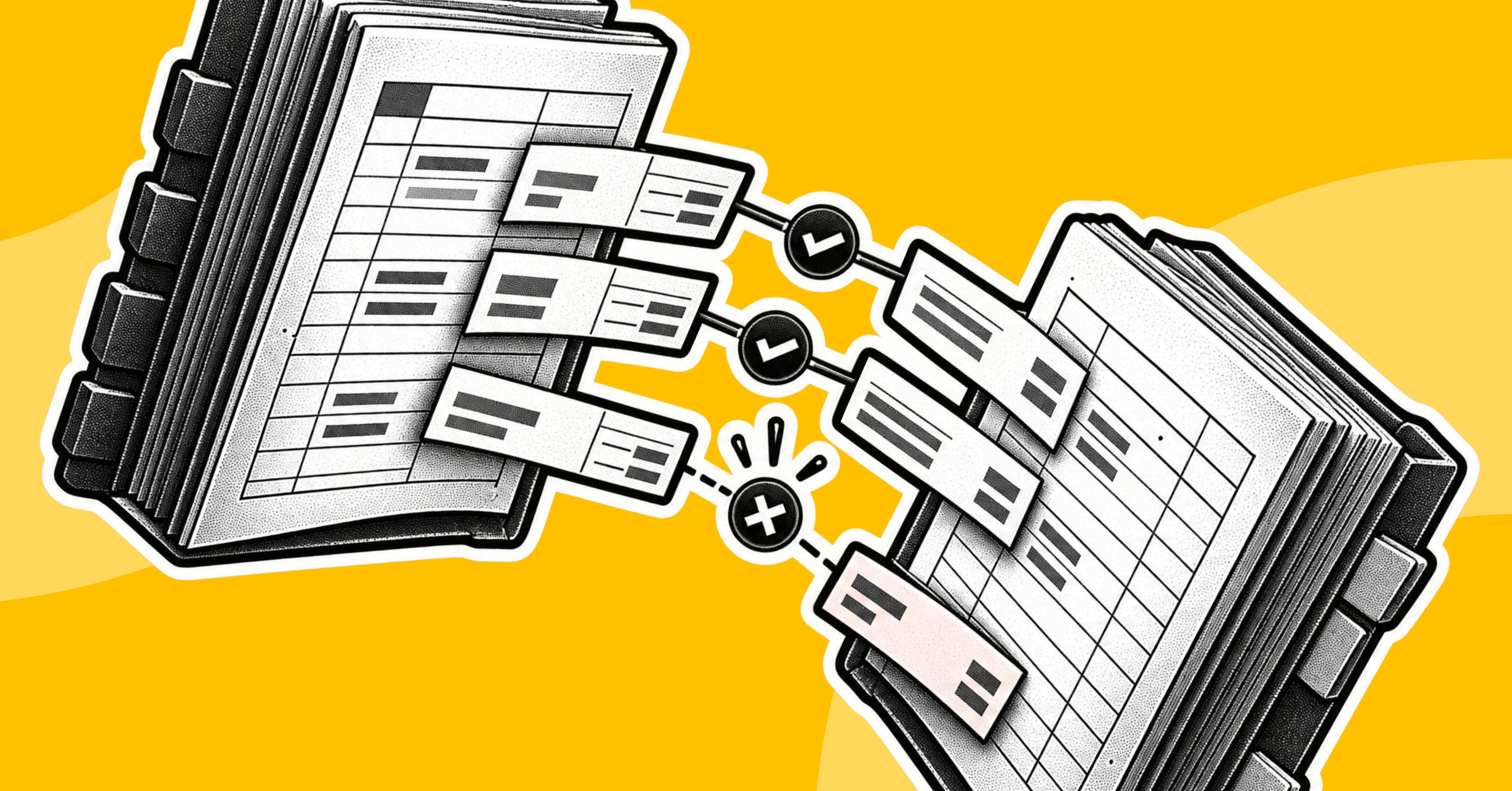
- Reconcile AR and AP subledgers before period close: unmatched invoices on either side distort the working capital picture and delay close.
- Automate matching on both sides: automated cash application on the O2C side and automated invoice matching on the P2P side cut manual effort and reduce the lag between transaction and ledger update.
Worked example: a company collects from customers in 45 days (DSO of 45) but pays vendors in 30 days (DPO of 30). It's funding operations for 15 days out of its own working capital before customer cash arrives. Closing that 15-day gap, either by shortening DSO or extending DPO, frees up cash without borrowing. Some finance teams close this gap using AI-native platforms; Bluecopa, for instance, unifies O2C and P2P on a single data layer so DSO and DPO can be tracked and reconciled together rather than in separate systems.
Conclusion
Order-to-Cash and Procure-to-Pay are mirror-image cash cycles. O2C brings money in through sales and collections. P2P sends money out through purchasing and vendor payments. Understanding both, and how they interact, is the foundation of managing working capital well.
FAQ
1. Is procure-to-pay part of order-to-cash?
No. They are separate, parallel processes. O2C manages sales and cash inflow; P2P manages purchasing and cash outflow. Neither is a sub-process of the other.
2. Which is accounts receivable: O2C or P2P?
Order-to-Cash is linked to Accounts Receivable. It generates the customer invoices and collections that make up the AR subledger, per Wikipedia's overview of order to cash.
3. How do O2C and P2P affect working capital?
O2C speed (DSO) and P2P timing (DPO) together set how much cash a company needs to fund operations before customer payments arrive.
4. What are the steps in the O2C cycle?
Order capture, order fulfillment, invoicing, cash application, and collections make up the standard order-to-cash cycle.
5. What are the steps in the P2P cycle?
Purchase requisition, purchase order issuance, goods receipt, invoice matching, and vendor payment make up the standard procure-to-pay cycle.