

Comparing the top 7 best bank reconciliation software options for finance teams in 2026 includes 1. BlackLine, 2. HighRadius, 3. FloQast, 4. Trintech (Adra by Trintech), 5. SolveXia, 6. Bluecopa, and 7. ReconArt.
Manually matching bank statements against the general ledger every month is the single biggest reason Record-to-Report (R2R) cycles stretch past a week. This guide ranks each platform on official capabilities and verified G2 and Gartner Peer Insights reviews.
This article compares the 7 bank reconciliation platforms finance teams evaluate most often in 2026, ranked on official capabilities, verified G2 and Gartner Peer Insights feedback, and real company-size fit, not marketing claims. It matters because picking the wrong tool here is expensive twice over: once in the implementation effort, and again every month the reconciliation process still doesn't scale with transaction volume.
Who Needs Bank Reconciliation Software
Bank reconciliation looks simple on paper: match the bank statement to the ledger. In practice, the bottleneck looks different depending on transaction volume, entity count, and how many bank formats a team has to support. The table below maps common finance profiles to their core reconciliation pain point and the platform on this list best suited to solve it.
What Is Bank Reconciliation Software?
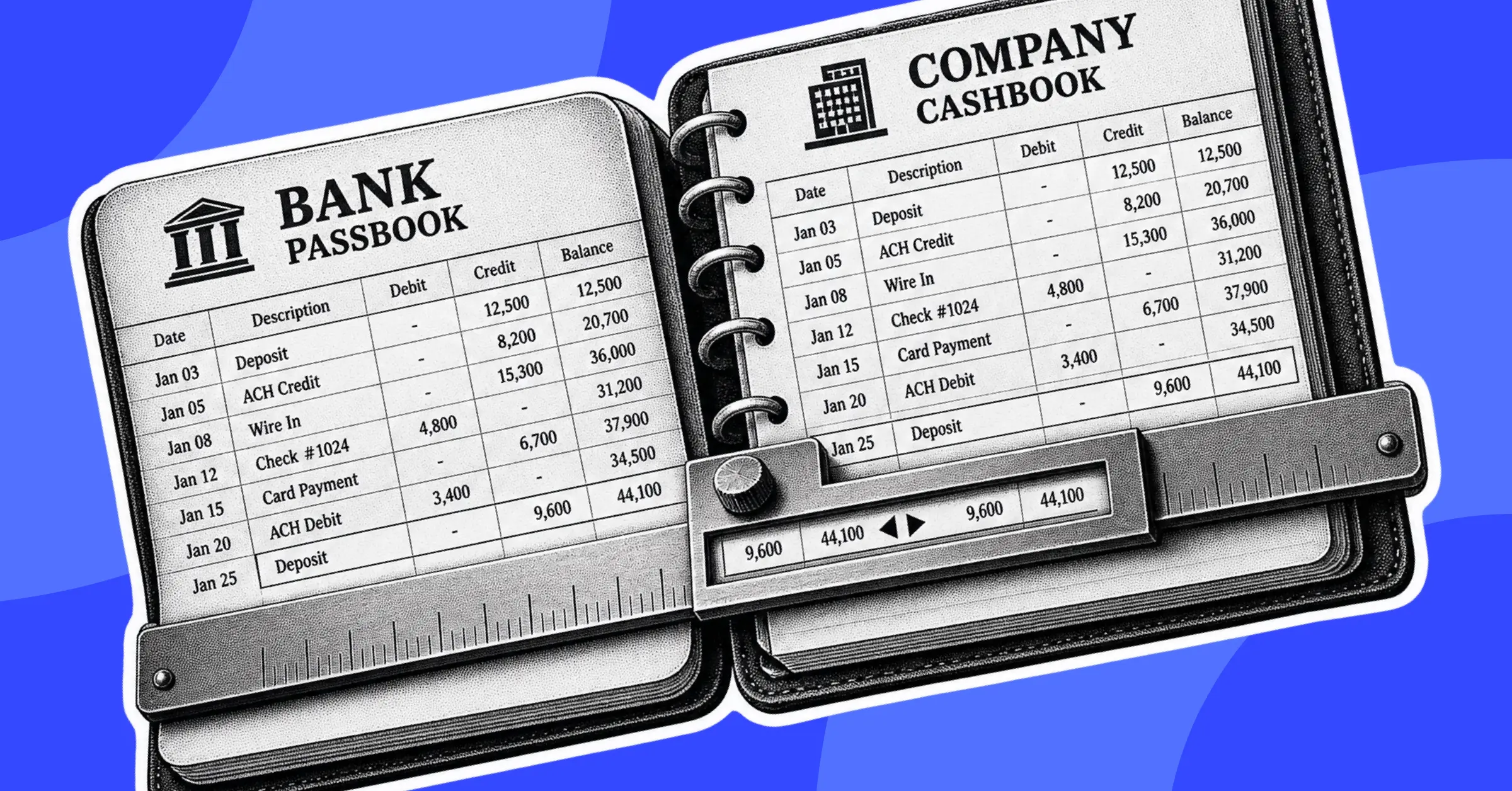
Bank reconciliation software automatically matches transactions on a bank statement against the general ledger, flags exceptions, and produces an audit-ready reconciliation report. A bank reconciliation tool replaces manual line-by-line matching in a spreadsheet with rules-based or AI-driven matching that runs continuously instead of once a month.
The global reconciliation software market was valued at roughly $4.01 billion in 2025 and is projected to reach $15.52 billion by 2035, growing at a 14.50% CAGR as finance teams move off manual, spreadsheet-based bank reconciliation.
How We Ranked
We reviewed 30+ bank reconciliation, account reconciliation, and financial close platforms on the market today and narrowed the list to the 7
We then spent over 16 hours going deeper on those 7, evaluating each vendor's official website for bank-reconciliation-specific feature depth and cross-referencing verified reviews on G2 and Gartner Peer Insights specific to matching and reconciliation functionality, not the vendor's broader product suite.
We weighted these factors:
- Matching intelligence — how much of transaction-level matching runs automatically versus needing manual review
- Bank format and data-source flexibility — native support for common bank statement formats (BAI2, SWIFT MT940, ISO 20022) and multiple banking relationships
- ERP and GL integration breadth — native connectivity to SAP S/4HANA, Oracle NetSuite, Sage Intacct, and other core ledgers
- Verified user sentiment — G2 and Gartner Peer Insights feedback specific to reconciliation and matching, not the vendor's entire product line
- Company-size fit — whether the implementation model suits mid-market or enterprise reconciliation volume
Side-by-Side Comparison: Best Bank Reconciliation Software at a Glance
The table below ranks all seven bank reconciliation platforms on company size, key differentiator, and G2 rating.
7 Best Bank Reconciliation Platforms Reviewed in Detail
1. BlackLine
Best For: Large enterprises and global public companies managing complex, multi-entity bank and balance sheet reconciliation across multiple ERPs.
Overview: BlackLine's account reconciliation platform automates bank and balance sheet matching with rule-based and AI-driven workflows, giving finance teams a single dashboard for reconciliation status and exceptions. Its Verity AI layer flags anomalies and automates low-risk account certification, so accountants focus on accounts that actually need judgment. It's built for organizations running global entities and multiple banking relationships.
Key Features:
- Automated Data Loads: Ingests bank statements and GL data automatically instead of manual file uploads.
- Auto-Reconciliation Rules: Rule-based matching that auto-certifies low-risk accounts within configured thresholds.
- Transaction Matching: High-volume data ingestion with rule-based automated matching across accounts.
- Real-Time Dashboards: Visibility into reconciliation status and outstanding exceptions across every entity.
- Journals Risk Analyzer: AI-enabled anomaly detection across journal entries tied to reconciled balances.
- Smart Close for SAP: Purpose-built reconciliation acceleration for SAP environments.
- Task Management: A cloud-based command center for reconciliation task tracking and escalation.
Pros:
- Centralizes and automates reconciliation activities: "centralize close activities, automate reconciliations, improve visibility."
- Strong balance sheet reconciliation: "gold standard for balance sheet reconciliations."
Source: G2
Cons:
- Complex initial setup: "initial setup and configuration can be complex and time-consuming."
- ERP integration gaps: "better connection to Microsoft Dynamics ... currently get data manually."
Source: G2
Pricing: BlackLine doesn't publish pricing. According to Vendr's software pricing data (cited via Coefficient), average annual contracts run approximately $77,000, with documented contracts ranging from $17,500 to $340,000/year depending on scale.
2. HighRadius
Best For: O2C-heavy enterprises and mid-market companies that want bank reconciliation automated alongside accounts receivable, not as a standalone product.
Overview: HighRadius offers an AI-powered financial close and reconciliation platform automating transaction matching and reconciliation across bank, balance sheet, and intercompany accounts. It's part of HighRadius's broader Autonomous Finance platform, used by 1,500+ companies including Adobe and Unilever. HighRadius reports high auto-reconciliation match rates for its customers.
Key Features:
- Automated Reconciliation: High auto-reconciliation and transactional auto-match rates across bank and balance sheet accounts.
- AI-Powered Journal Posting: Automated journal creation and posting to the general ledger once transactions are matched.
- Anomaly Detection & Resolution: Identifies variances and suggests corrections automatically.
- Multi-Account Support: Bank, balance sheet, and intercompany reconciliation in one workflow.
- GL Mapping: Automated chart-of-accounts mapping for reconciled balances.
Pros:
- Automated matching and journal entries: "It matches transactions and automates the Journal Entries needed to post in ERP."
- Configurable matching rules: "Matching Rules which helps the team from a process perspective."
Source: G2
Cons:
- ERP compatibility gaps: "Not working well with Business Central ERP."
- Rigid month-end gating: "All tasks need to be completed before you can open a new month or checklist."
Source: G2
Pricing: HighRadius uses an outcome-based pricing model with $0 implementation fees and $0 subscription fees, charging based on results delivered rather than seats, per HighRadius's own pricing announcement.
3. FloQast
Best For: Accountant-led close teams at mid-market and enterprise companies that want bank reconciliation automated without a heavy IT lift.
Overview: FloQast's reconciliation management automates the tie-out process by pulling general ledger balances directly from the ERP, then applies AutoRec Matching to handle transaction-level matching for high-volume accounts. Native integrations with NetSuite, Excel, and Box keep reconciliation status visible without manual chasing. It's used by 3,500+ companies, including Lululemon, DoorDash, and Chipotle.
Key Features:
- AutoRec Matching: Automates transaction-level matching for high-volume bank and balance sheet accounts.
- Automated GL Tie-Out: Pulls general ledger balances directly from the ERP instead of manual export.
- Intelligent Checklists: Task categorization, process documentation, and automated task rollovers with AI-assisted mapping.
- Purpose-Built Dashboards: Real-time monitoring of reconciliation status and due dates across entities.
- Collaborative Reconciliation: Native integrations with Slack, Microsoft Teams, Box, and Excel.
Pros:
- Automates the GL tie-out process: "FloQast automates the tie-out process by pulling General Ledger (GL) balances directly from your ERP system."
- AutoRec handles high-volume matching: "The AutoRec Matching feature automates transaction-level matching for high-volume accounts."
Source: G2
Cons:
- Limited granularity versus enterprise-grade platforms: "It may lack the granular transaction-level detail and advanced functionality of some other enterprise-grade platforms."
- Bulk editing runs slowly: "Bulk editing reconciliations runs sluggishly."
Source: G2
Pricing: FloQast doesn't publish pricing. According to Coefficient pricing analysis (citing Vendr and G2 data), plans start around $12,000/year, with mid-market teams (50-200 employees) typically paying $30,000-$60,000/year and larger organizations $56,000-$80,000+/year.
4. Trintech (Adra by Trintech)
Best For: Mid-market companies with high transaction volume that want to auto-certify low-risk accounts while centralizing documentation and workflows.
Overview: Adra Balancer automates balance sheet and bank reconciliation using configurable threshold rules that auto-reconcile low-risk accounts with no errors within defined deviations. It integrates directly with general ledger systems and keeps a central document library for bank statements and supporting evidence. AmeriCU reports completing all of the previous month's reconciliations in six days, and Ruby Slipper cut cash reconciliation processing time by 90%.
Key Features:
- Automated Low-Risk Account Reconciliation: Configurable threshold rules auto-reconcile accounts with no errors within defined deviations.
- Streamlined ERP Connectivity: Direct integration with general ledger systems for bank statement and balance data.
- Central Document Library: Cloud-based repository for bank statements, invoices, and supporting evidence.
- Audit Trail Automation: Comprehensive tracking of comments, changes, and approvals on every reconciliation.
- AI-Assisted Variance Analysis: Highlights balance changes and suggests likely drivers.
- Real-Time Alerts: Automatic notifications when balances change after certification.
- Audit-Ready Reporting: One-click reconciliation reports for internal and external auditors.
Pros:
- Automated matching saves time and reduces errors: "the automatching saved lots of time and human errors."
- Handles high account volume reliably: "successfully matching a significant number of items each day"
Source: G2
Cons:
- Reporting can feel inflexible: "difficulty with currency-specific account settings in reconciliation workflows."
- Performance slows on large reconciliations: "can feel slow at times, particularly when working with large reconciliations."
Source: G2
Pricing: According to VendorBenchmark's pricing analysis, Adra by Trintech runs approximately $55-$95 per user/month for the bundled Balancer and Task Manager modules, with typical enterprise annual costs ranging from $40,000-$200,000/year depending on user count (https://vendorbenchmark.com/vendors/trintech-adra-pricing).
5. SolveXia
Best For: Finance teams in banking, retail, and travel that need a no-code way to automate a reconciliation process too custom for a standard, out-of-the-box tool.
Overview: SolveXia's account reconciliation software uses an AI-powered matching engine with fuzzy logic to automatically match data across systems, claiming a 99% match rate. Its no-code process designer lets non-technical finance users build and adjust reconciliation workflows without IT tickets. Philippine Seven Corporation (7-Eleven) reduced e-wallet reconciliation from days to minutes after adopting the platform.
Key Features:
- AI-Powered Matching Engine: Fuzzy logic and intelligent rules match transactions automatically across systems.
- No-Code Process Designer: Lets non-technical users build and adjust reconciliation workflows without IT support.
- Unified Data Connectivity: Connects to multiple systems and data sources for a single reconciliation workflow.
- Real-Time Dashboards: Surfaces discrepancies and monitoring status as reconciliations run.
- Collaborative Workflows: Built-in approval processes and audit trails for every reconciliation.
Pros:
- Automation builder handles complex custom processes: "create automation processes for reporting, file manipulation and even API access to 3rd party systems."
- No-code interface is accessible without IT: "no-code interface that makes it accessible for non-technical users without IT support."
Source: G2
Cons:
- Process designer lacks loop functionality: "the lack of loop functionality within the process designer restricts programming capabilities, though workarounds exist."
- Learning curve to master full feature set: "requires time to master all features and capabilities."
Source: G2
Pricing: SolveXia doesn't publish pricing, and no credible third-party source has an independent estimate either. Custom pricing — contact sales.
6. Bluecopa
Best For: Mid-market to enterprise finance teams that want bank reconciliation, continuous close, and Order-to-Cash and Procure-to-Pay automated on one platform instead of stitching together separate point solutions.
Overview: Bluecopa is an AI-native finance operations platform for mid-market to enterprise teams running bank reconciliation, continuous close, and Order-to-Cash and Procure-to-Pay on one unified data layer. Its SamyxAI agent Samyx Recon runs multi-field fuzzy and deterministic hybrid matching built to process 5M+ records per hour, with 97-99% reconciliation accuracy. Yatra cut its manual reconciliation effort by 80% using Bluecopa.
Key Features:
- Continuous Bank Reconciliation: Always-on matching across bank transaction data instead of a single month-end batch run.
- Samyx Recon Matching Engine: Multi-field fuzzy and deterministic hybrid matching built to process 5M+ records per hour.
- AI Exception Management: Automatically classifies unmatched items and recommends resolutions.
- Automated Journal Entry Posting: Calculates and posts journal entries tied to reconciled balances with built-in audit trails.
- Unified O2C, P2P, and R2R Data Layer: Bank reconciliation, close, AR, and AP data live on one platform instead of separate systems.
- 200+ ERP and System Integrations: Including SAP, Oracle NetSuite, Sage Intacct, and QuickBooks.
- Real-Time Audit Trails: Streamlined approval workflows with built-in compliance documentation.
Pros:
- Fast, automated reconciliation: "fast reconciliation with automations and RPA helping in saving hours."
- Comprehensive reconciliation functionality: "built all necessary functionality around data, reconciliation and month end close automation."
Source: G2
Cons:
Bluecopa has a growing review base with no reported negatives to date specific to bank reconciliation, though the smaller sample size means broader market feedback is still emerging.
Pricing: Custom pricing — contact sales. Bluecopa does not publish pricing, and no credible third-party source has independently priced the platform.
7. ReconArt
Best For: Finance teams across company sizes and industries managing multiple bank accounts and formats who want a dedicated bank reconciliation specialist rather than a module inside a broader close platform.
Overview: ReconArt automates high-volume matching between any bank statement and the general ledger, with out-of-the-box support for typical bank formats including BAI, ACH, and SWIFT, plus proprietary and custom formats. Fully configurable matching rules and ready-to-go reconciliation reports give finance teams an auditable framework for control and compliance. Progressive Credit Kenya uses ReconArt to automate daily reconciliations across 27 branches.
Key Features:
- High-Volume Bank-to-GL Matching: Matches any bank statement against the general ledger at scale.
- Broad Bank Format Support: Out-of-the-box support for BAI, ACH, SWIFT, and custom or proprietary formats.
- Automated Data Import: Automates the import, matching, and reporting steps of the reconciliation cycle.
- Fully Configurable Matching Rules: Lets finance teams tune matching logic to their own chart of accounts and thresholds.
- Ready-to-Go Reconciliation Reports: Produces audit-ready reports without manual report-building.
- ERP and System Integration: Connects to core ERP and financial systems for seamless data flow.
Pros:
- Straightforward path to strong results: "the straightforward way in which you can achieve the best results."
- Resolves cash clearing issues daily instead of monthly: "resolve cash clearing issues daily rather than waiting for the full month end."
Source: G2
Cons:
- Not intuitive for first-time users: "not intuitive for end users and can be a bit intimidating for them when they first start."
- Some matching rules are difficult to configure: "some rules are difficult to create, requiring IT involvement that slows implementation."
Source: G2
Pricing: ReconArt doesn't publish pricing, and no credible third-party source has an independent estimate either. Custom pricing — request a quote.
How to Choose Bank Reconciliation Software
By pain point:
- Multi-entity, multi-bank reconciliation is your bottleneck: BlackLine.
- Reconciliation is bottlenecked by unresolved AR exceptions: HighRadius.
- You need standardized, accountant-led reconciliation checklists: FloQast.
- You need to auto-certify high volumes of low-risk accounts: Trintech (Adra by Trintech).
- Your reconciliation process is too custom for an out-of-the-box tool: SolveXia.
- Reconciliation data is scattered across O2C, P2P, and R2R tools: Bluecopa, since it's the only platform here unifying all three on one data layer.
- You manage many bank formats and no ERP-native fit: ReconArt.
By stakeholder:
- CFO: Cares about reconciliation-cycle time reduction and how reconciled data feeds management reporting.
- Controller: Cares about matching accuracy, audit trail completeness, and SOX 404 control coverage.
- Accounting Manager: Cares about task visibility, exception queues, and whether the team actually uses the tool daily.
- IT/Finance Systems Owner: Cares about ERP integration depth (SAP S/4HANA, Oracle NetSuite, Sage Intacct) and how many bank formats need to be supported.
Common Mistakes When Choosing Bank Reconciliation Software
Finance teams evaluating bank reconciliation software tend to repeat the same errors:
- Assuming every tool supports every bank format without confirming ISO 20022, BAI2, or SWIFT MT940 support for your actual banking relationships.
- Evaluating only on match-rate claims without testing the tool against your actual chart of accounts and transaction patterns.
- Picking based on brand recognition instead of confirming the tool handles your specific transaction volume and bank count.
- Underestimating change management for accounting teams used to spreadsheet-based reconciliation.
- Ignoring upstream O2C and P2P exceptions that actually cause reconciliation delays, not just the matching engine itself.
- Not confirming the pricing model (per-user, outcome-based, or usage-based) before comparing total cost of ownership.
Why Bluecopa Is the Right Choice for Unified Bank Reconciliation
Bluecopa fits mid-market to enterprise finance teams tired of running bank reconciliation, close, AR, and AP on separate tools that don't share data. Its recon automation workflow replaces the end-of-month batch match with always-on matching all period. Because Record-to-Report shares a data layer with Order-to-Cash and Procure-to-Pay, exceptions get caught upstream, not during reconciliation.
This fits GCC and shared-services finance teams and Tier 2/Tier 3 transaction-intensive enterprises managing 1M+ transactions a month, where enterprise-level cost and implementation timelines aren't justified but spreadsheet-based reconciliation no longer scales.
Bottom Line
If you run global, multi-entity bank reconciliation at enterprise scale, BlackLine is the strongest match, and if your reconciliation is bottlenecked specifically by unresolved AR exceptions, HighRadius covers that ground instead. Teams that want the highest accountant adoption and reconciliation-day visibility tend to land on FloQast.
If you need to auto-certify a high volume of low-risk accounts, Trintech's Adra by Trintech is built for that, while SolveXia is the better fit when your reconciliation process is too custom for an out-of-the-box tool and needs a no-code builder instead. If reconciliation, AR, and AP need to run on one unified data layer, Bluecopa is the only platform on this list built that way.
For finance teams juggling many different bank statement formats without a clean ERP-native fit, ReconArt is the pick, though its thinner G2 review base is worth weighing against the more established options above. Across all seven, the right choice comes down to whether the bottleneck is entity scale, AR exceptions, checklist adoption, process customization, or fragmented data across reconciliation and revenue operations.
All Vendors Reviewed
We evaluated the following bank reconciliation, account reconciliation, and financial close software tools before narrowing this list to the 7 featured above: BlackLine, HighRadius, FloQast, Trintech (Adra by Trintech), SolveXia, Bluecopa, ReconArt, AutoRek, Cashbook, Xelix, Ledge, Numeric, OneStream, CCH Tagetik, Prophix, Sage Intacct, Oracle NetSuite, QuickBooks, Xero, SS&C Blue Prism, Duco, Broadridge, Nomentia, Ledgible, ReconNET, Rebank, Cadency by Trintech, Datarails, Vena Solutions, Board, and Workiva.
Editorial Note
Last Reviewed: August 2026
Vendor capabilities, pricing, and customer ratings change over time. Confirm current features, pricing, and integrations directly with the vendor before making a decision.
Frequently Asked Questions
1. What is bank reconciliation software?
Bank reconciliation software automatically matches bank statement transactions against the general ledger and flags exceptions for review, replacing manual spreadsheet matching.
2. How long does bank reconciliation take with automation software?
Teams using platforms like BlackLine, Bluecopa, or Trintech's Adra typically cut a multi-day manual reconciliation down to same-day or near-real-time matching.
3. Does bank reconciliation software replace my ERP?
No. It integrates with your ERP, such as SAP S/4HANA, Oracle NetSuite, or Sage Intacct, to automate matching against the general ledger, not replace it.
4. What's the difference between bank reconciliation and account reconciliation software?
Bank reconciliation software matches bank statements to the GL specifically. Account reconciliation software like BlackLine or Bluecopa covers bank, balance sheet, and intercompany accounts together.
5. Is bank reconciliation software worth it for mid-market finance teams?
Yes. Mid-market teams using AI-native platforms like Bluecopa or SolveXia report faster reconciliation cycles and lower manual matching effort than legacy tools.
Which bank reconciliation software supports the most bank statement formats?
ReconArt offers the broadest out-of-the-box format support, including BAI, ACH, SWIFT, and custom formats, while most close-management platforms support a narrower standard set.