

Most finance leaders already know they should automate the close. Fewer can explain what actually happens under the hood once they do: which tasks get automated, which stay manual, and how rules-based logic differs from AI/ML matching. This guide walks through the mechanics, step by step, from close checklist automation through reconciliation, journal entries, flux analysis, exception handling, and the shift from periodic to continuous close, so you can evaluate close automation software with a working model of how it actually operates rather than a vendor pitch.
What Is Financial Close Automation?
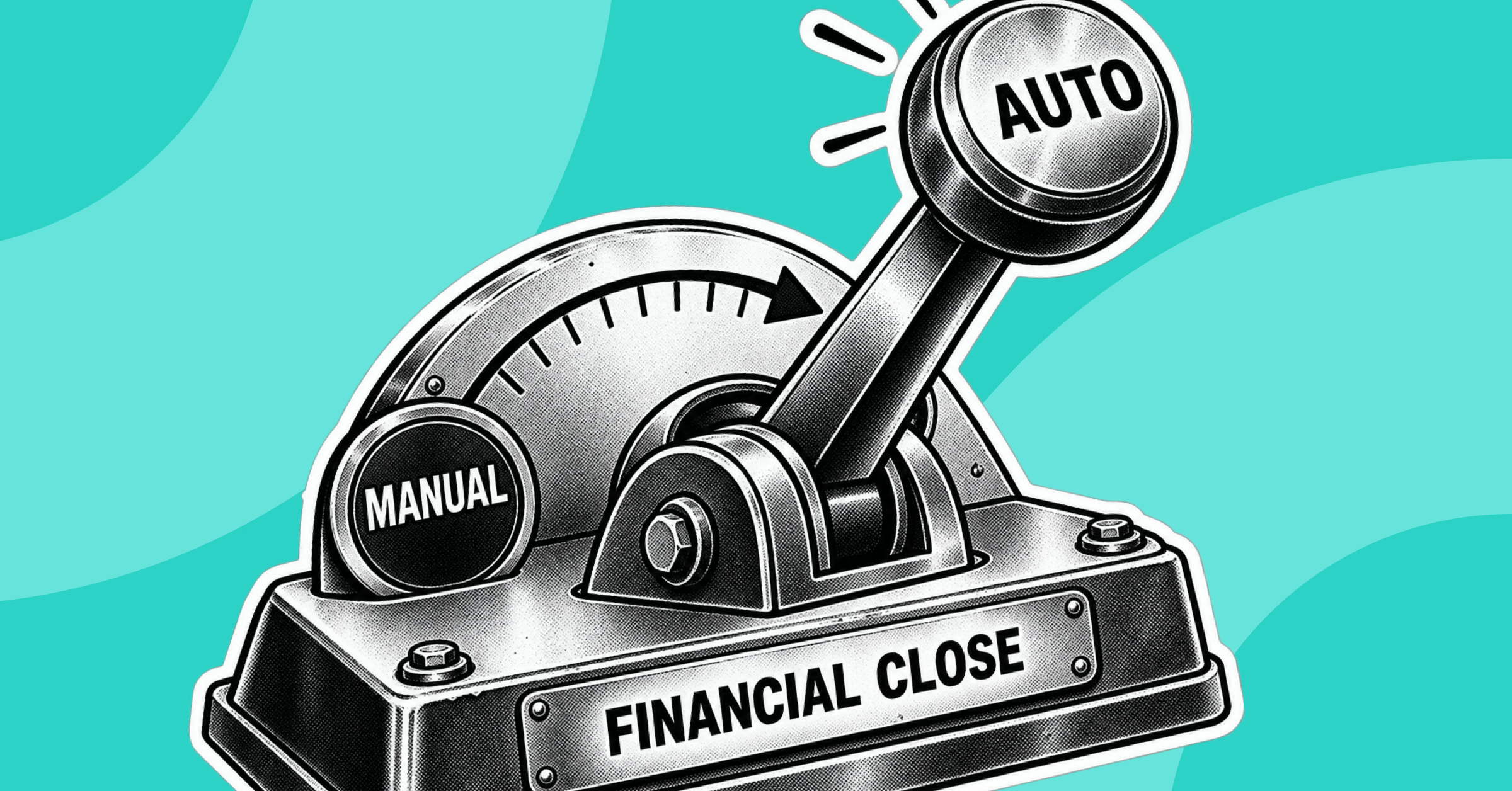
Financial close automation is the use of software to execute, monitor, and control the tasks that make up the record-to-report (R2R) cycle, the close checklist, account reconciliation, journal entry preparation and posting, variance analysis, and management review, with reduced manual intervention. It does not mean removing accountants from the close. It means removing repetitive, rules-based work (data pulls, matching, formatting, routing) so accountants spend their time on judgment calls: investigating exceptions, explaining variances, and approving entries.
In practice, financial close automation spans four layers:
- Task orchestration: the close calendar, checklist, and dependency logic that sequences who does what, and when.
- Data and matching: reconciliation automation that pulls transactions from ERPs, banks, and subledgers and matches them against each other.
- Posting and adjustment: journal entry automation, including recurring entries, accruals, and allocations.
- Review and control: flux/variance analysis, exception workflows, approvals, and the audit trail that documents all of it.
Each layer can be automated to a different degree, and that degree is exactly what separates a basic close checklist tool from a genuine continuous close software platform.
Why Does the Manual Financial Close Process Break Down at Scale?
A manual close works reasonably well for a single entity with low transaction volume. It breaks down as soon as any of these variables increase:
- Entity count: each additional legal entity multiplies the number of reconciliations, intercompany eliminations, and sign-offs required.
- Transaction volume: high-volume businesses (ecommerce, marketplaces, BFSI) generate more line items than spreadsheet-based matching can realistically handle inside a five-to-ten-day close window.
- System fragmentation: data spread across multiple ERPs, banking portals, and point solutions has to be exported, reformatted, and reconciled by hand before anyone can even start the actual review.
- Headcount dependency: when the close lives in one controller's spreadsheets and email threads, the process is fragile to turnover, leave, and GCC handoffs across time zones.
The symptom finance leaders usually notice first is close cycle time creeping upward year over year, even as the finance team grows. The underlying cause is almost always the same: task tracking, reconciliation, and review are all manual, so every added entity or transaction adds linear (or worse) manual effort, with no corresponding increase in control quality.
What Actually Gets Automated in the Financial Close Process?
It helps to separate what automation actually replaces from what it changes the shape of. Automation directly replaces:
- Manual data extraction and reformatting from ERPs, banks, and subledgers.
- Line-by-line manual matching for high-volume, low-complexity reconciliations.
- Manual routing of tasks, reminders, and status updates across a close calendar.
- Manual roll-forward of recurring and templated journal entries.
- Manual calculation of period-over-period and budget-to-actual variances.
Automation changes the shape (but doesn't eliminate) of:
- Exception review: instead of reviewing every line, accountants review only the items automation flags as unmatched or unusual.
- Approvals: instead of chasing sign-off over email, approvals happen inside a workflow with a timestamped audit trail.
- Judgment-based accounting: estimates, reserves, and non-standard entries still require human judgment, automation just prepares the supporting data faster.
What automation does not remove is accountability. Someone still owns every reconciliation, every journal entry, and every variance explanation. Automation changes how much manual effort that ownership requires, not who is responsible for the number.
How Does Close Task Management and Checklist Automation Work?
Close task management automation starts with a digital close calendar: a structured list of every task in the close, who owns it, when it's due, and what it depends on. Mechanically, this works through a few core features:
- Templated checklists: a standard close checklist is built once per entity or process area and reused every period, instead of being rebuilt or copy-pasted from last month's spreadsheet.
- Dependency logic: tasks are sequenced so downstream steps (e.g., consolidation) can't start until upstream steps (e.g., subledger reconciliation) are marked complete.
- Automated reminders and escalations: owners are notified as deadlines approach, and overdue tasks escalate to a manager automatically, replacing the controller's manual follow-up.
- Real-time status dashboards: instead of a controller compiling status from emails and spreadsheets, a live dashboard shows what percentage of the close is complete, by entity, by task owner, or by process area.
For enterprises and GCCs running the close across multiple entities and time zones, this layer alone often produces the fastest visible ROI, because it replaces the coordination overhead of the close rather than any single accounting calculation.
How Does Reconciliation Automation Work Inside the Close?
Reconciliation automation is the layer most closely tied to close cycle time, because reconciliations are usually the most transaction-heavy part of the close. Mechanically, it works in three stages:
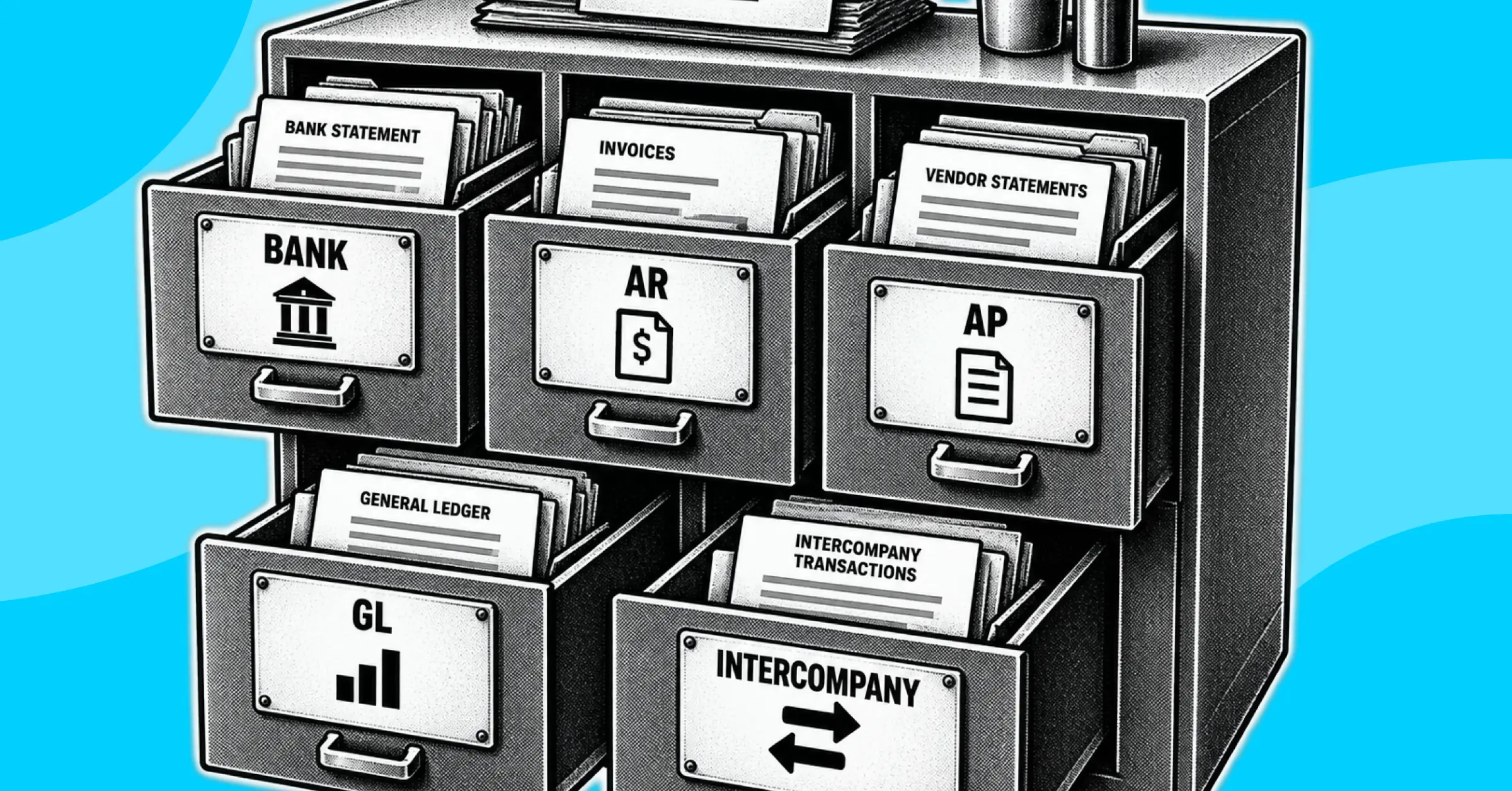
- Data ingestion: transaction data is pulled automatically from the ERP general ledger, subledgers, bank feeds, and other source systems, instead of being manually exported and pasted into spreadsheets.
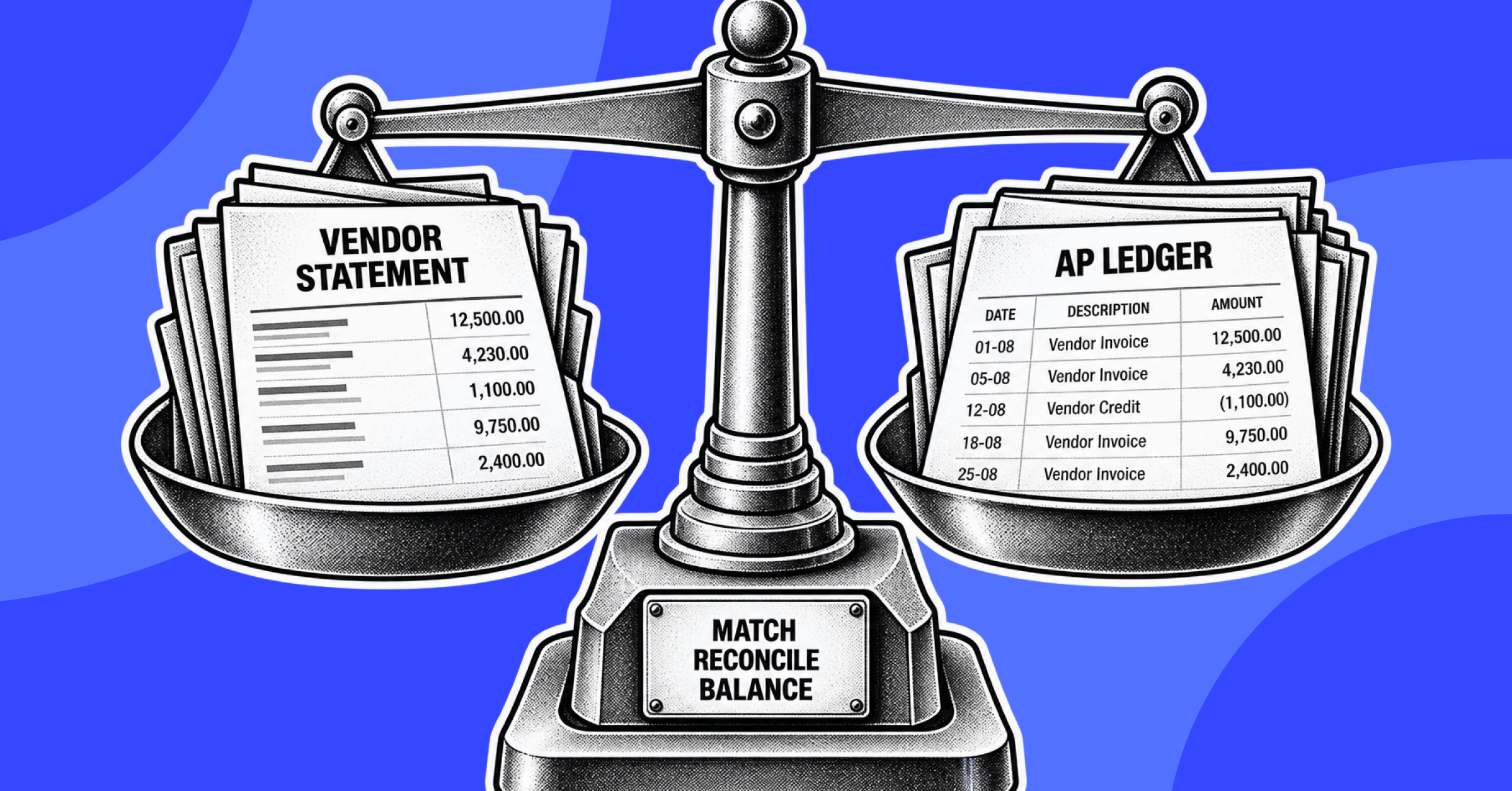
- Matching: the system compares transactions across sources (e.g., GL balance vs. bank statement, or subledger vs. GL) and identifies which items match and which don't.
- Certification: once a reconciliation is matched (or matched with documented exceptions), the preparer certifies it and a reviewer approves it, both actions logged with a timestamp.
The mechanics of stage two, matching, are where reconciliation software actually differs the most between vendors, and it's worth understanding in detail because "automated matching" is not one thing. That's covered in the next section.
Rules-Based Automation vs. AI/ML Automation in Financial Close: What's the Difference?
This distinction is where most close automation content stays vague, and it's worth being precise about, because the two approaches solve different problems and most enterprise closes need both.
How Rules-Based Matching Works
Rules-based automation matches transactions using explicit, pre-defined logic that a person configures in advance: match if the amount is identical and the date falls within a set window, match if the reference number matches exactly, match many-to-one if a set of subledger entries sums to a single GL line. Rules-based matching is:
- Fast to implement for high-volume, low-variability transactions (e.g., card settlements, standard vendor payments).
- Fully deterministic and auditable: every match can be traced back to the exact rule that fired.
- Brittle when transaction patterns vary: a rule tuned for one bank format or one entity's naming convention often needs to be rebuilt for another.
How AI/ML Matching Works
AI/ML-based matching uses models trained on historical matching patterns (and, in mature systems, on how accountants have resolved past exceptions) to identify likely matches even when there's no exact rule that covers the case: slightly different amounts due to FX rounding, descriptions that don't line up character-for-character, or many-to-many combinations that would take too many rules to enumerate manually. AI/ML matching:
- Handles variability and edge cases that rules-based logic would need dozens of narrow rules to cover, or would miss entirely.
- Improves over time as the model sees more resolved exceptions, in systems designed to learn from accountant decisions.
- Requires more governance: match confidence thresholds, human-in-the-loop review for lower-confidence matches, and periodic model validation, since a probabilistic match is not the same as a deterministic one.
The practical takeaway for a finance leader evaluating automation: rules-based matching should handle the high-volume, standard-pattern majority of transactions, and AI/ML matching should be reserved for the harder, variable, or high-judgment minority where rules don't scale. A platform that claims "AI-powered reconciliation" but can't explain which transactions are handled by rules and which by a model is worth pressing on directly.
How Does Journal Entry Automation and Posting Control Work?
Journal entry automation covers the preparation, review, and posting of both recurring and one-off entries. Mechanically, it typically includes:
- Template-based recurring entries: entries that repeat every period (standard accruals, depreciation, allocations) are generated automatically from a template and prior-period data, rather than re-keyed manually.
- Source-system-driven entries: entries derived from reconciliation results or subledger activity are generated automatically once the underlying reconciliation is certified.
- Segregation-of-duties controls: the system enforces that the preparer and approver of an entry cannot be the same person, and that entries above a defined threshold require a second approval.
- Posting controls: entries are validated against posting period rules, account mapping, and balance checks before they're allowed to post to the GL, catching errors before they hit the ledger rather than after.
The important nuance here is that journal entry automation is not about auto-posting every entry without review. It's about auto-preparing the routine entries so accountants can focus review time on the judgment-heavy, non-standard, and estimate-based entries that genuinely need a human decision.
How Does Flux and Variance Analysis Automation Work?
Flux (fluctuation) and variance analysis compares current-period results against a prior period, budget, or forecast, and explains material differences. Automating this involves:
- Automated variance calculation: the system computes period-over-period, budget-to-actual, and forecast-to-actual variances at the account or line-item level as soon as the period's data is available, instead of an analyst building this in a spreadsheet after close.
- Threshold-based flagging: variances above a configured dollar or percentage threshold are automatically flagged for explanation, so reviewers aren't scanning every line for anomalies.
- Drill-through to source detail: a flagged variance links directly back to the underlying transactions or journal entries driving it, so an analyst isn't hunting across systems to explain a swing.
- Commentary workflows: the accountable owner enters a documented explanation directly against the flagged line, building a variance commentary record that's automatically retained for audit and management reporting.
This is one of the higher-leverage automation layers for FP&A and controllership, because it turns variance analysis from a reactive, spreadsheet-built exercise into a standing output that's ready the moment the numbers close.
How Do Exception Handling and Approval Workflows Work in an Automated Close?
Exception-based workflow is the operating model that makes the rest of this automation valuable: instead of reviewing every transaction, every reconciliation, and every entry, reviewers only see what didn't match, what breached a threshold, or what a model flagged as low-confidence. Mechanically, this means:
- Automatic routing: an exception (an unmatched transaction, a flagged variance, a rejected entry) is routed automatically to the accountable owner, not surfaced only when someone happens to notice it.
- Defined resolution paths: each exception type has a documented resolution workflow (investigate, adjust, escalate, write off) rather than an ad hoc email thread.
- Aging and escalation: exceptions that sit unresolved past a set number of days escalate automatically to a manager, preventing items from quietly rolling forward period after period.
- Tiered approvals: higher-dollar or higher-risk exceptions and entries route through additional approval layers automatically, based on configured thresholds.
Every action in this workflow, who flagged it, who resolved it, what the resolution was, and when, is captured automatically as an audit trail. That audit trail is what auditors and internal controls teams actually rely on when testing the close process, and it's a meaningfully stronger control artifact than an email chain or a spreadsheet comment.
Continuous Close vs. Periodic Close: How Does Automation Change the Close Cadence?
Periodic close is the traditional model: reconciliation, review, and reporting happen in a concentrated window after period-end, typically five to ten business days. Continuous close automation shifts much of that work earlier, spreading it across the period instead of compressing it into a post-period sprint. Mechanically, continuous close depends on:
- Daily or near-real-time data feeds: transactions are ingested and matched continuously through the period, not batch-loaded once at period-end.
- Rolling reconciliation: high-volume accounts are reconciled daily or weekly throughout the period, so by period-end only a small residual of exceptions remains to review.
- Pre-close readiness checks: the system surfaces open items, unreconciled balances, and pending approvals days before period-end, rather than surprising the team on day one of the close.
The result is not a faster version of the same periodic close, it's a structurally different cadence, where period-end becomes a short confirmation and reporting step rather than the entire close effort. This is the model behind continuous close software, and it's why continuous close is usually described as a cadence change enabled by automation, not a separate automation category.
What Data, Integration, and Controls Does Financial Close Automation Require?
Financial close automation is only as good as the data and integration foundation underneath it. Before evaluating software, finance teams should confirm the following are in place or achievable:
- ERP and subledger integration: the platform needs a reliable, ideally native, connection to every source system in scope (ERP, banking portals, AR/AP subledgers, treasury systems), not just CSV upload.
- Chart of accounts and entity mapping: consistent account and entity structures across systems, so matching and consolidation logic doesn't have to be rebuilt manually for every entity.
- Data quality and standardization: inconsistent formats, currencies, and naming conventions across source systems need to be normalized before matching logic (rules-based or AI/ML) can work reliably.
- Role-based access controls: the platform must enforce who can prepare, review, approve, and post, mapped to the organization's actual segregation-of-duties policy.
- Audit trail and retention: every match, entry, approval, and exception resolution needs to be logged, timestamped, and retained in a format an external auditor can review directly.
For enterprises and GCCs operating multiple ERPs across regions, this integration layer is usually the single biggest determinant of how much value close automation actually delivers, more than any specific matching algorithm.
How to Implement Financial Close Automation: A Step-by-Step Approach
Implementation works best as a phased rollout rather than a single "automate everything" cutover. A practical sequence:
- Step 1: Map the current close. Document every task, owner, system, and hand-off in the existing close calendar, including how long each step actually takes today.
- Step 2: Prioritize by volume and risk. Identify the highest-volume reconciliations and most repetitive tasks first, these deliver the fastest cycle-time reduction.
- Step 3: Automate task management and checklists first. This is typically the lowest-risk, fastest-to-implement layer, and it establishes the close calendar the rest of the automation will plug into.
- Step 4: Roll out reconciliation automation by account type. Start with rules-based matching on high-volume, standard-pattern accounts, then extend to AI/ML matching for variable or high-judgment accounts.
- Step 5: Automate recurring journal entries. Move standard, template-based entries (accruals, depreciation, allocations) to automated generation before tackling non-standard entries.
- Step 6: Layer in flux/variance automation and exception workflows. Once reconciliation and journal entry data are flowing automatically, automated variance calculation and exception routing have clean data to work from.
- Step 7: Shift toward continuous close. Once the above layers are stable, move high-volume reconciliations to a daily or weekly cadence rather than a single post-period-end pass.
- Step 8: Validate controls and audit trail. Confirm the automated workflow satisfies internal controls and external audit requirements before relying on it as the system of record for the close.
Each step should have a defined success metric (cycle time reduction, exception rate, number of manual touches eliminated) before moving to the next, rather than automating every process area simultaneously.
What Is the ROI, and What Are the Risks, of Financial Close Automation?
The ROI case for financial close automation is usually built on a few measurable outcomes:
- Close cycle time reduction: most organizations that automate task management, reconciliation, and journal entries see meaningful reduction in days-to-close, freeing finance capacity for analysis rather than data-wrangling.
- Reduced manual error and rework: automated matching and posting controls catch errors before they post, reducing the restatements and correcting entries that consume time in later periods.
- Lower audit and compliance overhead: a system-generated audit trail reduces the time finance and audit teams spend assembling evidence manually during testing.
- Better use of scarce accounting talent: shifting accountants from data-matching to exception investigation and analysis improves both retention and the quality of financial insight the close actually produces.
The risks are real and worth naming directly rather than glossing over:
- Over-reliance on automation without review: treating a high-confidence AI/ML match as certain, rather than probabilistic, can let genuine errors through if human review is skipped entirely.
- Poor data quality undermining matching accuracy: both rules-based and AI/ML matching perform worse when source data is inconsistent, incomplete, or poorly mapped.
- Change management resistance: close automation changes roles and responsibilities, and rollouts that don't account for this often stall at the adoption stage rather than the technology stage.
- Control gaps during transition: running manual and automated processes in parallel during rollout can itself introduce control risk if ownership isn't clearly assigned for each period.
These risks are manageable with the phased approach described above and with a platform that makes rules-based vs. AI/ML matching logic and confidence levels transparent, rather than a black box.
How Bluecopa Automates the Financial Close Process
Everything above describes the mechanics of financial close automation in general. Bluecopa, an AI-native finance operations platform powered by SamyxAI, applies those same mechanics as a single, unified system for enterprise finance teams and Global Capability Centers, rather than as separate point tools bolted together.
SamyxAI-powered, exception-based reconciliation. Bluecopa applies rules-based matching to high-volume, standard-pattern transactions and SamyxAI-driven AI/ML matching to variable, high-judgment cases, the same two-layer approach described earlier in this guide, so accountants only review genuine exceptions rather than re-checking every line. Matches, confidence levels, and the logic behind each match are visible and auditable, not opaque.
Continuous close orchestration. Rather than treating task management, reconciliation, journal entries, and variance analysis as separate modules, Bluecopa orchestrates them against a single close calendar, so reconciliations that clear earlier in the period feed directly into journal entry preparation and flux analysis, shifting more of the close workload ahead of period-end in line with the continuous close model described above. This is the operating layer behind Bluecopa's Record to Report capability.
Unified controls and audit trail. Every match, journal entry, approval, and exception resolution across reconciliation, R2R, Order-to-Cash, and Procure-to-Pay is captured in one system of record, with role-based access and a single audit trail, instead of the fragmented evidence trail that results from stitching together separate reconciliation, close, and reporting tools.
For enterprise finance teams and GCCs managing multiple entities, ERPs, and geographies, this unified approach is the practical answer to the scale problems described earlier in this guide: it's what keeps close cycle time from growing linearly with entity count and transaction volume.
Frequently Asked Questions
1. How does financial close automation work in simple terms?
Financial close automation uses software to run the repetitive parts of the close, task tracking, transaction matching, recurring journal entries, and variance calculation, automatically, so accountants review only exceptions and make the judgment calls, rather than performing every step manually.
2. What is the difference between rules-based and AI-based close automation?
Rules-based automation matches transactions using explicit, pre-configured logic (exact amount and date match, for example) and works best for high-volume, standard-pattern transactions. AI/ML automation uses models trained on historical matching patterns to identify likely matches in variable or edge-case scenarios that rules can't reliably cover, and it typically requires confidence thresholds and human review for lower-confidence matches.
3. How long does it take to automate the financial close process?
Most organizations implement close automation in phases over several months rather than all at once, starting with close task management and checklist automation, then reconciliation, then journal entries and flux analysis, then a shift toward continuous close. Timelines vary by entity count, system complexity, and data readiness.
4. Does financial close automation replace accountants?
No. It removes repetitive, rules-based work like data matching and manual entry preparation, so accountants spend more time on exception investigation, variance explanation, and judgment-based accounting like estimates and reserves, which automation does not replace.
5. What is continuous close, and is it the same as close automation?
Continuous close is a cadence in which reconciliation and review happen throughout the period rather than being concentrated into a post-period-end window. It's enabled by automation (daily matching, rolling reconciliation, pre-close readiness checks) but is best understood as a change in when the work happens, not a separate automation category from the mechanics described in this guide.
6. What data or systems does financial close automation require?
At minimum, reliable integration with the ERP general ledger and relevant subledgers, a consistent chart of accounts and entity mapping across systems, role-based access controls aligned to segregation-of-duties policy, and an audit trail that logs every match, entry, and approval for audit review.