

Key Takeaways
- Reconciling every account at month-end creates a bottleneck because low-risk, high-volume accounts compete with high-risk, judgment-heavy accounts for the same close window.
- The fix is to build a complete account inventory, tier accounts by risk and volume, and assign each tier a reconciliation frequency instead of defaulting everything to monthly.
- Stable, high-volume accounts (bank, AR, AP subledgers) can be reconciled daily or weekly, well before close begins, so month-end only handles true exceptions.
- A reconciliation calendar that spreads work across the month, paired with clear preparer/reviewer ownership, turns close from a single spike into a distributed, predictable workflow.
- Automating repetitive matching on high-volume accounts frees preparer capacity for the judgment-based accounts that actually need it.
Finance teams that reconcile hundreds of accounts on the same three-to-five day close window are not doing reconciliation wrong, they are doing it inefficiently. Accounts do not all carry the same risk, volume, or complexity, yet most close calendars treat them as if they do. Breaking up monthly reconciliation into manageable pieces means matching effort, frequency, and ownership to each account's actual characteristics, so the close period is reserved for what genuinely needs end-of-period judgment. This guide walks through a practical, seven-step framework for doing that, from building an account inventory to distributing ownership and automating repetitive matching.
What It Means to Break Up Monthly Reconciliation Into Manageable Pieces
Breaking up monthly reconciliation into manageable pieces means separating a single, undifferentiated month-end reconciliation task into smaller units of work that are tiered by risk and materiality, scheduled at a frequency appropriate to each tier, and distributed across the month rather than compressed into the days immediately following period-end. Instead of one large reconciliation event covering every balance sheet account, the work is split into a continuous stream: some accounts reconciled daily, some weekly, some monthly, and a small subset quarterly. The result is a workload that is level-loaded across the close cycle instead of concentrated in a handful of high-pressure days.
This is fundamentally a question of reconciliation workload distribution, not a reduction in rigor. Every account still gets reconciled to the same standard; what changes is when the work happens and how much of it lands on the close team at once.
Why Reconciling Everything at Month-End Creates Bottlenecks
Most close calendars inherited their structure from a paper-based era when reconciliation could only start after the books closed. That constraint no longer applies for most accounts, but the habit of waiting until month-end persists. The result is a close window where preparers reconcile a high-volume bank account with thousands of transactions and a low-volume, judgment-heavy accrual account requiring a controller's sign-off, both competing for the same three to five days.
This creates three predictable bottlenecks. Preparer capacity is fixed, so time spent on mechanical, high-volume matching is time not spent investigating genuine exceptions. Reviewers face a wall of reconciliations submitted at once, which compresses review quality right when scrutiny matters most. And accounts with upstream data dependencies, such as intercompany or subledger feeds, have no room to correct discrepancies before the close deadline because everything happens in parallel with no buffer. Understanding how often account reconciliations should be performed for each account type is the starting point for resolving all three problems.
Step 1: Build an Inventory of All Reconciliation Accounts
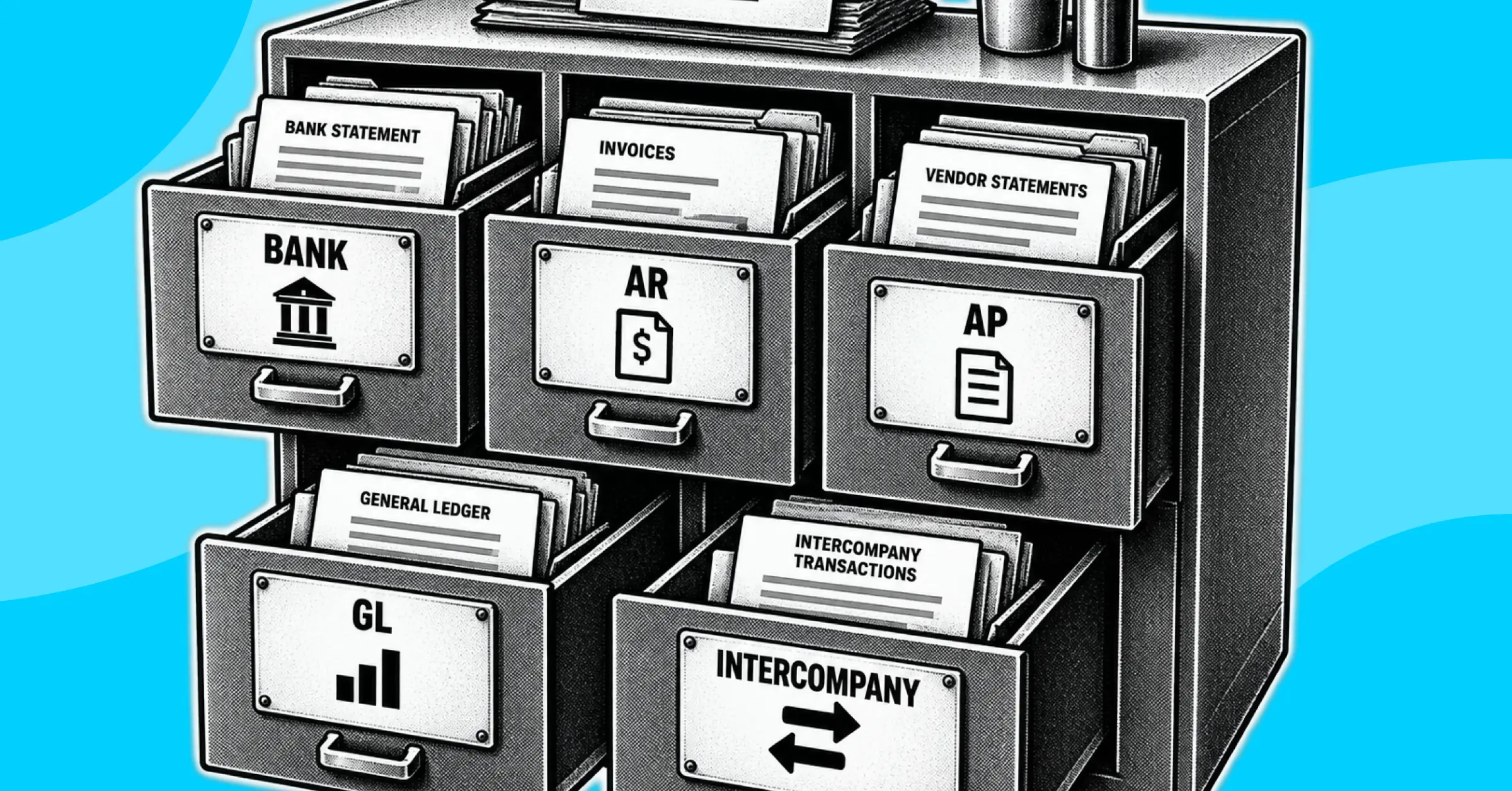
Before any account can be tiered or scheduled, finance needs a complete, current inventory of every account requiring reconciliation. This sounds basic, but in enterprise environments with multiple entities, ERPs, and years of chart-of-account changes, the inventory is often incomplete or stale. Pull the full trial balance for every legal entity, then cross-reference it against accounts your team has historically reconciled. Flag any account on the trial balance with no reconciliation history, and any reconciliation template that references an account no longer in active use.
For each account, capture at minimum: account owner, transaction volume, source system, entity, currency, and whether the account is manually funded or system-generated. This inventory becomes the foundation for every subsequent step and is worth maintaining as a living document, since new entities, subsidiaries, and system migrations constantly change the underlying account structure. Teams that want a starting template rather than building one from scratch can use a structured account reconciliation template to standardize how account attributes, risk factors, and ownership are captured.
Step 2: Tier Accounts by Risk, Volume, and Materiality
Once the inventory exists, group accounts into tiers based on three factors: financial statement risk if misstated, transaction volume, and materiality relative to the entity's balance sheet. This tiering exercise is the core of balance sheet reconciliation prioritization, and it determines how much scrutiny, frequency, and reviewer attention each account receives.
A practical High/Medium/Low tiering example for an enterprise finance function might look like this:
- High tier: cash and bank accounts, intercompany accounts, accrued liabilities, revenue recognition accounts, and any account with a history of prior-period adjustments or audit findings. These carry either high materiality, high volume, or elevated judgment risk, often all three.
- Medium tier: accounts payable and accounts receivable subledger control accounts, prepaid expenses, fixed asset subledgers, and payroll clearing accounts. These are typically high volume but lower judgment risk, since most activity is systematic and rules-based.
- Low tier: low-materiality suspense accounts, dormant legal entity accounts, minor equity accounts, and accounts with little to no monthly activity. These need periodic confirmation that nothing has changed, not deep monthly analysis.
Materiality thresholds should be set relative to each entity's size, not applied uniformly across a multi-entity enterprise, since an account that is immaterial for a large operating entity may be highly material for a smaller shared-services entity.
Step 3: Assign a Reconciliation Frequency to Each Tier
With tiers defined, assign each one a reconciliation frequency, which is where account reconciliation frequency by account type becomes an explicit policy rather than an afterthought. Frequency should track transaction volume and risk, not simply default to monthly because that's when close happens.
A frequency breakdown that works well for most enterprise finance teams:
- Daily: bank and cash accounts, payment processor clearing accounts, and any account feeding real-time cash positioning.
- Weekly: AR and AP subledger control accounts, high-volume intercompany accounts, and payroll clearing accounts.
- Monthly: accrued liabilities, prepaid expenses, fixed asset subledgers, revenue recognition accounts, and most standard balance sheet accounts.
- Quarterly: low-materiality suspense accounts, dormant entity accounts, and accounts with minimal or no activity between periods, reconciled quarterly primarily to confirm no unexpected movement occurred.
This structure directly answers the recurring question of how often account reconciliations should be performed: high-volume, high-risk accounts need continuous attention, while low-activity accounts need only periodic confirmation. Documenting this as policy, not as informal practice, is what makes it auditable and repeatable across entities.
Step 4: Reconcile Stable, High-Volume Accounts Mid-Period Instead of Waiting for Close
The accounts with the highest transaction volume, bank, AR, AP, and payment clearing accounts, are usually also the most stable in matching logic: the rules for what constitutes a match rarely change month to month. These are exactly the accounts that benefit most from being pulled out of the month-end window and reconciled continuously throughout the period.
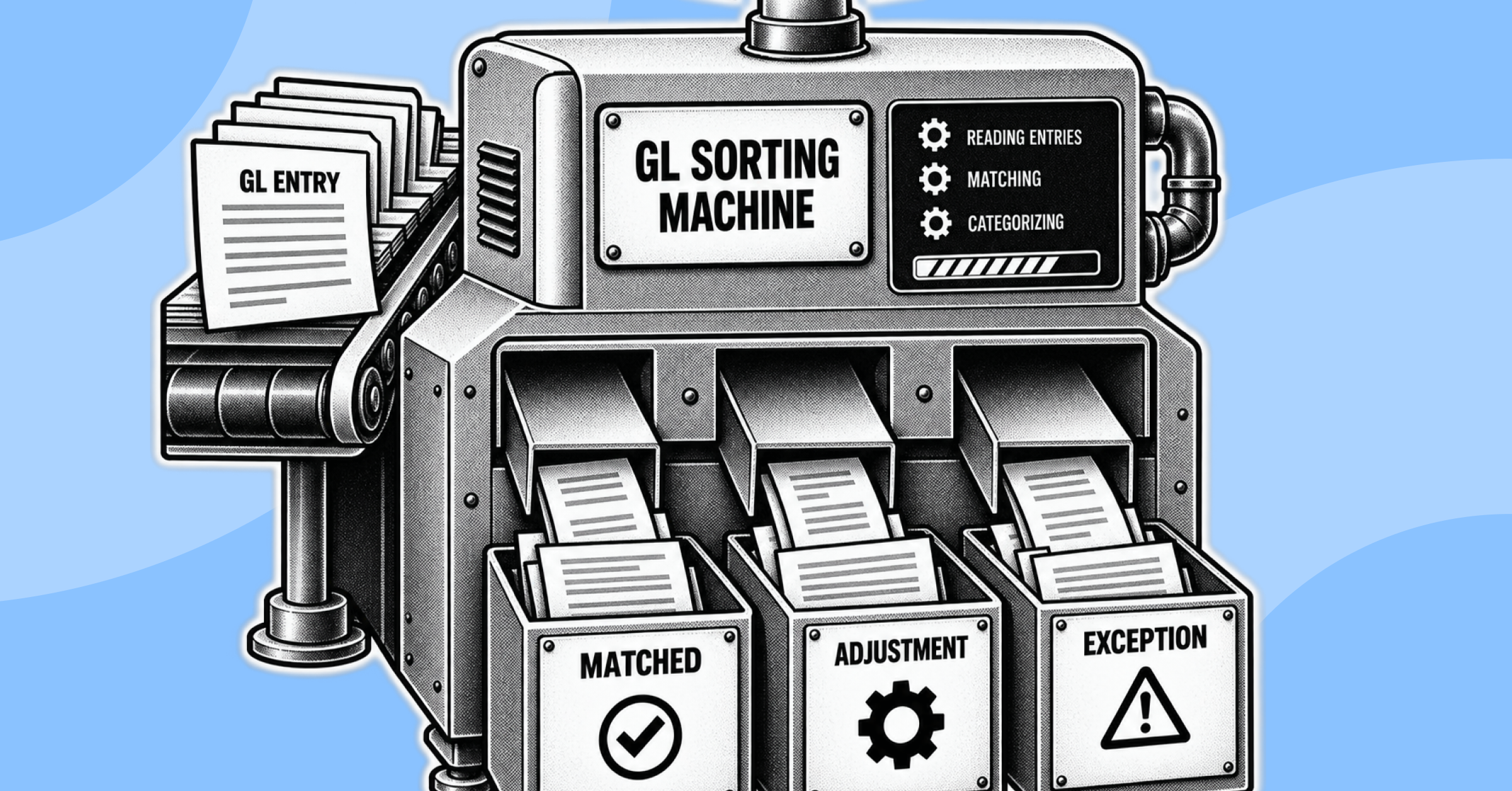
Reconciling these accounts mid-period means transactions are matched as they occur, or on a daily/weekly cadence, so that by the time close begins, the account already has a near-final balance with only a handful of open items to resolve. This is the practical difference between continuous reconciliation vs month-end reconciliation: continuous reconciliation treats matching as an ongoing operational process, while month-end reconciliation treats it as a periodic event. Shifting high-volume accounts to the continuous model removes the largest chunk of mechanical work from the close window, leaving capacity for accounts that genuinely require period-end judgment, such as accruals and revenue cutoffs.
Step 5: Build a Reconciliation Calendar That Spreads Work Across the Month
Once frequencies are assigned, translate them into an actual close calendar reconciliation schedule rather than leaving the timing implicit. A calendar makes the distribution of work visible to preparers, reviewers, and controllers, and prevents tiering from quietly reverting to "everything at month-end" once a live close cycle gets busy.
A sample week-by-week structure for a four-week period might look like this:
- Week 1: daily bank and cash reconciliations continue as normal; weekly AR/AP subledger reconciliations for the prior week are completed; low-tier quarterly accounts due this quarter are confirmed early in the cycle to avoid a pileup later.
- Week 2: daily and weekly cadences continue; medium-tier monthly accounts with no dependency on period-end cutoff, such as fixed asset subledgers, are reconciled using data available mid-month.
- Week 3: daily and weekly cadences continue; prepaid expense schedules and other monthly accounts that do not require final period activity are reconciled and reviewed.
- Week 4 (close week): only accounts genuinely dependent on period-end cutoff remain, accruals, revenue recognition, intercompany true-ups, and final bank/AR/AP tie-outs. Reviewers are working through a small, high-attention set of reconciliations instead of the entire chart of accounts at once.
Maintain the calendar as a shared, visible artifact, in the ERP's close management module or a dedicated reconciliation platform, so ownership and due dates are unambiguous every week.
Step 6: Distribute Ownership Across Preparers and Reviewers
A tiered calendar only works if ownership is distributed to match it. Assign each account a named preparer and reviewer, reflecting the tier: high-tier, judgment-heavy accounts should go to senior preparers with a controller or assistant controller as reviewer, while medium- and low-tier accounts can be distributed more broadly, including to staff accountants building reconciliation experience.
Segregation of duties matters here as much as workload balance: the person entering transactions into an account should not be the sole reviewer of its reconciliation. For enterprise, multi-entity teams, this typically means codifying approval thresholds and reviewer assignments as policy rather than relying on informal team knowledge, particularly when shared-services or GCC teams reconcile accounts on behalf of multiple entities with different materiality thresholds and local reviewers. Policy-based ownership also makes the calendar resilient to staff turnover, since a new preparer can see exactly which accounts they own, at what frequency, and who reviews their work.
Step 7: Automate Repetitive Matching to Free Capacity for Complex Accounts
High-volume, rules-based accounts, bank, AR, and AP clearing accounts in particular, are the best candidates for automated matching, since the logic for a match is largely deterministic: transaction date, amount, and reference fields align according to consistent rules. Automating this layer does not eliminate the need for a preparer, it changes their role from manually tying out thousands of lines to reviewing the exceptions the system could not automatically match.
This is where tiering and frequency work from earlier steps pays off: once high-volume accounts are reconciled continuously and automated matching handles routine transactions, preparer time is freed for the smaller number of accounts requiring genuine analytical judgment, such as accruals, revenue cutoffs, and intercompany true-ups. For a detailed walkthrough for bank accounts specifically, see how to automate bank reconciliation, which covers the data, matching logic, and exception handling required to move a bank account onto a continuous, automated cadence.
Continuous Reconciliation: The Next Step Beyond Splitting Up Monthly Work
Tiering, frequency assignment, and a distributed calendar are structural steps that make reconciliation manageable, but they are also the foundation for a bigger shift: moving from a periodic close activity to a continuous one. In a continuous close model, reconciliation is not something that happens in a scheduled window, it is an ongoing operational process where matching happens as transactions occur and exceptions are surfaced and resolved in near real time.
The distinction between continuous reconciliation vs month-end reconciliation matters because it changes what "close" means for the team. Instead of close being the moment reconciliation work begins, close becomes the moment it is confirmed complete, with most matching already done throughout the period. Enterprise finance teams that have implemented tiering and a distributed calendar are typically well positioned to extend that framework into a continuous model, since account-level frequency assignments already point toward which accounts are ready for real-time matching.
Common Mistakes When Splitting Up Reconciliation Work
A few recurring mistakes undermine this framework after teams adopt it:
- Tiering once and never revisiting it. Account risk and volume change as the business grows or ERP migrations shift transaction patterns, so tiers need periodic review, not a one-time classification.
- Assigning frequency without adjusting ownership. Moving an account to a weekly or daily cadence without assigning a preparer who has capacity for it simply creates a backlog in a different rhythm.
- Treating the calendar as aspirational rather than enforced. If preparers can quietly push weekly reconciliations to month-end when they run out of time, the distribution collapses back into the original bottleneck.
- Automating matching without addressing exception handling. Automation only helps if someone owns reviewing the exceptions it surfaces; automating the easy matches without a clear process for the rest just moves the bottleneck.
- Applying the same materiality threshold across every entity. A fixed dollar threshold that makes sense for the largest entity can misclassify accounts at smaller entities, overloading the calendar with immaterial items or missing genuinely material ones.
How Bluecopa Supports a Tiered, Continuous Reconciliation Workflow
Bluecopa is an AI-native finance operations platform powered by SamyxAI, built to unify Order-to-Cash, Procure-to-Pay, and Record-to-Report, including reconciliation, continuous close, and journal automation, on a single data layer. For enterprise, multi-entity finance teams, this matters directly for the tiering and calendar work above: account inventories, ownership assignments, and reconciliation frequencies can be managed consistently across entities instead of maintained in separate spreadsheets or disconnected point tools.
Samyx Recon, Bluecopa's matching engine, processes over 5 million records per hour at 97 to 99 percent accuracy using a hybrid of deterministic and AI-assisted matching, which makes it practical to move high-volume accounts like bank, AR, and AP onto a daily or weekly cadence without adding headcount. Matching is AI-assisted, not autonomous: the system handles routine, rules-based matches automatically and routes genuine exceptions to a human reviewer, so preparers retain control over anything requiring judgment. Samyx Build complements this with policy-as-code controls, letting finance teams codify approval thresholds, materiality tiers, and segregation-of-duties rules into the workflow, supporting the ownership distribution described in Step 6.
Enterprise teams already using this approach have seen concrete results. Yatra achieved 7x faster AR reconciliation, a 90% faster month-end close, and an 80% reduction in manual reconciliation effort. HackerEarth reduced reconciliation errors by 60%. For enterprise and shared-services teams moving from a single monthly reconciliation event to a tiered, distributed, increasingly continuous workflow, a unified platform removes much of the manual coordination that tiering and calendaring otherwise require.
Frequently Asked Questions
1. How do I decide which accounts to reconcile daily versus monthly?
Base the decision on transaction volume and risk, not habit. Accounts with high transaction volume and low judgment risk, such as bank and cash accounts, are strong candidates for daily reconciliation because the matching logic is repetitive and stable. Accounts with lower volume but higher judgment risk, such as accruals, are better suited to a monthly cadence since they require period-end information to reconcile accurately.
2. What is the difference between continuous reconciliation and month-end reconciliation?
Month-end reconciliation treats matching as a periodic event that happens after the books close for the period. Continuous reconciliation treats matching as an ongoing operational process, where transactions are matched as they occur or on a very short cadence, so that by the time period-end arrives, most of the account is already reconciled and only true exceptions remain.
3. How many reconciliation tiers should a finance team use?
Three tiers, High, Medium, and Low, is generally sufficient for most enterprise finance teams and keeps the framework simple enough to apply consistently across entities. Adding more tiers rarely improves the outcome and can make the policy harder to maintain and audit.
4. Does splitting up reconciliation work reduce the rigor of the close?
No. Every account still gets reconciled to the same standard and reviewed by an appropriate reviewer; what changes is the timing and frequency of the work, not the level of scrutiny applied to it. In practice, spreading work across the month tends to improve rigor because reviewers are not reviewing dozens of reconciliations at once under time pressure.
5. How often should intercompany accounts be reconciled?
Intercompany accounts are typically high-risk and, in enterprise multi-entity environments, often high-volume as well, which places them in the High tier. Depending on transaction volume, this usually means a weekly reconciliation cadence, with a final tie-out during the close window to confirm no unresolved items remain before consolidation.
6. Can automation handle reconciliation for accounts that require judgment, like accruals?
Automation is best suited to accounts with deterministic matching rules, such as bank and AP clearing accounts. Judgment-heavy accounts like accruals still require a preparer's analysis, but automation can support them indirectly by handling the high-volume accounts that would otherwise consume preparer time, freeing capacity for the accounts that genuinely need human judgment.