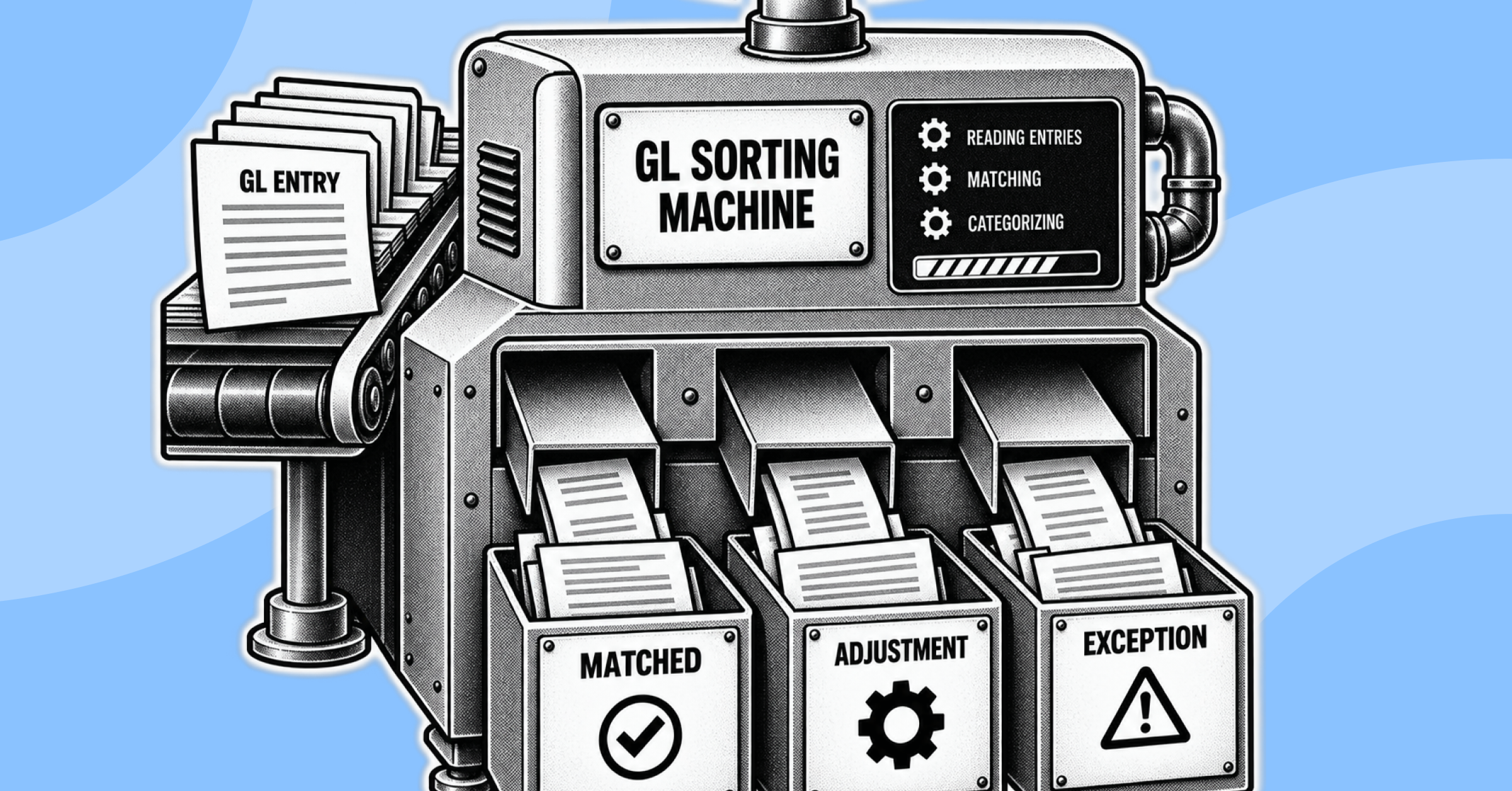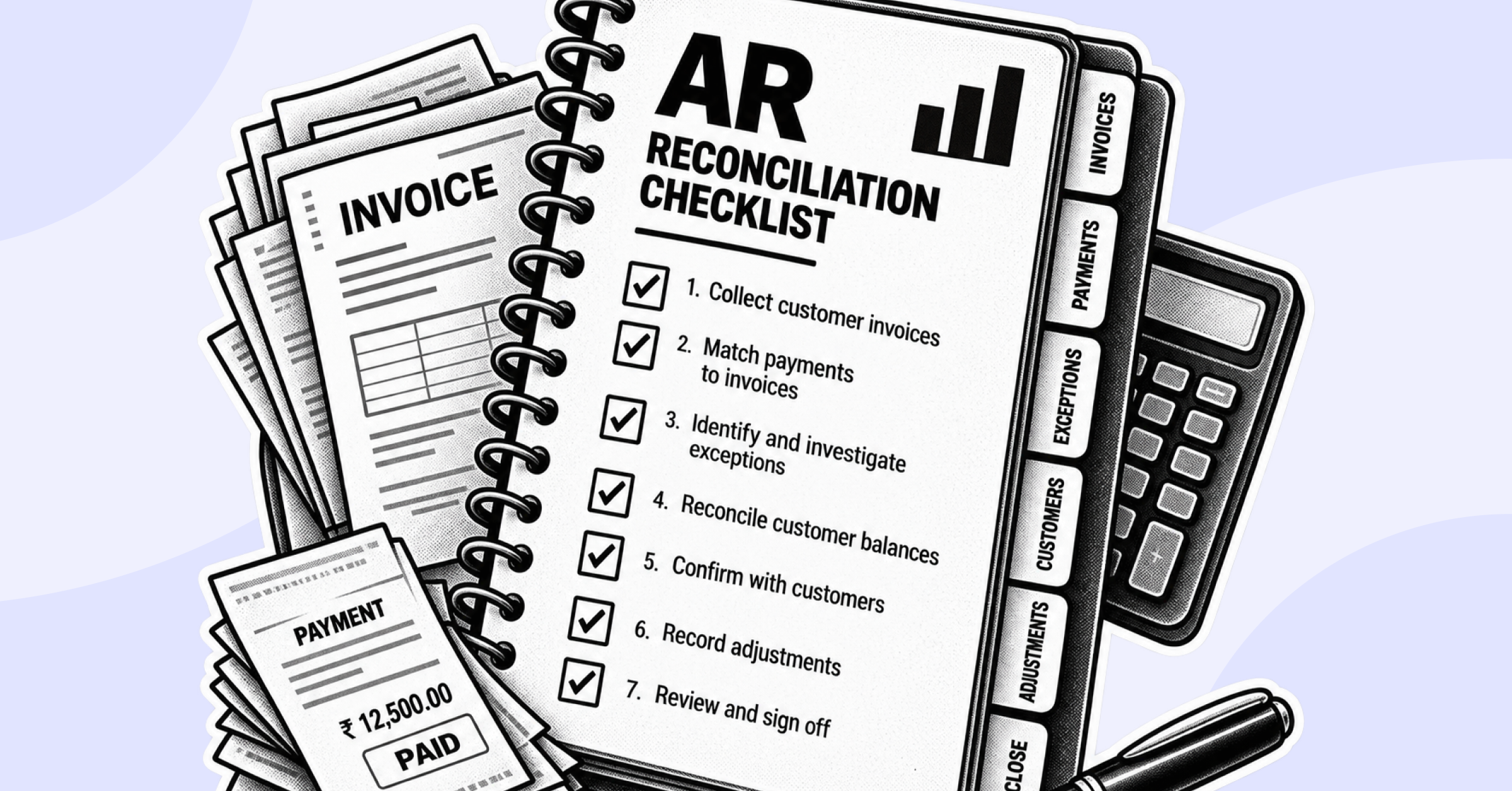



Revenue reconciliation software matches what your billing system, CRM, and payment processors booked against what actually landed in the general ledger, and flags every dollar that doesn't line up before it becomes a close delay or an audit finding. If your team is still doing this in spreadsheets, you already know why you're reading this.
Bank reconciliation alone is the single largest consumer of non-advisory staff hours at accounting firms that offer bookkeeping services, averaging 11.3 hours per client per month according to the AICPA & CIMA National MAP Survey.
This list covers the eight platforms finance teams evaluate most often for automated revenue reconciliation in 2026, ranked by feature depth, verified user sentiment, and fit by company size.
Who Needs This and Why
Teams evaluating this list are usually also dealing with the reconciliation pain described in what revenue reconciliation actually involves - matching bookings to collections isn't a bank-rec problem, it's a data problem, and it's why several vendors below built dedicated matching engines instead of bolting reconciliation onto a close checklist.
What Is Revenue Reconciliation Software?
Revenue reconciliation software automatically matches revenue recorded in your books against the underlying transactions in billing, CRM, and payment systems, then flags mismatches for review instead of making an accountant trace them by hand.
How We Ranked
We spent over 25 hours researching this list, evaluating each vendor's official website for feature depth, cross-referencing verified reviews on G2, Capterra, and Gartner Peer Insights, and checking practitioner discussion on forums like Reddit and Proformative for real-world complaints these ratings don't always capture.
We looked specifically at how much of each platform's revenue reconciliation automation is genuinely out-of-the-box versus dependent on custom rule-building. We weighted these factors:
- AI and matching maturity - how much transaction-level matching the tool does out of the box versus how much rule-building falls on your team
- ERP integration breadth - native connectors to SAP, Oracle NetSuite, Sage Intacct, and other systems your stack already runs on
- Verified user sentiment - G2, Capterra, and Gartner Peer Insights ratings, weighted by review volume and recency, not star rating alone
- Company-size fit - whether the vendor is genuinely built for your transaction volume and entity count, not just capable of handling it
- Audit trail and compliance depth - how defensible the reconciliation record is under SOX and external audit
Side-by-Side Comparison: Top Automated Reconciliation Softwares
8 Best Automated Revenue Reconciliation Software Reviewed
1. BlackLine
Best For
Large enterprises and accounting firms managing complex, multi-entity account structures that need audit-ready reconciliation controls.
Overview
BlackLine's Account Reconciliations and Transaction Matching products automate, standardize, and control the reconciliation process to increase accuracy and speed at close. It unifies transaction-level data in the cloud and applies configurable business rules to match transactions and flag exceptions automatically.
In a published ROI case study, AT&T reported a 689% ROI and more than $1 million in annual savings after costs, with the platform paying for itself in 1.8 months.
Key Features
- Automated transaction matching: configurable business rules compare and validate transaction-level data across sources
- Auto-certification: system-certifies low-risk accounts automatically, with BlackLine reporting 40-65% of monthly accounts typically qualify
- Exception flagging: surfaces unmatched or anomalous transactions for review instead of burying them in a spreadsheet
- Standardized templates: consistent reconciliation workflows across account types and entities
- Variance and flux analysis: tied directly to reconciliation data for period-over-period review
- Audit trail: full review and sign-off history built into every reconciliation
- Verity AI-assisted matching: AI layer for faster reconciliation cycles
- Broad ERP integration: connectors for SAP, Oracle, NetSuite, and Sage Intacct, among others
Pros
- Transaction matching handles high-volume data well: "I use BlackLine Financial Close Management for month-end reconciliations. I like that transaction matching works well for one of our reconciliations, especially when dealing with high volumes of data."
- High system-certification rates save real time: "We have been able system certify over 60% of our reconciliations. This has saved significant time."
- Cash reconciliation benefits noticeably from auto-certification: "The transaction matching has been a tremendous benefit in our cash reconciliation process. Also the auto-certification for reconciliations is great."
Source: G2
Cons
- Complex setup with a real learning curve: "I dislike that BlackLine can feel complex at first, requiring significant setup and user training. Some configurations take time, and performance may slow with very large datasets."
- Matching configuration is tricky for non-admins: "Some of the matching setup is kind of tricky, and making changes for account groupings is a little tricky for someone not familiar with the normal process."
- Long ramp-up on auto-certification features: "There are too many auto certifying features that could be more analyzed in-depth. The initial setup wasn't easy, taking us a few weeks and quarters to get used to the system."
Source: G2
Pricing
BlackLine doesn't publish pricing. According to Capterra, plans start around $105/month (https://www.capterra.com/p/114268/Finance-Controls-Automation/pricing/), though real enterprise contracts run substantially higher depending on modules and entity count.
2. FloQast
Best For
Corporate accounting teams that want month-end close checklists and account reconciliation automated in one connected workflow.
Overview
FloQast's AutoRec engine automates transaction matching for reconciliations without requiring rule setup, extending to bank, cash, and deferred-revenue amortization schedules. Automated sign-offs trigger when subledger balances tie out within configured thresholds. In a published case study, cybersecurity company Venafi cut its close from 15 days to 10, a 33% reduction, using FloQast.
Key Features
- AI-powered AutoRec matching: automates up to 75% of transaction matches out of the box, including high-volume bank and clearing accounts
- Automated sign-offs: FloQast signs off on the user's behalf when balances tie out within set thresholds
- AI-enhanced bank reconciliation: secure API integration for automated cash reconciliations
- Amortization automation: end-to-end handling for prepaid expenses and simple deferred revenue schedules
- Reconciling items tracking: documents and manages timing and unknown differences with a full audit trail
- Real-time reconciliation dashboard: status, balance comparisons, preparers, reviewers, and sign-off dates in one view
- ERP data feeds: API-driven pulls that reduce manual entry error
Pros
- Automates GL tie-outs directly from the ERP: "FloQast automates the tie-out process by pulling General Ledger (GL) balances directly from your ERP system, which significantly reduces manual data entry and the time spent on preparing simple reconciliations."
- Centralizes the entire close process: "What I like best about FloQast is how it centralizes and automates the month-end close process. The checklists, task tracking, and automated reconciliations make it easy to see exactly where we are in the close at any time."
- Measurable close-time reduction: "In total, after 6 months of use, the time to complete our close has decreased by 60% and we are more confident in the accuracy of the underlying data than ever before."
Source: G2
Cons
- Standardized formats don't flex for entity-specific exceptions: "When a client had entity-specific reconciliation requirements and ad-hoc adjusting entries, FloQast's standardized checklist and reconciliation formats didn't fully accommodate these exceptions. This led to maintaining parallel Excel trackers outside the system."
- Lacks transaction-level depth of dedicated matching platforms: "It may lack the granular transaction-level detail and advanced functionality of some other enterprise-grade reconciliation-focused platforms. Its flux (variance) analysis tool also has some reported limitations."
- Slow refresh on large reconciliation files: "My biggest complaint is the time it takes for things to load. For example, when I submit my reconciliation files, it takes quite a long time for FQ to refresh."
Source: G2
Pricing
FloQast doesn't publish pricing. According to Capterra, plans start around $999/month, with third-party estimates suggesting typical enterprise contracts run $30,000-$80,000+ annually depending on company size.
3. HighRadius
Best For
High-volume enterprise finance teams that want agentic AI handling bank, GL, and intercompany reconciliation at scale.
Overview
HighRadius's Financial Close & Reconciliation software uses more than 100 pre-built AI agents to automate account, bank, GL, and intercompany reconciliation, enforcing SOX and IFRS compliance along the way. It integrates with SAP, Oracle, NetSuite, Dynamics 365, Sage Intacct, and Workday. HighRadius publishes an 80% reconciliation-automation rate and a 90% auto-match rate on bank reconciliation.
Key Features
- Automated ERP data extraction: pulls transaction and GL data at a published 90% match rate
- AI-driven bank, GL, and intercompany reconciliation: targets 99% accuracy across reconciliation types
- Continuous subledger-to-GL verification: real-time detection of broken links between subledgers and the GL
- Direct journal entry posting: approved entries post to the ERP without manual re-entry
- Real-time dashboards and alerts: live status and summaries throughout close
- Customizable workflows: discrepancy and anomaly detection tuned to your process
- Compliance coverage: SOC 1 Type 2, SOC 2 Type 2, GDPR, and HIPAA support built in
Pros and Cons
HighRadius's dedicated Financial Close & Reconciliation product has a thin G2 review base to date, and the reviews currently on file are attributed only to "Verified User" rather than a named reviewer. Per our sourcing standard, we require a named reviewer to publish a quote, so we're disclosing this gap rather than publishing unattributed pros and cons.
The official-site metrics above (80% automation rate, 90% bank auto-match) are the most reliable public signal on this specific product until a larger, named review base develops.
Pricing
Custom pricing - contact sales. HighRadius doesn't publish pricing, and no credible third-party source lists a specific figure for this product.
4. Trintech (Cadency)
Best For
Global enterprises with complex intercompany accounting and multiple acquired entities needing standardized reconciliation.
Overview
Cadency is Trintech's enterprise financial close and reconciliation platform, automating balance sheet reconciliation, transaction matching, journal entries, and intercompany accounting across large, complex organizations. Trintech publishes a 90% reduction in accounts requiring manual reconciliation and a 30% reduction in transaction-matching time.
In a case study, LKQ achieved 90% auto-reconciliation of intercompany transactions while executing more than 100 acquisitions without adding headcount.
Key Features
- Balance sheet reconciliation: risk-based, standardized workflows through Cadency Certify
- Transaction matching: strong auto-matching and exception handling across messy, multi-source data
- Intercompany accounting: automated recording, reconciliation, and elimination of trade and non-trade transactions
- Journal entry automation: two-way ERP communication with full validation and status visibility
- Governance, risk, and compliance: automated SOX compliance with an audit-ready eBinder
- Close task orchestration: dashboard-driven task management that surfaces bottlenecks
- Pre-built ERP connectors: SAP, Oracle, and NetSuite out of the box
Pros
- Recent platform upgrades improved reliability: "There has been significant improvement with respect to system performance as new version is faster compared to older versions and there are added functionalities as well."
- Strong balance sheet reconciliation and reporting: "Cadency can be used for Balance sheet reconciliation too and the management reports can be generated which will be very useful and easy to understand as per the requirement of the management."
- Simplifies complex close while maintaining controls: "What I appreciate most about Trintech is its ability to simplify complex financial close and reconciliation processes while maintaining strong control and compliance standards."
Source: G2
Cons
- Advanced features carry a real learning curve: "One aspect of Trintech that can be challenging is the learning curve associated with some of its more advanced features... potential customization limitations for highly specialized workflows."
- User administration issues surfaced during rollout: "We've experienced issues with user administration. The solutions of which were not always straightforward and even perplexed the vendor. Standard reports in most cases did not provide business with what they needed."
Pricing
Custom pricing - contact sales. Neither Trintech's official site nor a credible third-party source publishes a real figure; Capterra's listed "$0.01" starting price is a data placeholder, not an actual rate.
5. Numeric
Best For
Lean accounting teams at high-growth companies that want reconciliation built into a modern, AI-first close platform.
Overview
Numeric gives accounting teams transaction-level visibility into ERP data, pulling balances directly from systems like NetSuite so accounts that tie out under a set materiality threshold can auto-submit. Its matching engine handles complex, multi-attribute matching on amount, memo, and date range. In a published case study, Brex reduced its close from 6 days to 4 using Numeric.
Key Features
- AI-powered matching engine: handles multi-attribute matching and automates 90%+ of transaction volume per Numeric's published benchmarks
- Real-time break monitoring: flags new transactions posted to already-reconciled accounts and pinpoints the exact discrepancy
- Direct ERP data pulls: balances refresh as soon as they hit the general ledger
- Workpaper linking: Google Drive, SharePoint, and Box integrations tie source documents directly to each reconciliation
- Auto-submit for balanced accounts: configurable materiality threshold reduces manual review load
- Automated journal entry drafting: for fees, transfers, and intercompany movements
- Broad bank integrations: connects across thousands of banks globally
Pros
- Reconciliation tool simplifies key-account review: "I'm a big fan of the reconciliation tool; it allows me to dig into key accounts and makes the review process easier."
- Rollover reconciliations save real time month over month: "I love that you can easily input reconciliation sources that roll over periods and automatically submit. Saving time month over month is a huge benefit since reconciliations are able to roll over without any manual intervention."
- Centralizes checklists and reconciliation visibility: "One of the most important roles it plays for us is centralising checklists, team visibility, sheet linking and accounts reconciliation."
Source: G2
Cons
- Manual sync process slows the reconciliation page: "I dislike the manual sync process under Manager Sources and the slowness when scrolling through the reconciliation page."
- Reconciliation gated behind paid tiers: "I wish reconciliations were available with the free version."
Source: G2
Pricing
Numeric's Essentials plan starts at $30/user/month per its published pricing page, though account reconciliation requires the Growth tier, which is custom-quoted based on company size.
6. Bluecopa
Best For
Mid-market to enterprise finance teams that want reconciliation unified with their Order-to-Cash and Procure-to-Pay data instead of managed as a standalone tool.
Overview
Bluecopa's record-to-report platform uses Samyx Recon, its AI-native matching engine, to process more than 5 million records per hour at 97-99% accuracy across bank, GL, subledger, and intercompany reconciliations. It's built on the same data layer as Bluecopa's O2C and P2P modules, so reconciliation isn't isolated from upstream billing and payment data.
In a published customer case study, logistics company Porter automated 70% of its reconciliation tasks using Bluecopa.
Key Features
- Samyx Recon matching engine: multi-field fuzzy and deterministic hybrid matching at 5M+ records/hour and 97-99% accuracy
- Samyx Extract: pulls line-level data from PDFs and spreadsheets with full provenance for reconciliation source documents
- Samyx Build: policy-as-code approval gates, thresholds, and segregation-of-duties controls for reconciliation sign-off
- Samyx Narrate: AI-generated variance analysis and trend commentary on reconciliation exceptions
- Unified O2C + P2P + R2R data layer: reconciliation runs against the same billing, payment, and vendor data as the rest of finance ops
- 200+ integrations: SAP, Oracle NetSuite, Sage Intacct, Zoho Books, QuickBooks, Xero, Stripe, Shopify, Salesforce, and more
- Continuous close support: ties reconciliation status directly into month-end close automation
Pros and Cons
Bluecopa has a growing G2 review base with no reported negatives to date. Its 4.8/5 rating is the highest in this category, though the smaller sample size compared to established leaders like BlackLine and FloQast means broader market feedback is still emerging.
Reviewers highlight the platform's customizability, direct Excel integration, and real-time reporting; the main area for improvement noted is limited intercompany-management depth for very large multi-location enterprises, along with a learning curve during initial setup.
Pricing
Custom pricing - contact sales. Bluecopa doesn't publish pricing, and no credible third-party source lists a specific figure.
7. ReconArt
Best For
Mid-market and enterprise teams across varied industries that need configurable, multi-sided matching beyond simple one-to-one reconciliation.
Overview
ReconArt is a web-based revenue reconciliation platform and financial close platform built for finance and controllership teams across more than 30 industries. Its matching engine is benchmarked at over 1 million transactions per minute and supports one-to-one, one-to-many, and many-to-many reconciliation.
ReconArt's Data Factory automates data ingestion and validation from ERP, core banking, cloud storage, and SFTP sources.
Key Features
- High-throughput matching engine: benchmarked at 1M+ transactions/minute across multi-sided reconciliation types
- ReconArt Data Factory: automated integration and data validation from ERP, banking, blockchain, and file-based sources
- Broad reconciliation coverage: bank, credit card, payments, GL/suspense, AR/AP, ledger-to-subledger, and intercompany
- Configurable audit trail: built for compliance-driven review requirements
- Customizable dashboards: reconciliation metrics and trend graphs to spot bottlenecks
- Integrated journals module: ties directly into close and certification workflow
Pros
- Purpose-built for two-bucket reconciliation: "The entire ReconArt platform is wonderfully designed just for reconciliations between two data buckets... ReconArt is helping us reconcile AP/AR statements in a really fast and flexible way."
- Custom rules automate complex recons: "Recon art has allowed us to automate many of our complex reconciliations and we plan to add more reconciliations to our list. The ability to create custom auto rules and import data from many sources allows a lot of great solutions."
Source: G2
Cons
- Hard to reverse uploaded data errors: "It is difficult to be able to pull back uploaded data, if there were errors, or clearings that shouldn't have happened. Once the data is loaded seems like more of a challenge to pull it back out."
- Complex rules need IT involvement: "Some rules are difficult to create and have run/match transactions successfully. Our IT team typically has to be involved in this process which is fine but means implementation of new recons & matching rules can be slow."
Source: G2
Pricing
Custom pricing - contact sales. Third-party pricing estimates for ReconArt vary too widely to cite a reliable figure, and ReconArt uses a quote-based model.
8. AutoRek
Best For
Regulated financial services firms, including asset managers, payment processors, and insurers, that need unlimited-volume reconciliation with heavy compliance requirements.
Overview
AutoRek is a reconciliation and data-control platform built for financial services firms managing CASS, EMIR, MiFID II, and ISO 20022 obligations. Its matching engine handles limitless transaction volume, and AutoRek reports its largest deployment processes 2.4 billion transactions while reconciling roughly 25% of all UK bank cash transactions.
AutoRek publishes 50%+ operational cost savings for clients, with ROI typically achieved within 9 months.
Key Features
- Automated data aggregation and enrichment: pre-built templates for complex, high-volume file loads from any source
- Limitless-volume matching engine: built to handle billions of transactions without sacrificing speed or accuracy
- Intelligent exception workflows: enriches, categorizes, prioritizes, and escalates high-risk transactions across teams
- Automated journal creation: handles rounding differences, tolerance write-offs, currency differences, and sales tax postings
- Configurable dashboards: drill-down reporting with scheduled report runs
- Comprehensive audit trail: built to support regulatory governance and reporting requirements
- Business-user rule configuration: rules engine that finance teams, not just IT, can adjust as the organization scales
Pros
- Increases efficiency and supports compliance automation: "By automating many of the manual tasks involved in data management, AutoRek helps organizations to increase their overall efficiency and reduce the amount of time and resources required to complete these tasks. Also, AutoRek helps organizations to comply with various financial regulations."
Source: G2
Cons
- Steep learning curve and high implementation investment: "Some users may find that the software has a steep learning curve, especially if they are new to automated data management solutions. Also, implementing AutoRek can be a significant investment, especially for smaller organizations."
Source: G2
Pricing
Custom pricing - contact sales. AutoRek's pricing is available only on request across every source we checked.
How to Choose the Right Automated Revenue Reconciliation Software?
Match the pain point to the platform, not the other way around:
- You're a global enterprise drowning in intercompany eliminations: Trintech (Cadency) or BlackLine, both built around multi-entity audit trails.
- You want reconciliation, close checklists, and sign-offs in one connected workflow: FloQast or Numeric, depending on team size and budget.
- You're scaling transaction volume faster than your headcount: HighRadius or Bluecopa, both built around AI-driven auto-matching at high volume.
- You need reconciliation to talk to your billing and payment data, not just your GL: Bluecopa, since O2C, P2P, and reconciliation run on one data layer.
- You're in a heavily regulated industry with compliance-first requirements: AutoRek or ReconArt.
Stakeholder priorities differ, and it's worth mapping those before you shortlist:
- CFO: cares about close-cycle impact, audit exposure, and how fast the tool pays for itself.
- Controller: cares about match accuracy, exception volume, and whether the audit trail holds up under external review.
- Accounting Manager: cares about how much of the actual matching work the tool does versus how much rule-building and babysitting it creates for the team.
Common Mistakes When Choosing Revenue Reconciliation Software
- Confusing a close checklist tool with a true matching engine. Some platforms track reconciliation tasks well but don't do heavy transaction-level auto-matching, which just moves the manual work instead of removing it.
- Signing before confirming ERP compatibility. A tool that's excellent on NetSuite can be a weak fit if your GL runs on SAP or Oracle. Confirm the specific connector, not just "integrates with ERPs."
- Underestimating implementation time. Enterprise-grade platforms can take three to nine months to configure properly; budget for that before you commit to a go-live date.
- Ignoring intercompany and multi-entity requirements until after purchase. If you're adding entities through acquisition, this needs to be tested in the demo, not assumed.
- Over-indexing on brand recognition over company-size fit. The most well-known enterprise platform can be genuine overkill, and genuinely frustrating, for a lean mid-market team.
- Trusting a star rating without checking review volume and recency. A 4.8 rating on 20 recent reviews and a 4.5 rating on 1,000 reviews across several years tell you different things about market confidence.
- Assuming AI adoption alone fixes the problem. Only 59% of CFOs report using AI in finance at all as of the Gartner 2025 Finance AI Adoption Survey, and adoption without matching data quality and workflow discipline rarely delivers the automation rate a vendor demos.
Why Bluecopa Is the Right Choice for Unified Reconciliation
If your reconciliation problem is really a data problem, upstream of the GL, Bluecopa's platform is built as an AI revenue reconciliation software layer for exactly that.
Samyx Recon matches at 5M+ records/hour with 97-99% accuracy, and because reconciliation sits on the same data layer as O2C and P2P, exceptions get traced back to the actual billing or payment record instead of a dead-end GL line.
That's the gap BlackLine and HighRadius don't close: both are strong reconciliation engines, but neither unifies reconciliation with the upstream O2C and P2P data that usually causes the mismatch in the first place.
This makes Bluecopa the strongest fit for mid-market to enterprise finance teams, particularly in D2C, e-commerce, logistics, and subscription businesses, that are scaling transaction volume across multiple payment gateways and want reconciliation exceptions to point at a root cause instead of just a variance.
Teams with heavy multi-entity intercompany structures should weigh Bluecopa's current depth there against Trintech or BlackLine, per the review feedback noted above. Bluecopa's Samyx AI agents extend the same matching logic into extraction and exception handling, so the reconciliation layer isn't working from cleaner data than the rest of finance ops sees.
Bottom Line
If you're a global enterprise with heavy intercompany accounting, choose Trintech (Cadency). If you need the deepest audit controls and have the budget for enterprise implementation, choose BlackLine.
If you want close checklists and reconciliation in one connected workflow at mid-market scale, choose FloQast or Numeric. If your transaction volume is scaling faster than your team, choose HighRadius or Bluecopa.
If reconciliation needs to trace back to upstream billing and payment data instead of stopping at the GL, choose Bluecopa. If you're in regulated financial services, choose AutoRek or ReconArt.
FAQ
1. What's the best revenue reconciliation tool for enterprise teams?
BlackLine and Trintech (Cadency) lead for enterprise-grade, SOX-ready audit trails; Bluecopa and HighRadius lead for AI-driven matching at high transaction volume and scale.
2. Does BlackLine integrate with SAP and Oracle?
Yes. BlackLine publishes native connectors for SAP, Oracle, NetSuite, and Sage Intacct, covering most enterprise ERP environments used for GAAP and ASC 606 reporting.
3. Does FloQast work with ERPs other than NetSuite and QuickBooks?
FloQast's integrations skew toward NetSuite, QuickBooks, and Sage Intacct; SAP S/4HANA or Oracle NetSuite ERP shops should confirm connector depth before buying.
4. How is revenue reconciliation different from general account reconciliation?
Revenue reconciliation matches bookings and collections across billing, CRM, and payment systems, while account reconciliation covers any GL account, including bank and vendor balances.
5. Can Bluecopa handle intercompany and multi-entity reconciliation?
Bluecopa supports multi-entity reconciliation, but its own reviewers note it's not yet as deep as BlackLine or Trintech for very large, complex intercompany structures.
6. How long does implementation typically take for enterprise reconciliation software?
Enterprise platforms like BlackLine, Trintech, and HighRadius commonly take three to nine months to implement, depending on SAP or Oracle ERP complexity and entity count.
Editorial Note
Last Reviewed: July 2026